WhatsApp us
Founded in 1123, St Bartholomew the Great is one of London’s oldest surviving churches, with a remarkable history reflected in its architecture and artistic heritage. Among its historic treasures is The Holy Family with Saint Elizabeth and the Infant Saint John the Baptist, a Renaissance painting with connections to the Venetian and Cremonese schools of Italy.
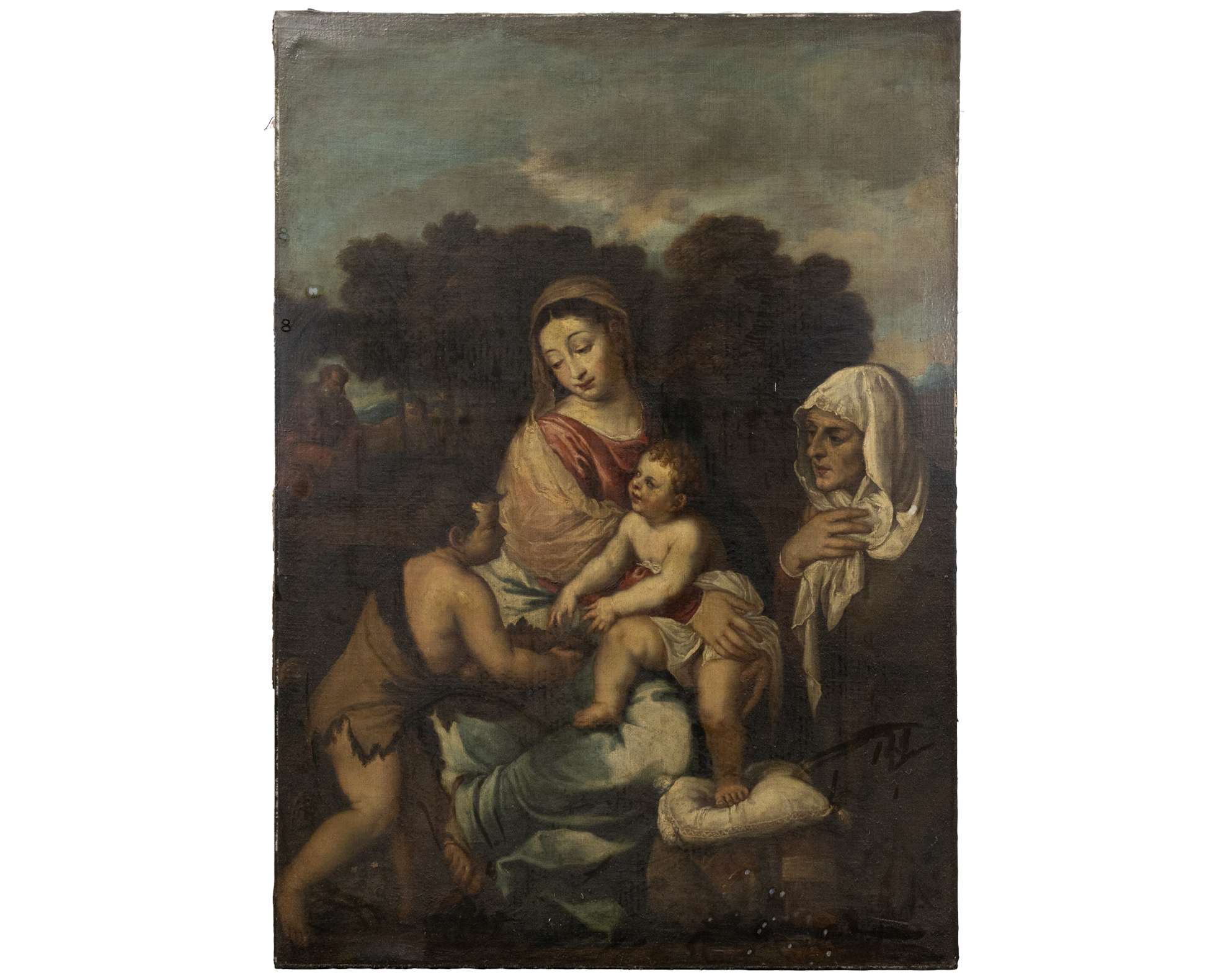
Over centuries of display, heavily yellowed varnish, accumulated dust and previous restoration work had obscured the painting’s rich colours and delicate details. Areas of unstable paint also threatened its long-term preservation.
Through meticulous examination, specialist cleaning and carefully considered conservation treatments, our paintings conservator Anna Rolph worked to recover the clarity of this beautiful composition while preserving its historic integrity.
 Above: a look inside St Bartholomew the Great
A Sacred Family
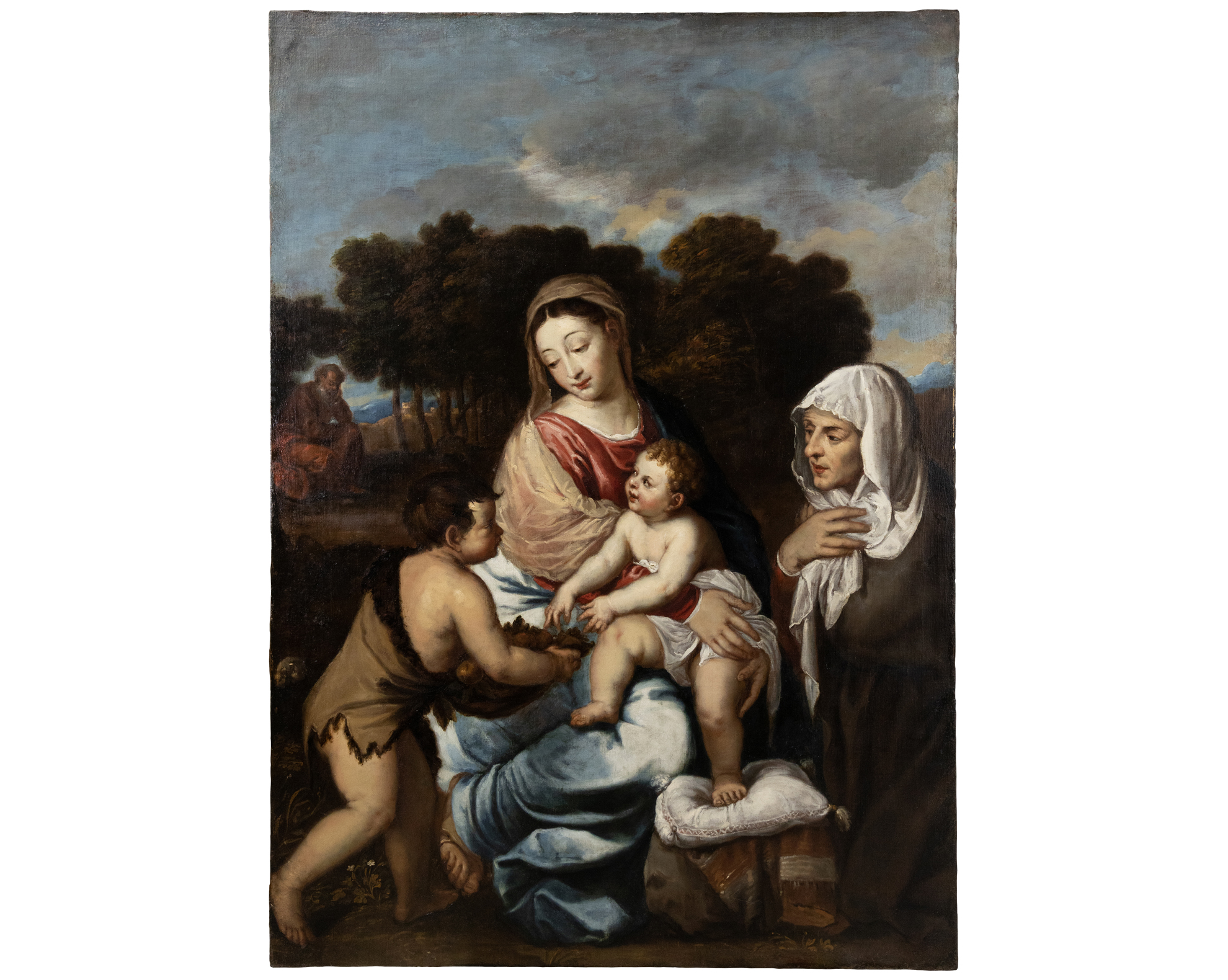
The Virgin Mary holds the infant Christ as he reaches towards his young cousin, Saint John the Baptist, who offers him a basket of fruit. The encounter recalls the biblical account of Mary’s visit to her relative Elizabeth, during which John is said to have leapt in his mother’s womb at the presence of Christ (Luke 1:39–45).
Saint Elizabeth watches affectionately over the children, while Saint Joseph rests quietly in the shadowed landscape behind them. His sleeping pose may recall the biblical dreams through which God guided him to protect Mary and Jesus.
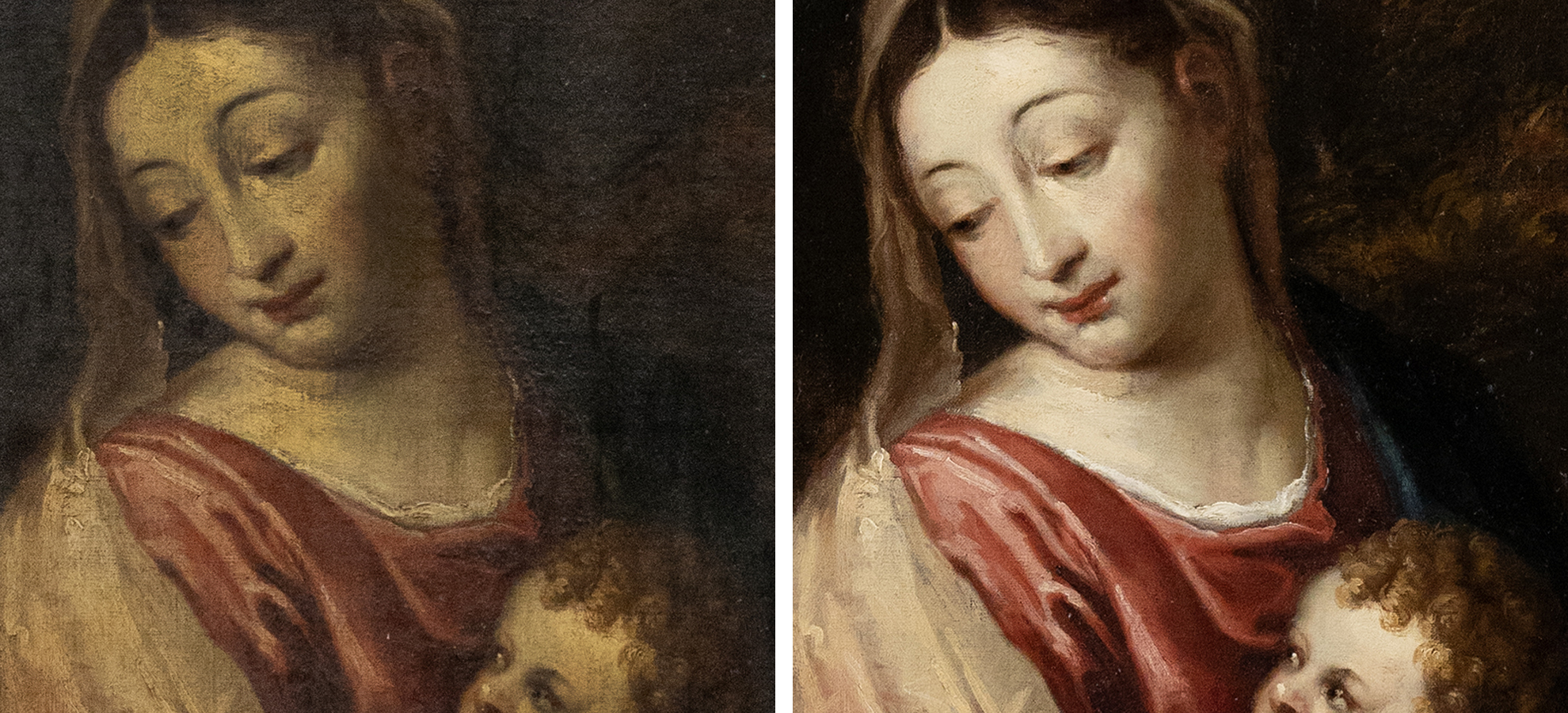
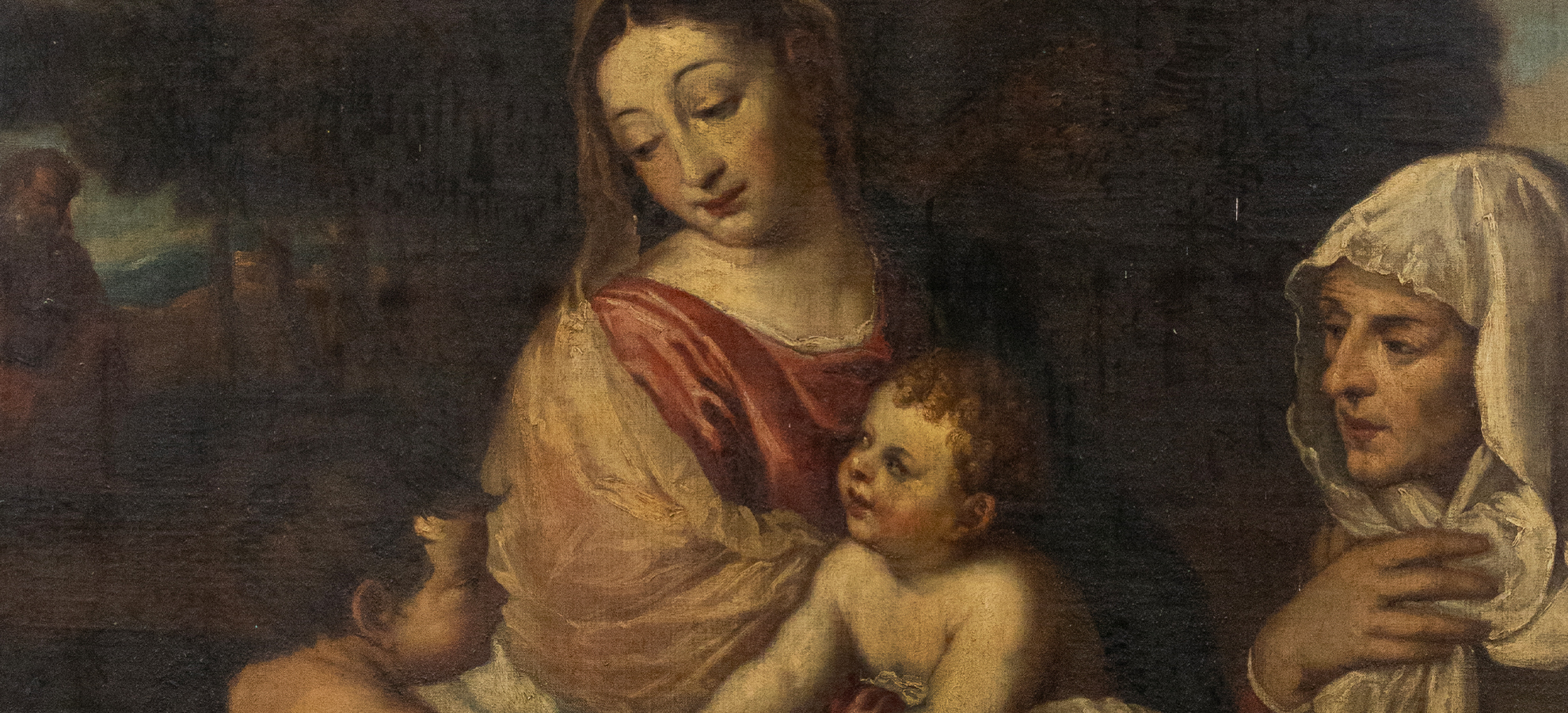 Above: a close up of the painting before treatment
Together, the figures’ gentle gestures and expressions bring warmth and humanity to the scene, presenting the sacred figures as a loving family while anticipating the extraordinary events ahead.
The subject holds particular significance within St Bartholomew the Great, where devotion to the Virgin Mary has been part of the church’s history for centuries. Medieval accounts describe an apparition of Mary to Canon Hubert, inspiring renewed devotion and the enlargement of the Lady Chapel. The painting connects the church’s own Marian traditions with themes of motherhood, family and faith.
A Complex Campaign of Conservation
When the painting arrived at our studio, Anna undertook a detailed condition assessment, revealing the combined effects of ageing, environmental exposure and previous restoration.
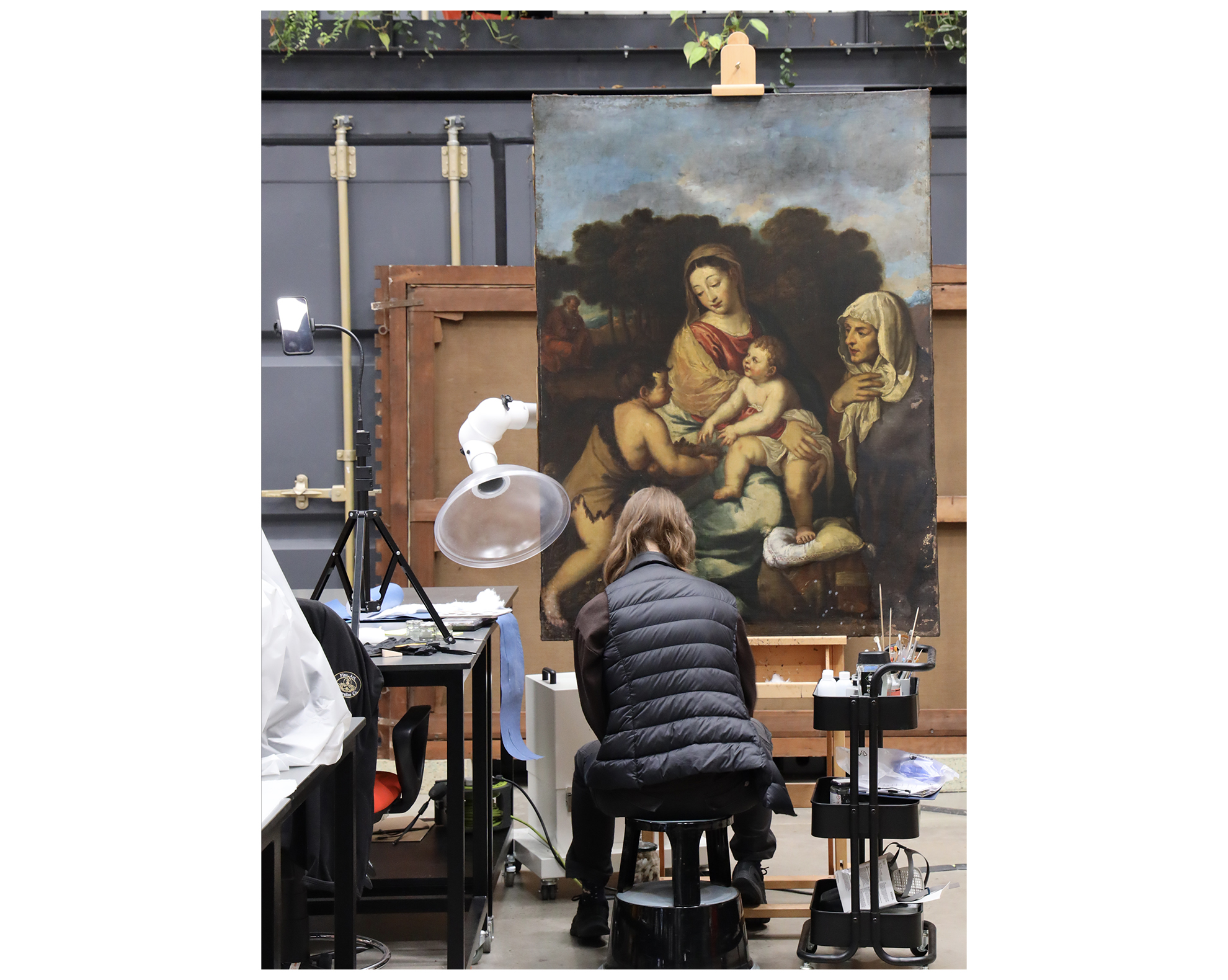
The most immediately visible concern was the heavily yellowed varnish, which had darkened the composition, distorted its colours and obscured much of the original detail. Accumulated dust and splashes of candle wax further diminished its appearance, reflecting the challenges of displaying artworks within an active place of worship.
Closer examination identified several concerns:
Lifting and flaking paint: Areas along the upper edge had become unstable, placing original paint at risk of further loss.
Historic overpainting: A substantial band of later paint across the sky, likely introduced to disguise earlier damage, had become discoloured and visually intrusive.
Previous restoration: Earlier treatments had left abrasion, uneven surface texture and unfilled paint losses.
Surface damage: A scratch towards the lower left interrupted the composition.
Frame deterioration: Accumulated dust, lifting decorative surfaces and areas of loss required specialist attention.
Conserving a painting of this age involves far more than removing accumulated dirt and discoloured varnish. Each layer tells part of its history, from the artist’s original brushwork to materials introduced during earlier restoration campaigns.
For Anna, the challenge was to understand these different materials, establish how they interacted and determine which could be safely treated without disturbing the original composition.
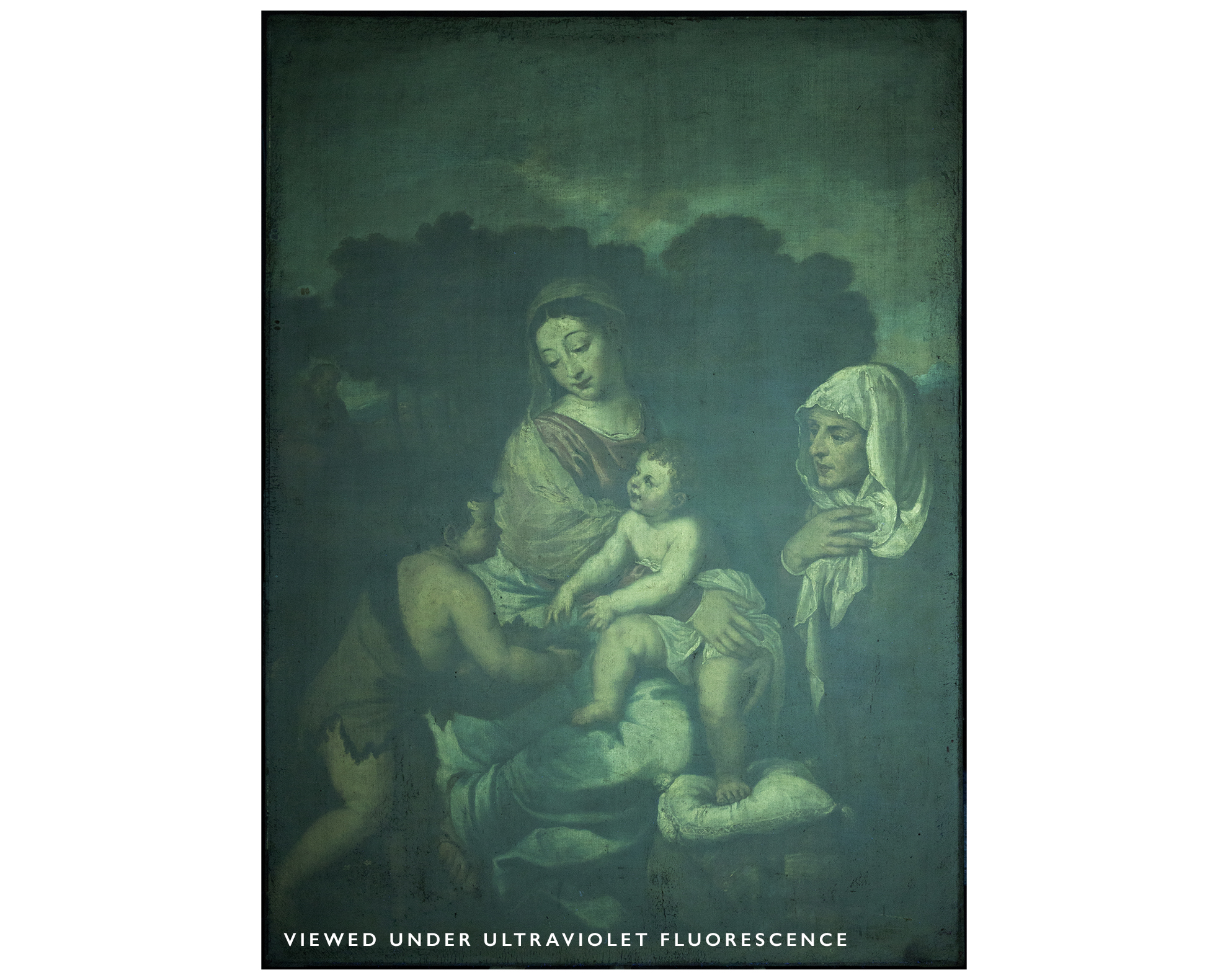
Understanding the Painting’s Complex Surface
Before treatment began, Anna conducted a series of controlled cleaning tests to assess the sensitivity of the original paint, aged varnish and historic restoration materials.
One of the greatest challenges emerged when certain brown pigments proved particularly sensitive to solvents. Solutions capable of reducing the yellowed varnish could therefore also pose a risk to the original paint beneath.
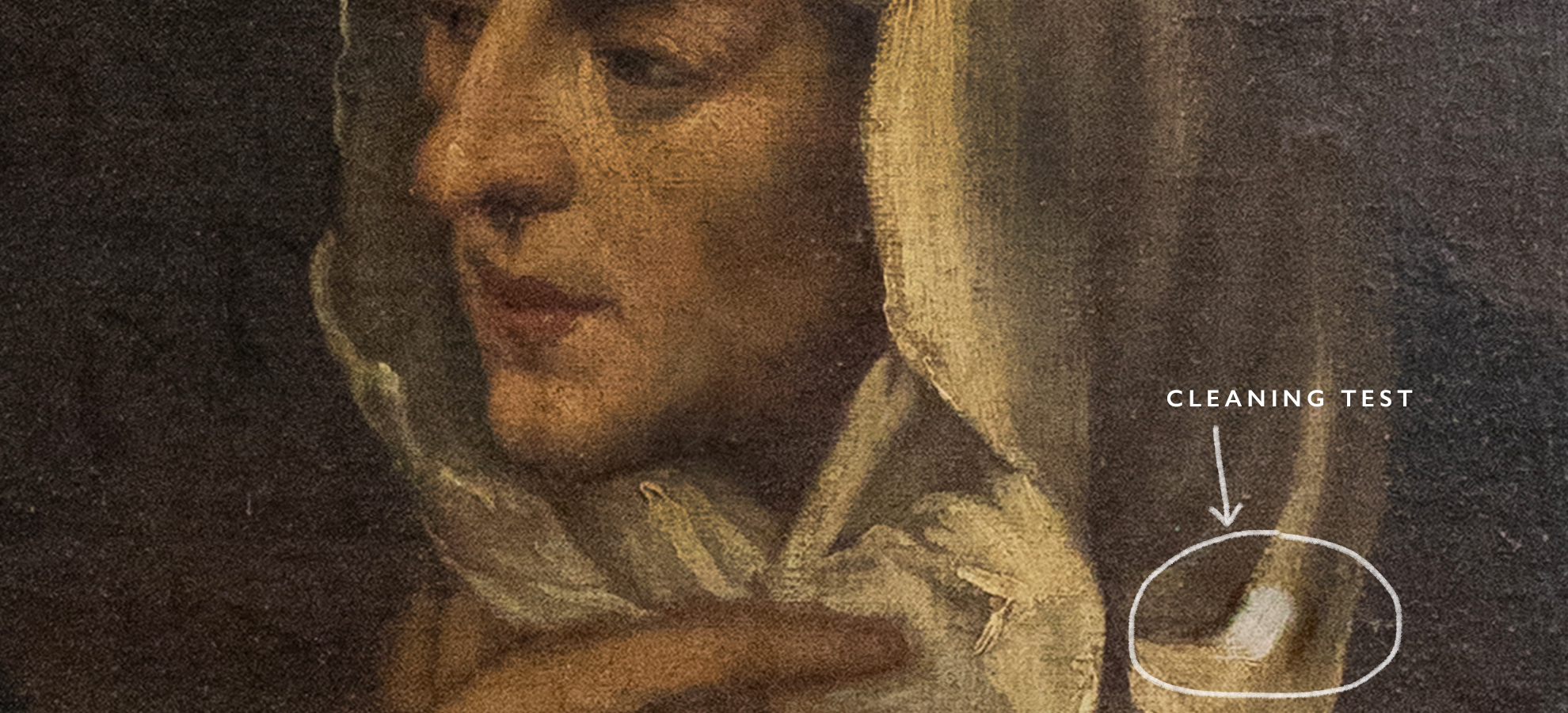 Above: the cleaning test shows how bright the paint is beneath the discoloured surface layers
Elsewhere, historic overpainting responded differently from the surrounding original material, further complicating treatment. This presented a delicate conservation problem. The varnish had become so heavily discoloured that it substantially altered the painting’s appearance, yet removing it too aggressively risked disturbing the very details the treatment was intended to reveal.
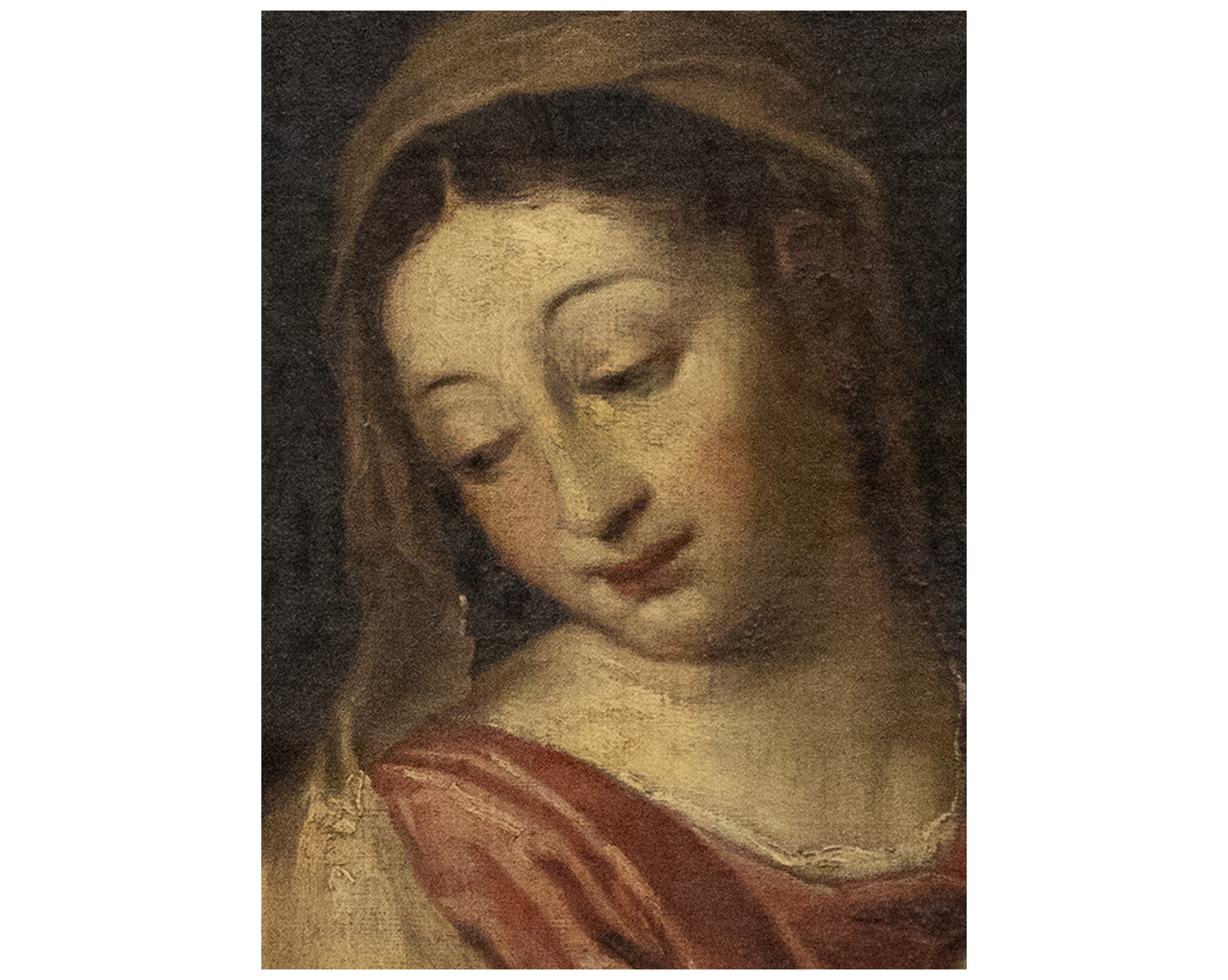
Rather than applying a uniform cleaning method, Anna selected and refined solutions according to the sensitivity and condition of individual passages. These preliminary investigations established where varnish reduction could proceed safely and where a more restrained approach was necessary.
Stabilising the Fragile Paint Layer
Vulnerable areas of original paint needed to be secured. Along the upper edge of the canvas, sections of paint had begun to lift and flake away from the underlying surface. Even gentle cleaning could place additional stress on these weakened areas, potentially resulting in further losses.
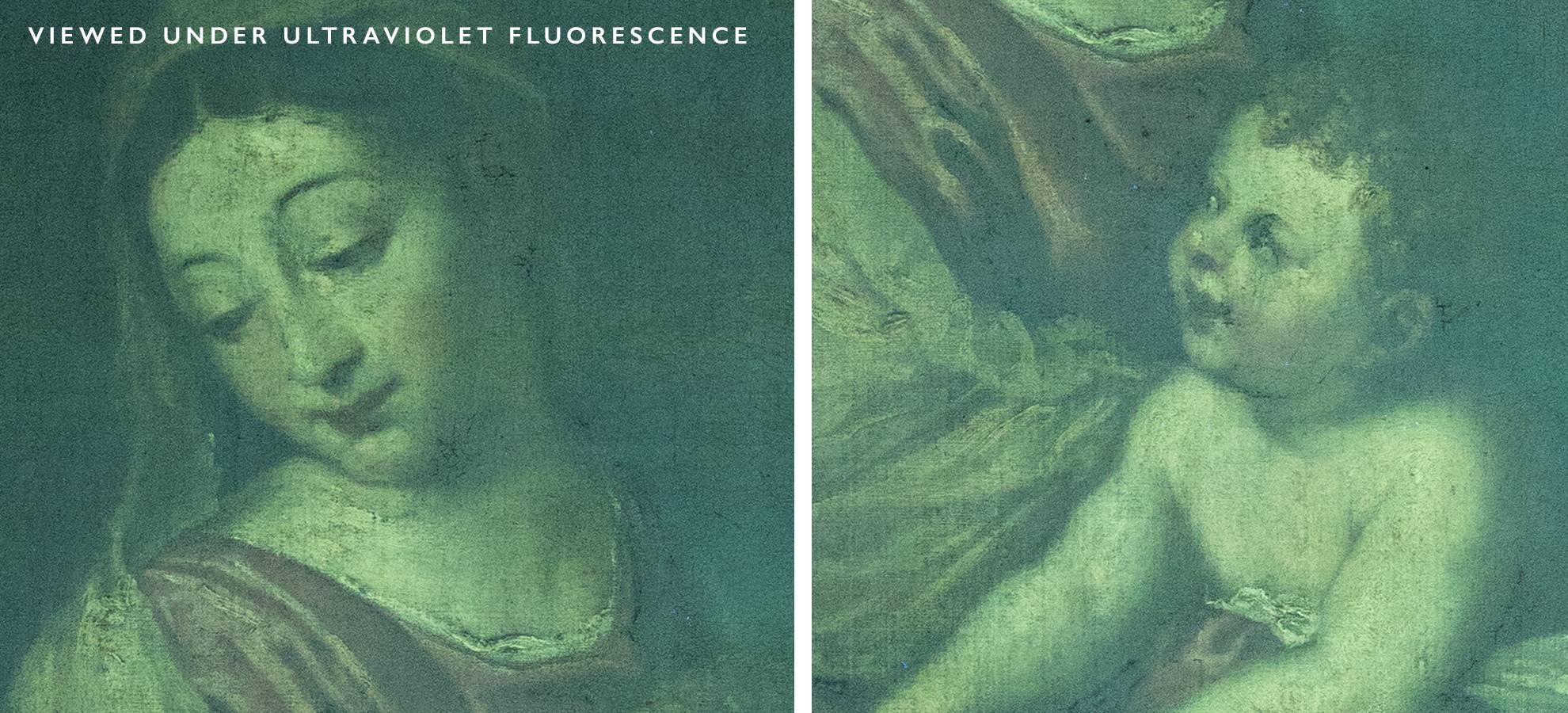
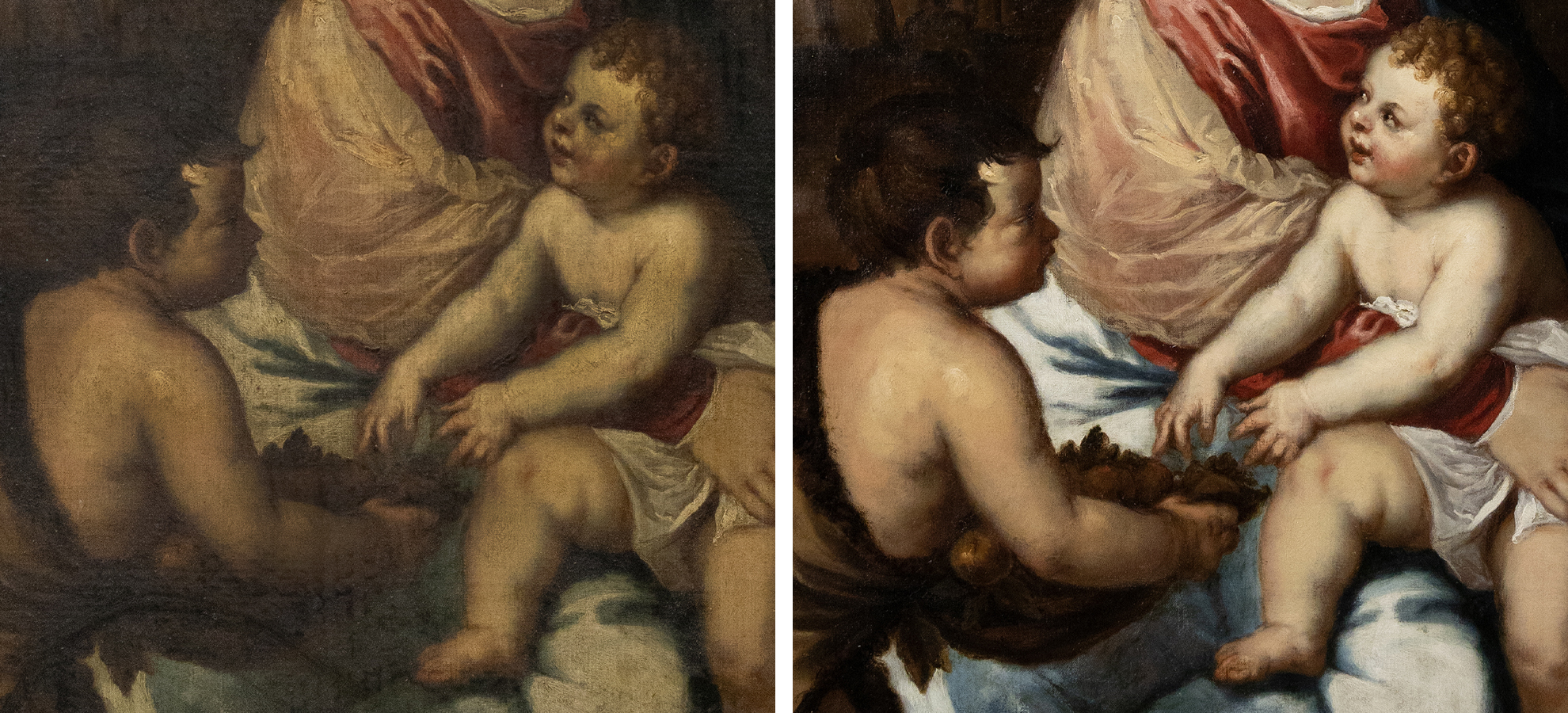
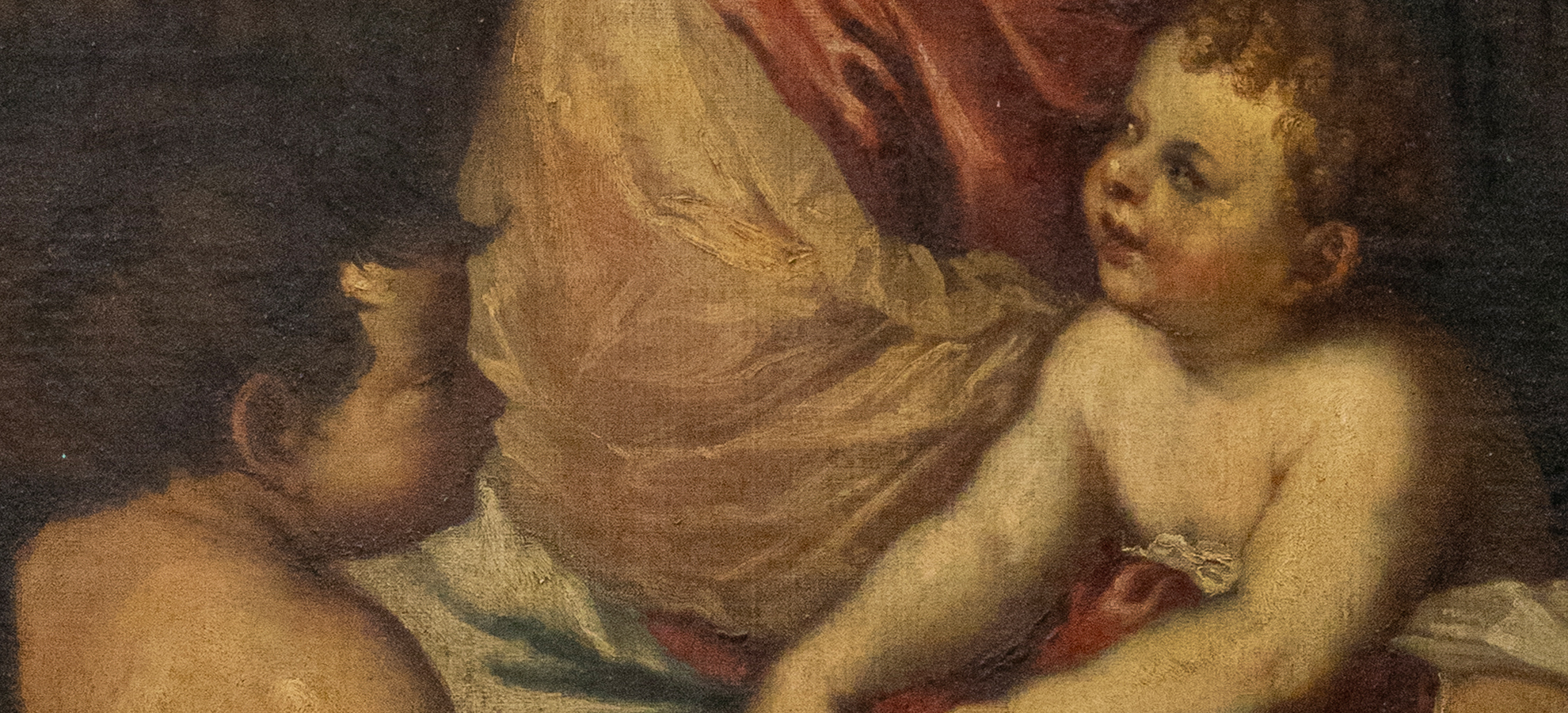 Above: a detail of the infant Christ and St John the Baptist
Anna carefully consolidated the unstable paint, securing vulnerable sections without unnecessarily altering the surrounding surface. This stabilisation provided a safer foundation for the subsequent cleaning programme.
Removing Centuries of Discolouration
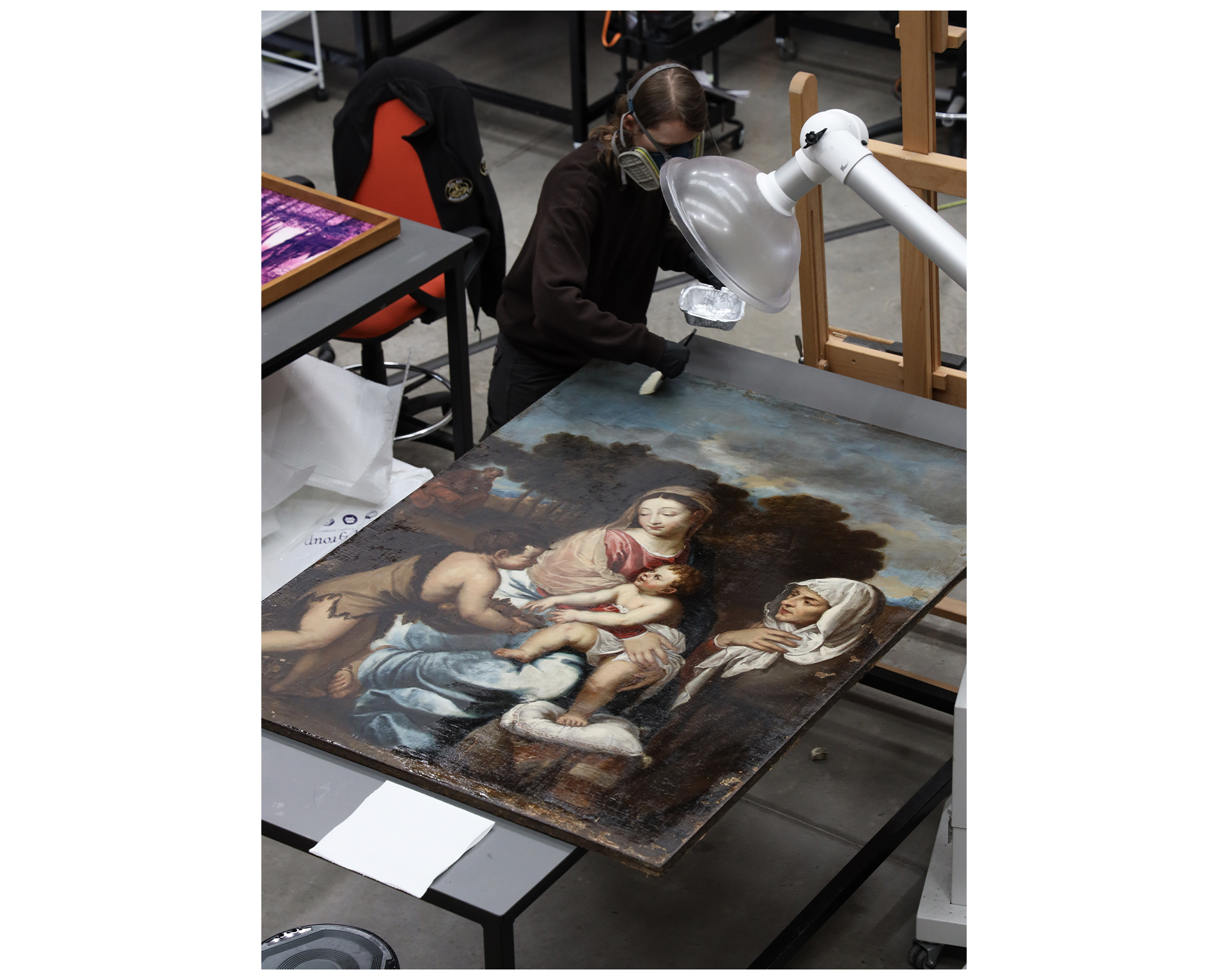
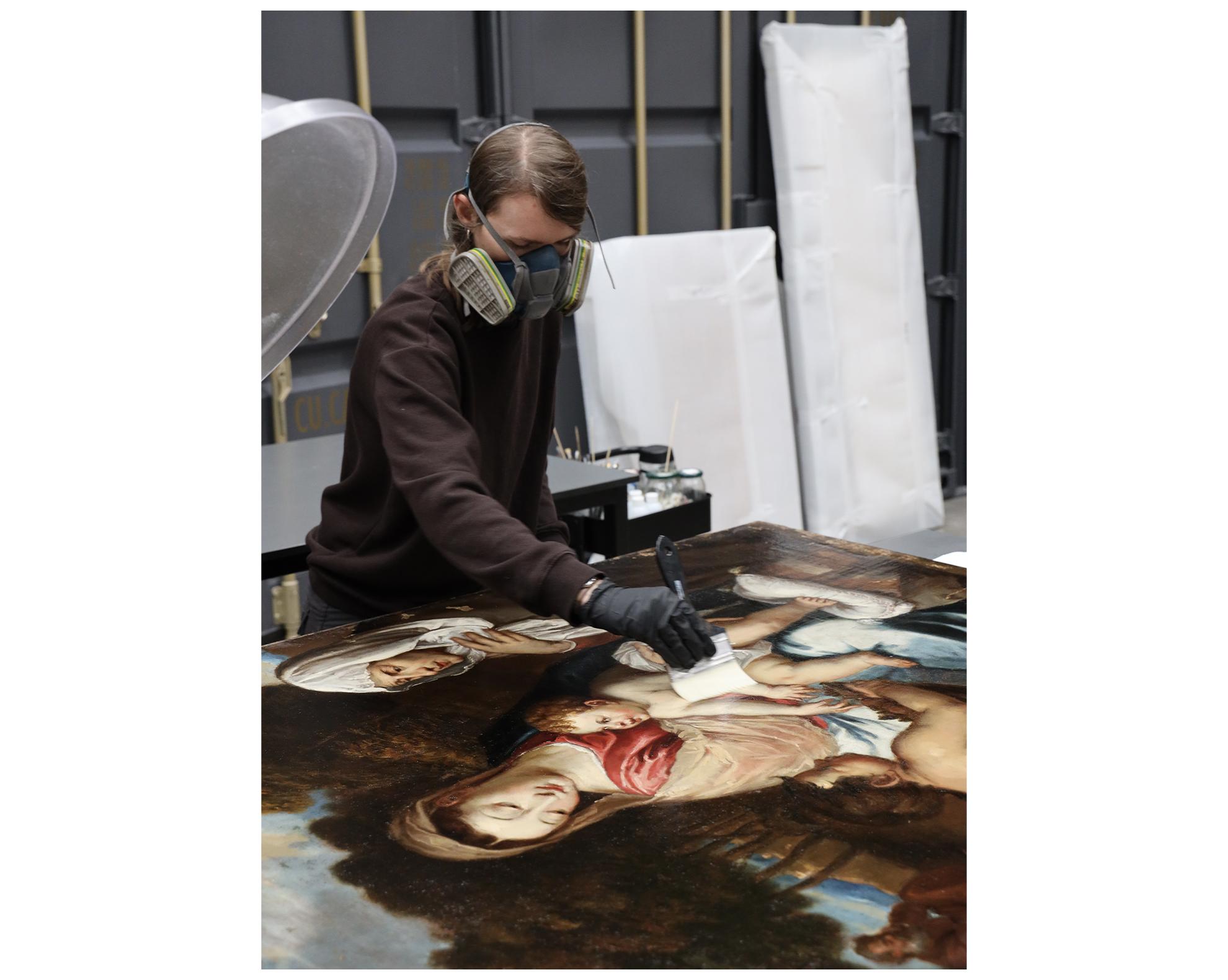
The painting’s long history within an active church had left substantial deposits of dust, dirt and candle wax across its surface. These contaminants were gradually removed using carefully selected cleaning methods.
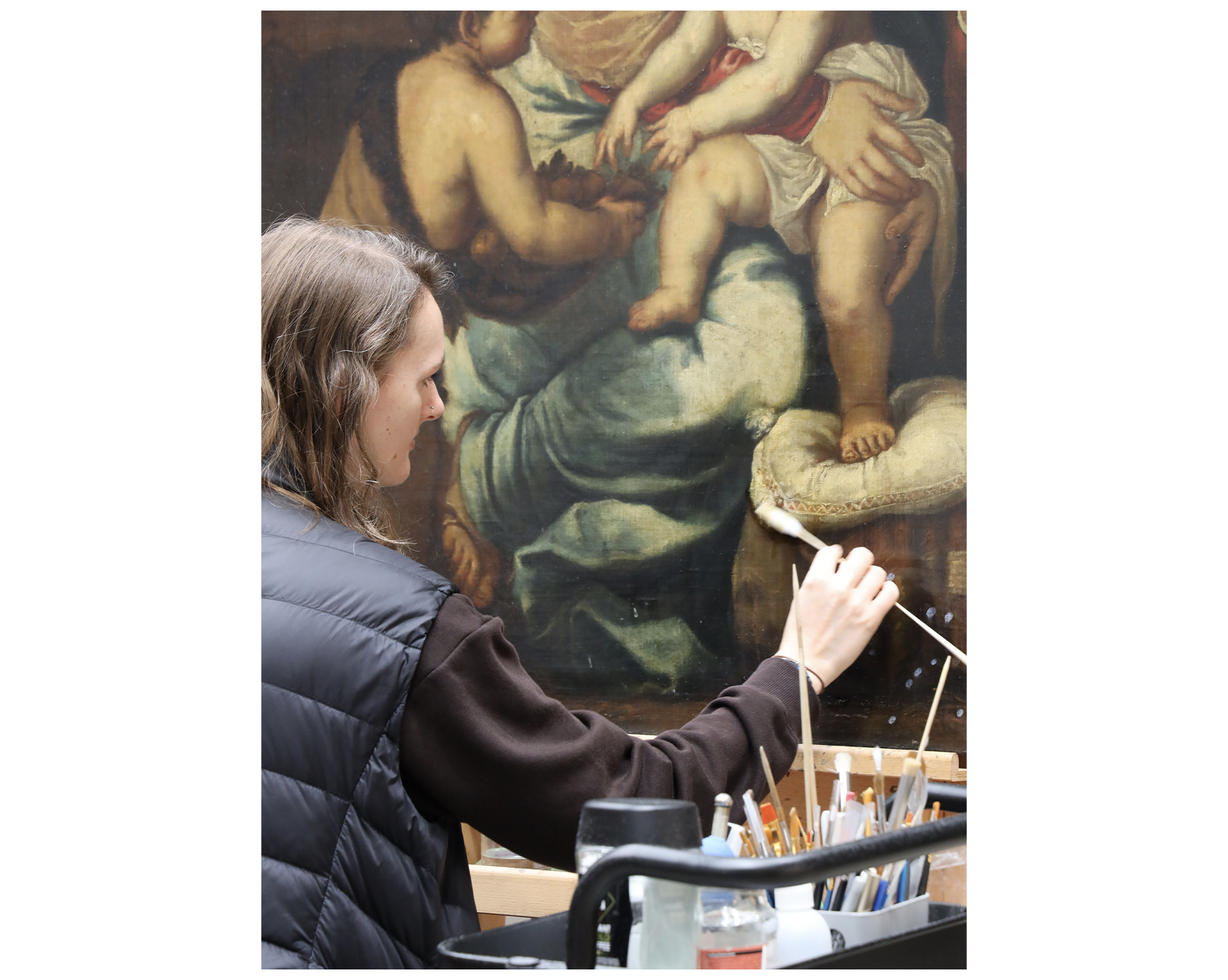
Attention then turned to the heavily yellowed varnish. Originally intended as a transparent protective coating, it had developed a strong amber colour over time, casting a brown veil across the composition. Pale passages appeared darker, subtle transitions between light and shadow had become compressed and the original balance of colours was increasingly difficult to appreciate.
Using the findings of her preliminary tests, Anna carefully reduced the degraded varnish with tailored cleaning solutions, adjusting her approach according to the sensitivity of individual passages.
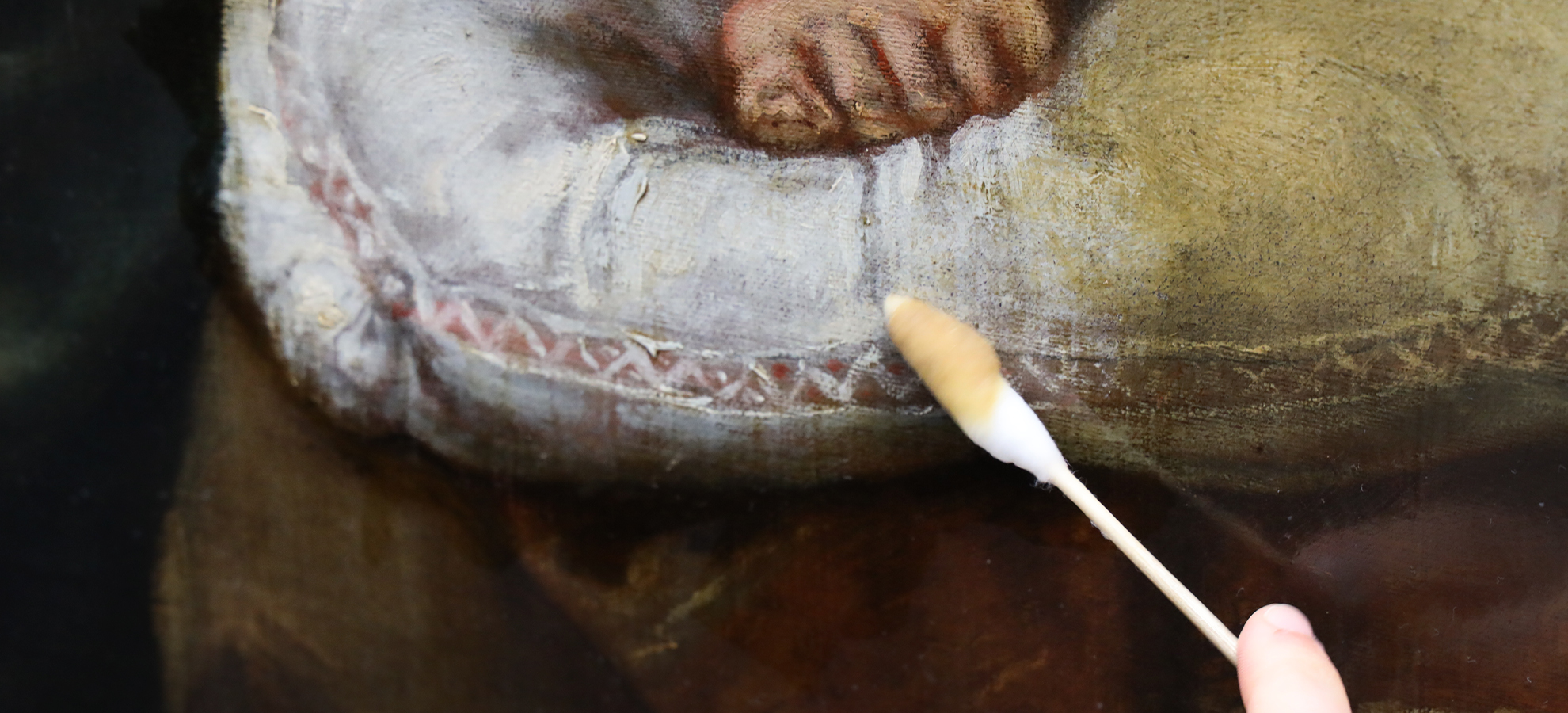 Above: a close up of the varnish removal treatment
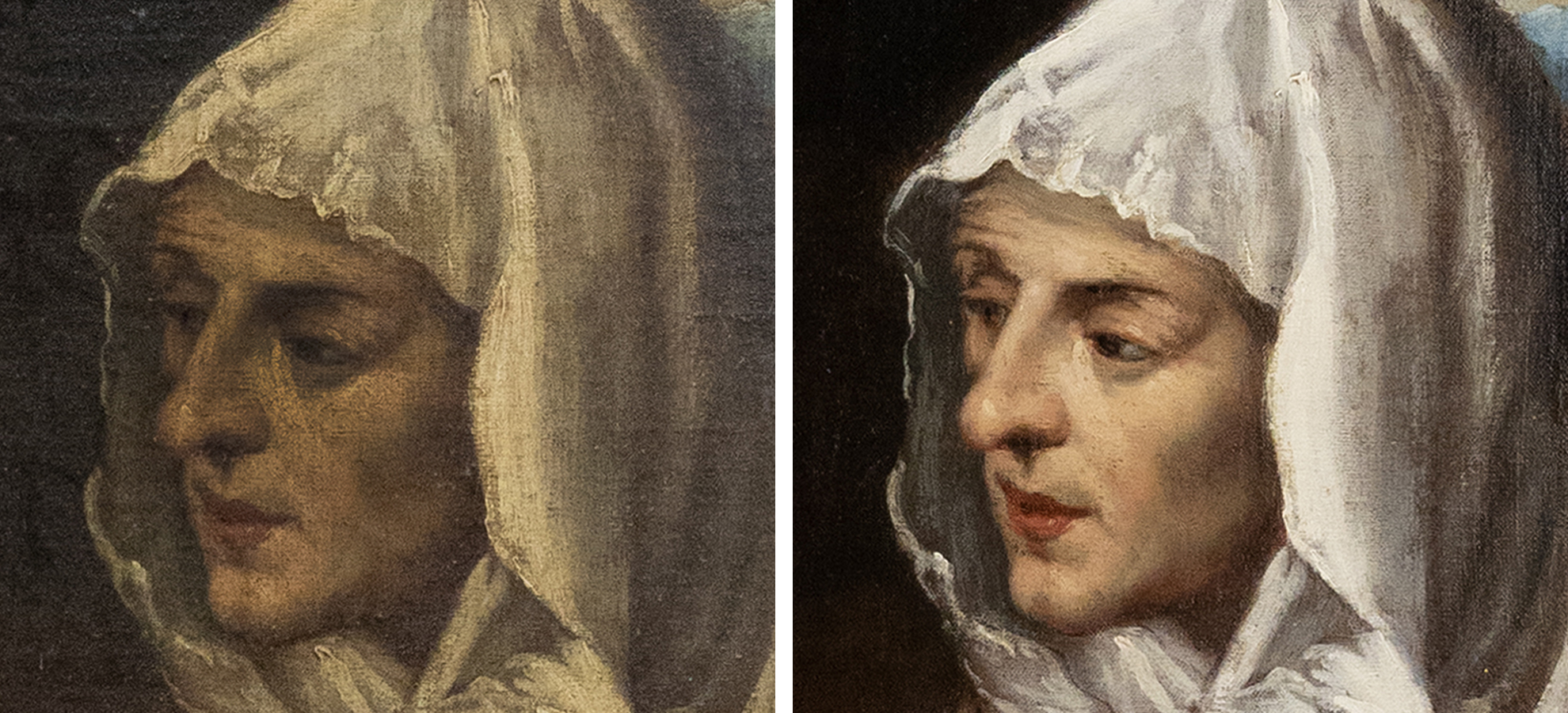
As the discoloured coating was gradually reduced, the painting began to reveal its former richness. Previously muted colours gained definition, delicate modelling emerged and details within the figures’ faces, clothing and surrounding landscape became increasingly legible.
The objective was not simply to brighten the image, but to recover its tonal relationships while protecting vulnerable glazes, fine brushwork and surviving original paint.
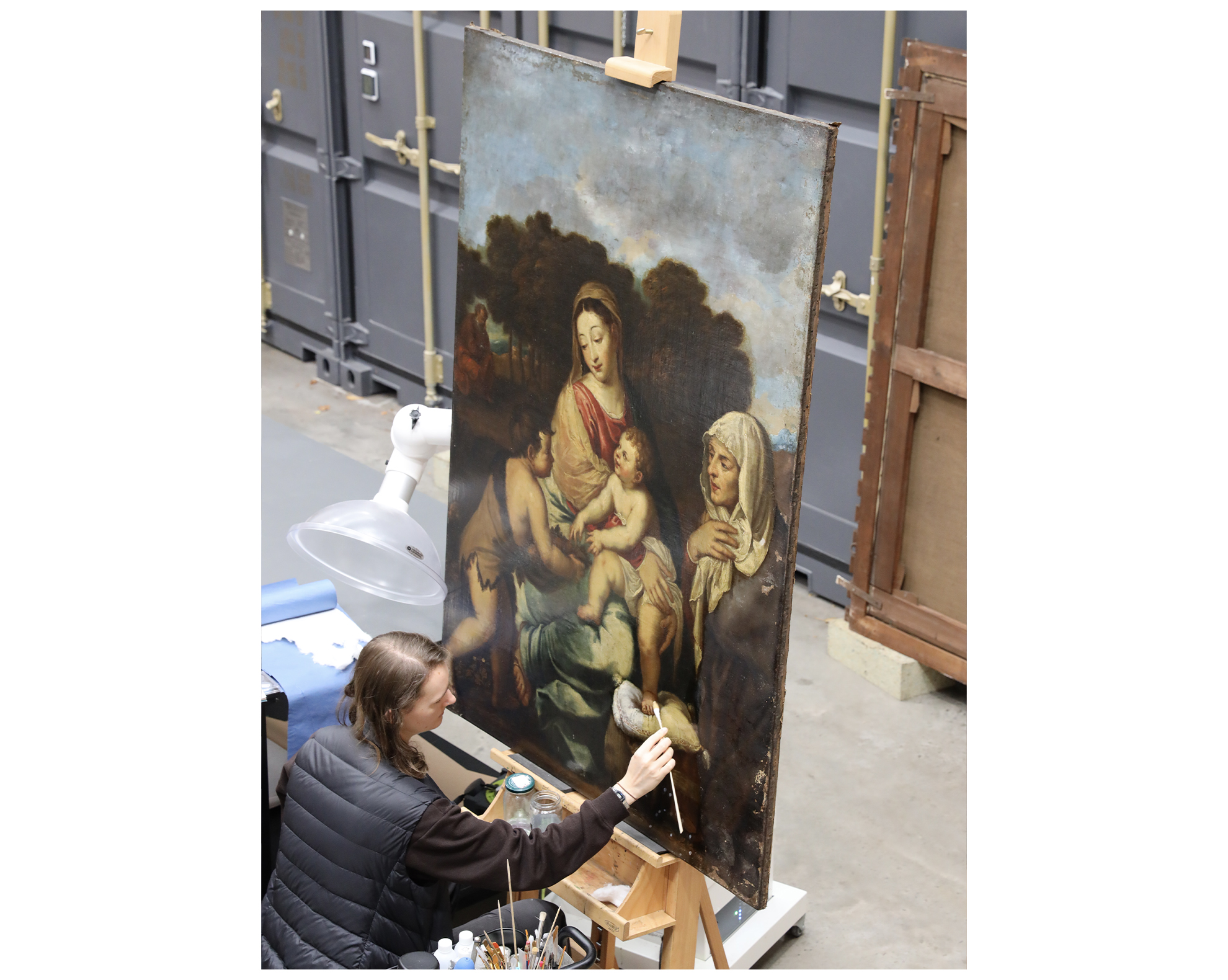
Unravelling Earlier Restoration
One of the most technically demanding aspects of the project involved addressing historic overpainting. At some point in the painting’s history, a substantial band of later paint had been introduced around the sky, likely to conceal earlier damage or compensate for losses. Although originally intended to improve the composition, this intervention had become discoloured and increasingly conspicuous.
Removing overpainting presents a different challenge from reducing varnish. Later paint may sit directly against original material, overlap surviving details or occupy areas where the original paint has been lost. Its composition and solubility can also differ considerably from the layers beneath.
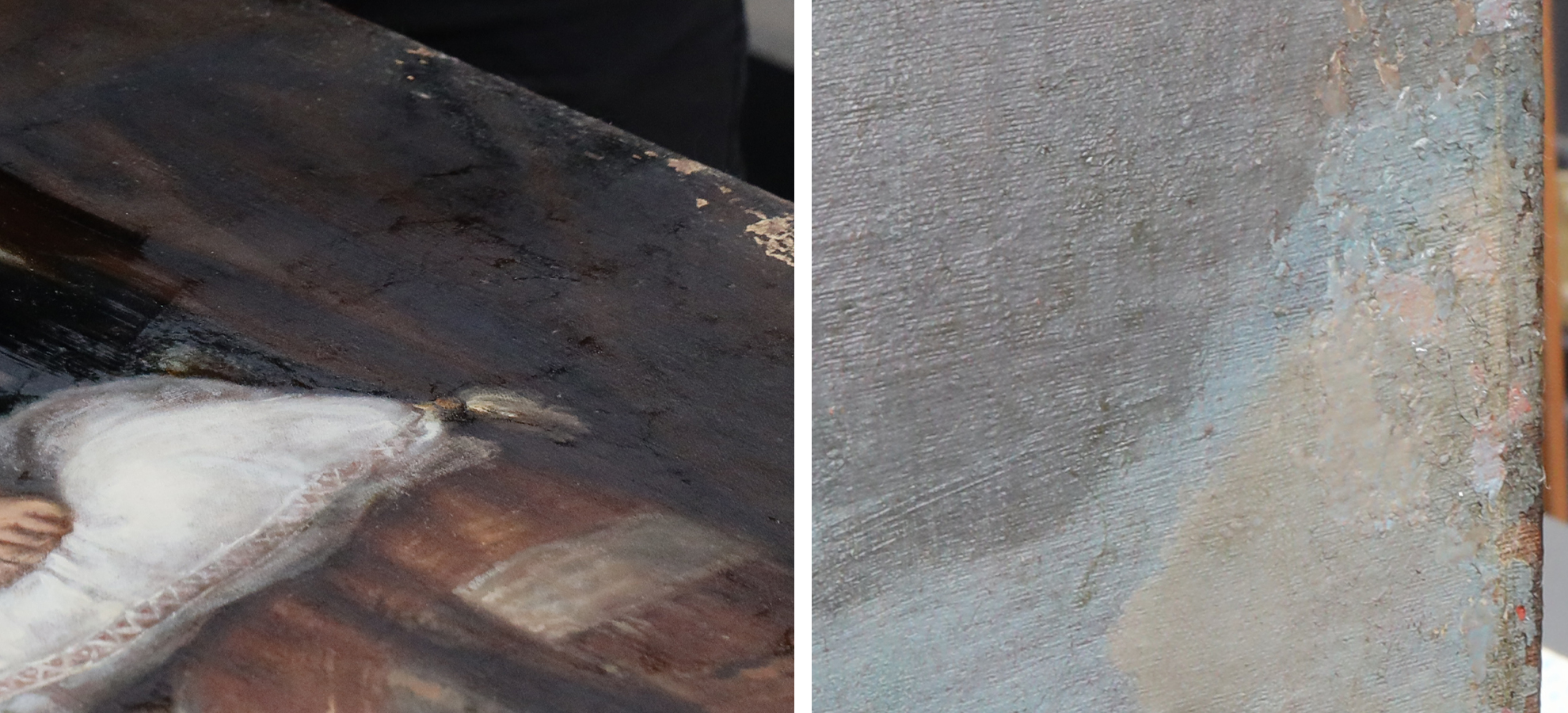
Anna therefore needed to establish where the later intervention began and ended, how it responded to treatment and whether it could be reduced without disturbing the original surface.
Working cautiously, she reduced the discoloured overpainting where appropriate, continually assessing its relationship with the surviving composition.
Earlier restoration had also left areas of abrasion, uneven texture and historic paint loss. Some original material had been permanently lost, requiring sensitive image reintegration rather than extensive reconstruction.
Above, you can see losses around the bottom edge of the painting where this over-paint had been. For ethical reasons, Anna coats the clean painting with a preliminary coat of varnish to allow her retouching to sit separately from the original artwork.
Using conservation-appropriate materials, Anna carefully retouched areas of loss and abrasion, reducing visual disruption while respecting the boundaries of the surviving original paint.
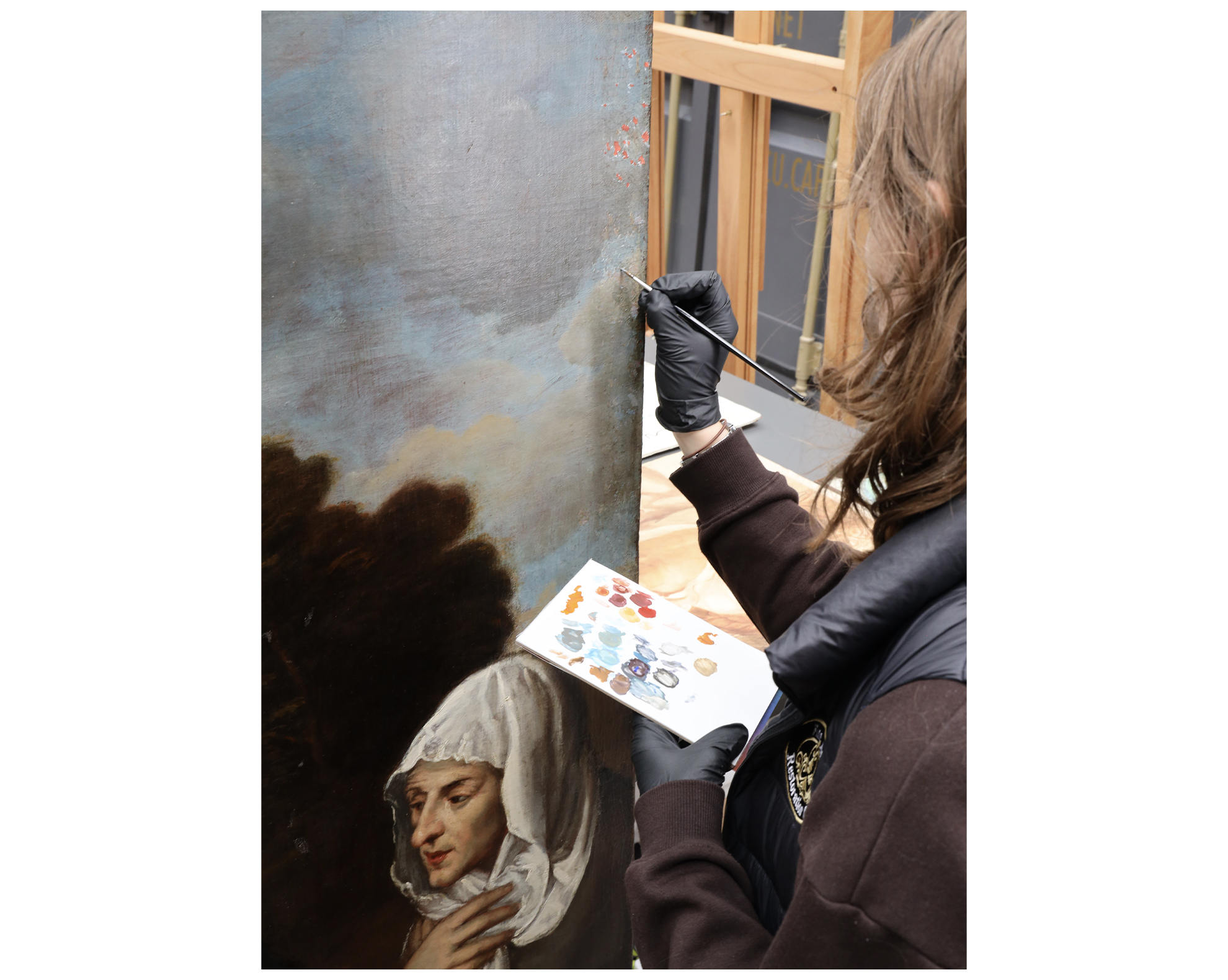
The aim was to restore continuity to the composition, allowing the viewer’s eye to move naturally across the image without being repeatedly drawn towards historic damage or previous repairs.
This distinction is central to conservation: the objective is not to make an old painting appear newly painted, but to recover its visual coherence while retaining its material authenticity.
Re-establishing Depth & Surface Harmony
Following cleaning and image reintegration, a fresh conservation-grade varnish was applied to provide a consistent surface finish and restore optical unity across the composition.
Varnish influences how light interacts with a painting, affecting colour saturation, the depth of darker passages and the appearance of subtle tonal transitions.
With the heavily discoloured earlier coating reduced, the new varnish helped bring these relationships back into balance. It also incorporated UV protection, providing an additional measure of protection for the painted surface.
The historic frame also required attention, with accumulated dust and vulnerable decorative elements assessed for careful cleaning and consolidation.
Together, these treatments addressed both the painting’s appearance and its underlying vulnerabilities, helping preserve the surviving original material.
Recovering History
Beyond its conservation, the painting offers a fascinating insight into the artistic exchanges of Renaissance Europe. Its rich colours, expressive figures and flowing drapery recall the Venetian School, particularly Titian and Polidoro da Lanciano. A remarkably similar painting in the Malaspina Art Gallery in Pavia, Italy, has been linked to the Cremonese School, offering a possible clue to the work’s origins.
Both compositions show connections to Raphael’s celebrated Madonna of the Pearl (1518), now in Madrid’s Museo del Prado. Raphael’s masterpiece has its own remarkable history. Acquired by King Charles I in 1627, it formed part of the English royal collection until his execution in 1649, when his paintings were dispersed and sold. The work subsequently entered the Spanish royal collection.
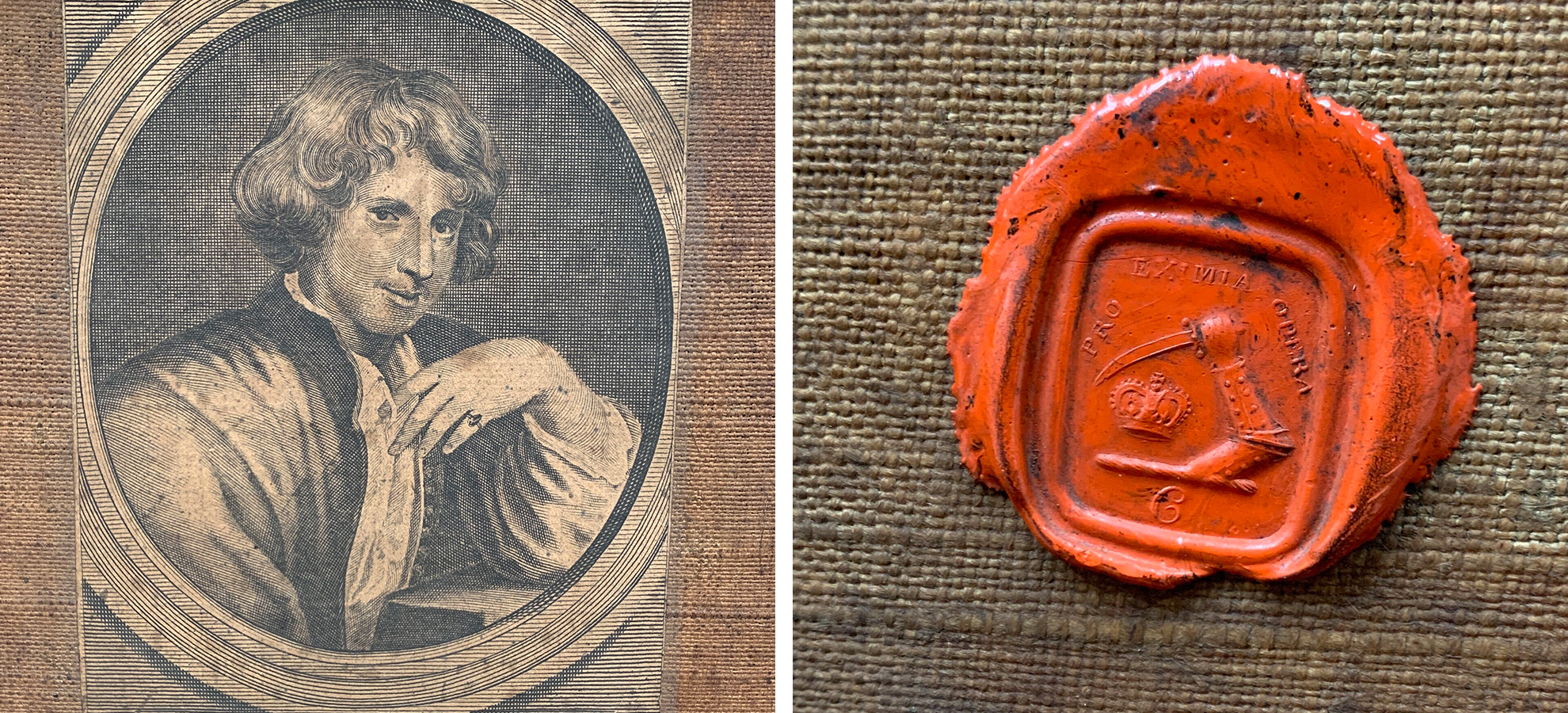
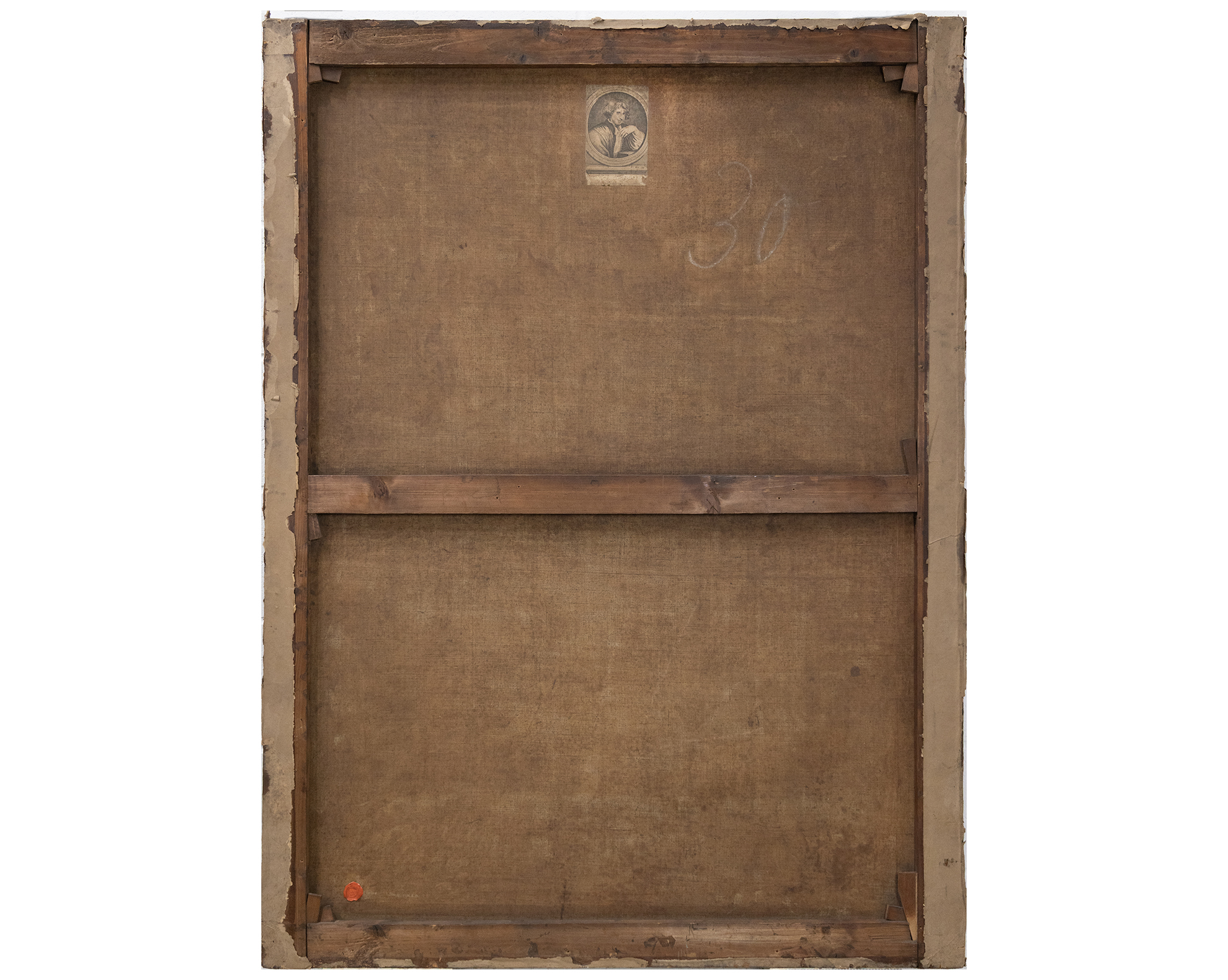
Unexpected discoveries on the reverse of the St Bartholomew painting add another intriguing dimension to its history. They include an engraved portrait of Sir Anthony van Dyck, Charles I’s court painter, bearing the name of Flemish engraver Michael van der Gucht (1660–1725), alongside a red wax seal featuring a crown and emblem. Although their precise significance remains unknown, both discoveries may offer valuable clues to the painting’s previous ownership and provenance.
While the artist remains unidentified, these connections reveal how compositions, artistic influences and objects travelled across Europe, with traces of that history surviving today within one of London’s oldest churches.
A Remarkable Transformation
The difference following conservation has been wonderful to see. With the heavily yellowed varnish reduced, the painting’s rich colours, delicate details and expressive figures can once again be appreciated.
The gentle interactions between the Virgin Mary, Christ, Saint John and Saint Elizabeth have regained much of their clarity, bringing renewed warmth and depth to the family scene.
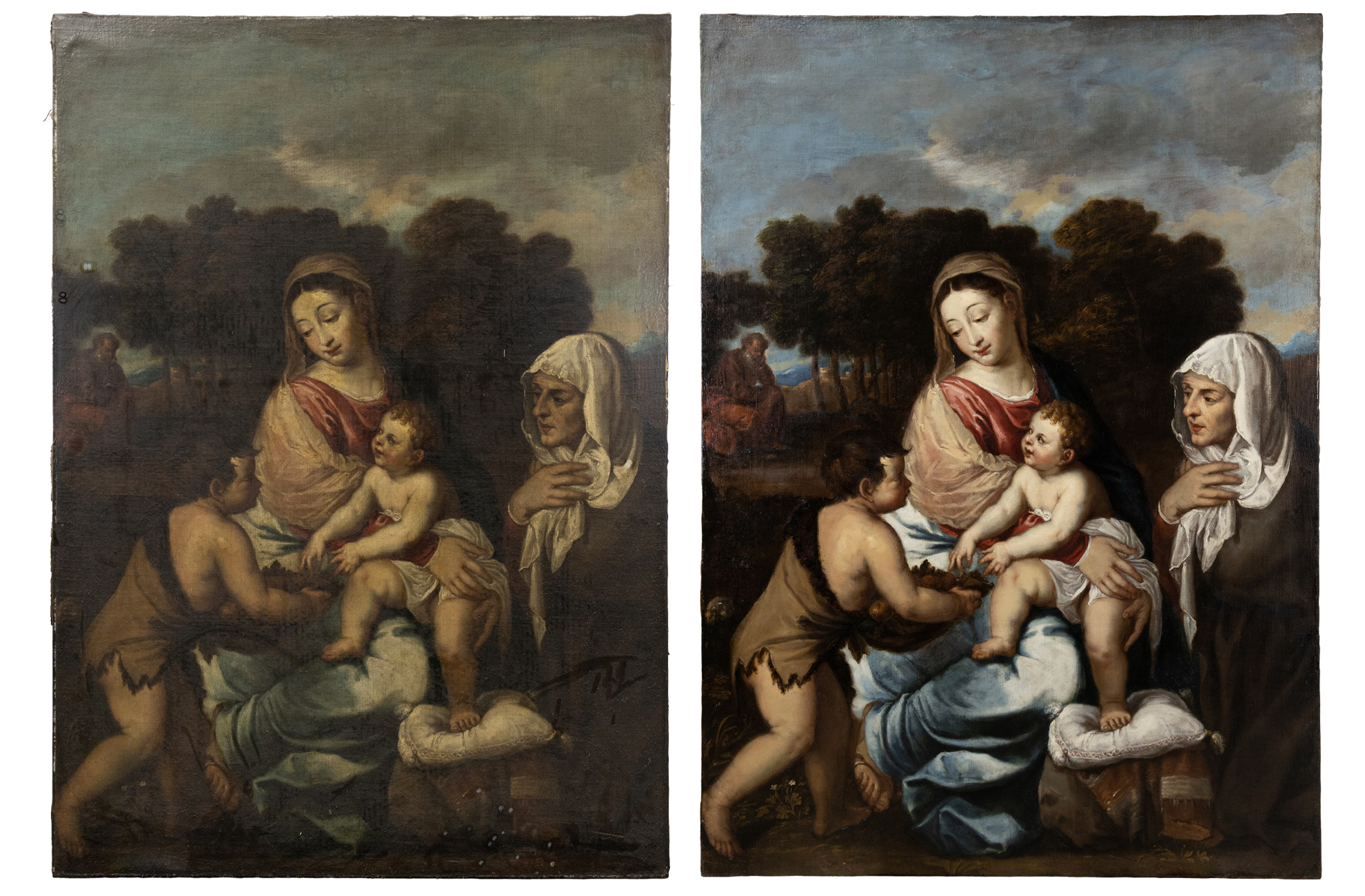
Beyond this visual transformation, treatment has addressed areas of instability, historic damage and previous restoration, helping to preserve the painting’s surviving original material.
The results have been warmly received by the church, whose representative responded with a particularly lovely message: “I am truly impressed, all I can say is, WOW!”
Caring for Historic Church Collections
For more than 900 years, St Bartholomew the Great has been a place of worship, with its artworks forming an important part of the church’s spiritual and cultural heritage.
Across the UK, historic churches care for diverse collections spanning centuries, often within buildings that were never designed to provide modern museum conditions. Fluctuating temperatures, humidity, dust, candle deposits and earlier repairs can all contribute to deterioration.
The conservation of The Holy Family demonstrates how specialist knowledge, careful investigation and sensitive treatment can help churches preserve their artistic heritage while continuing to function as living places of worship.
About Fine Art Restoration Company
Fine Art Restoration Company supports churches, cathedrals and historic religious institutions in the care and preservation of their artistic collections.
Our specialist conservators provide condition assessments, conservation advice and restoration services for paintings, historic frames, sculptures, decorative objects and other significant works of art.
Contact our team to arrange a specialist assessment or discuss how we can help protect your artwork.