 WhatsApp us
Artworks on paper can change considerably with age. Exposure to acidic framing materials, moisture, pollutants and other contaminants can gradually alter the paper, leaving brown stains and widespread discolouration that may eventually begin to overwhelm the image itself.
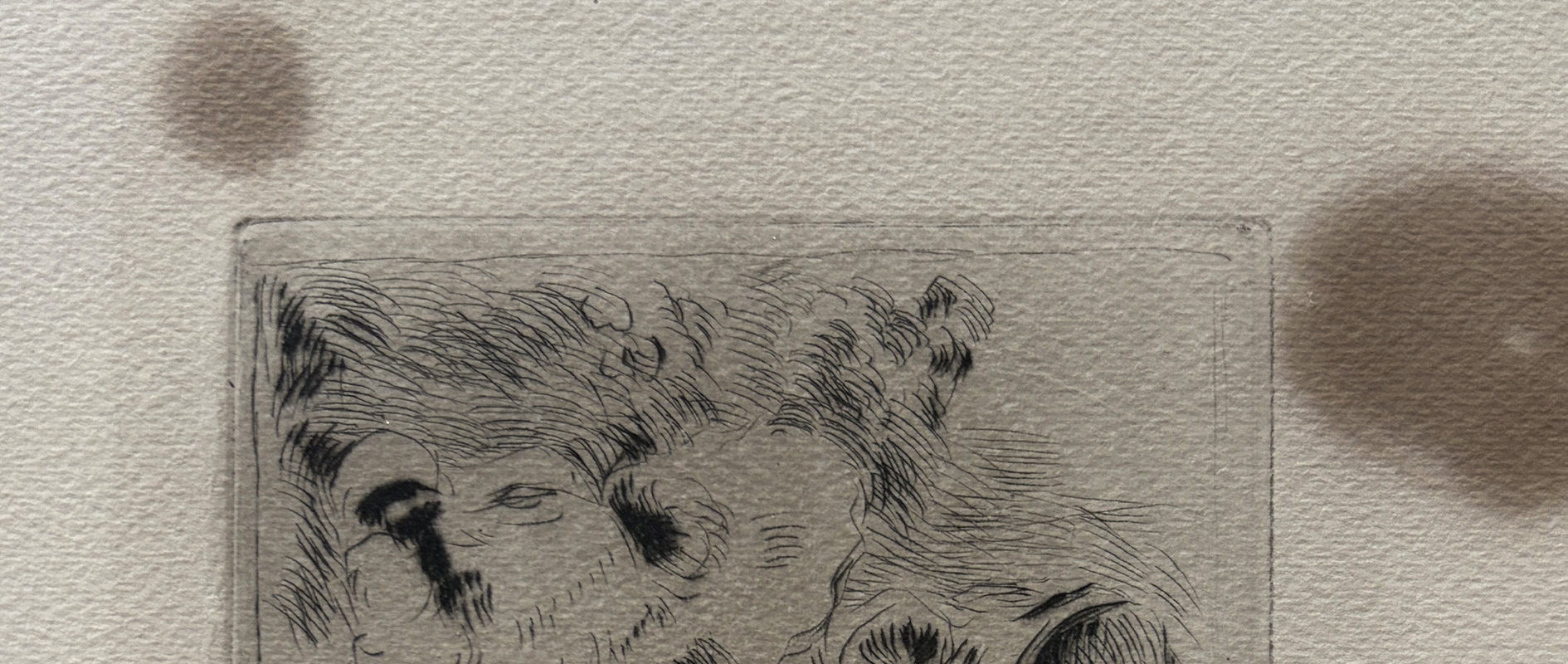
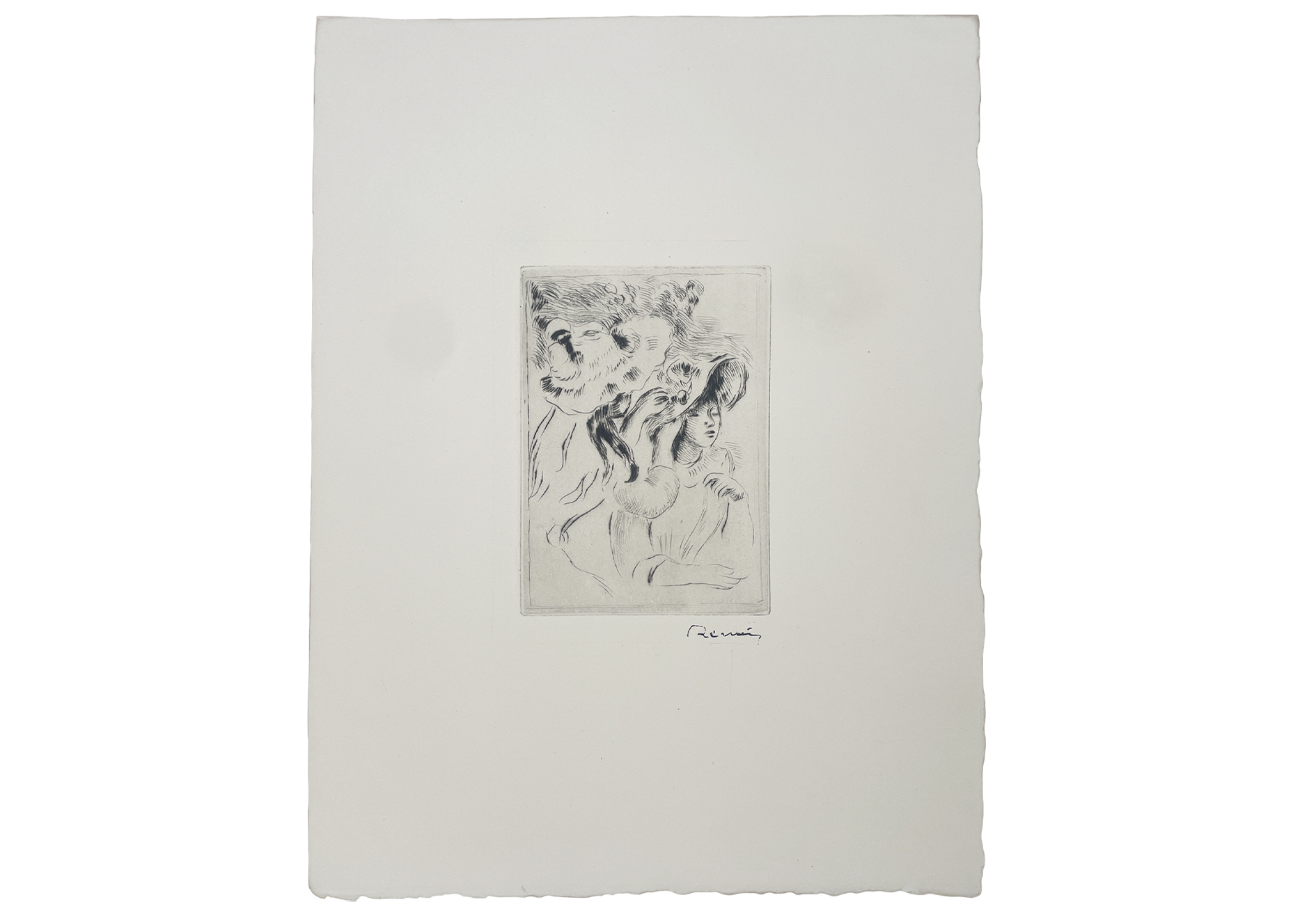
This was the case with an etching by Pierre-Auguste Renoir (1841-1919). When the print arrived with our conservator, two prominent brown marks stood out against the sheet. There was also widespread paper discolouration dulling the composition and distracting from Renoir’s delicate linework.
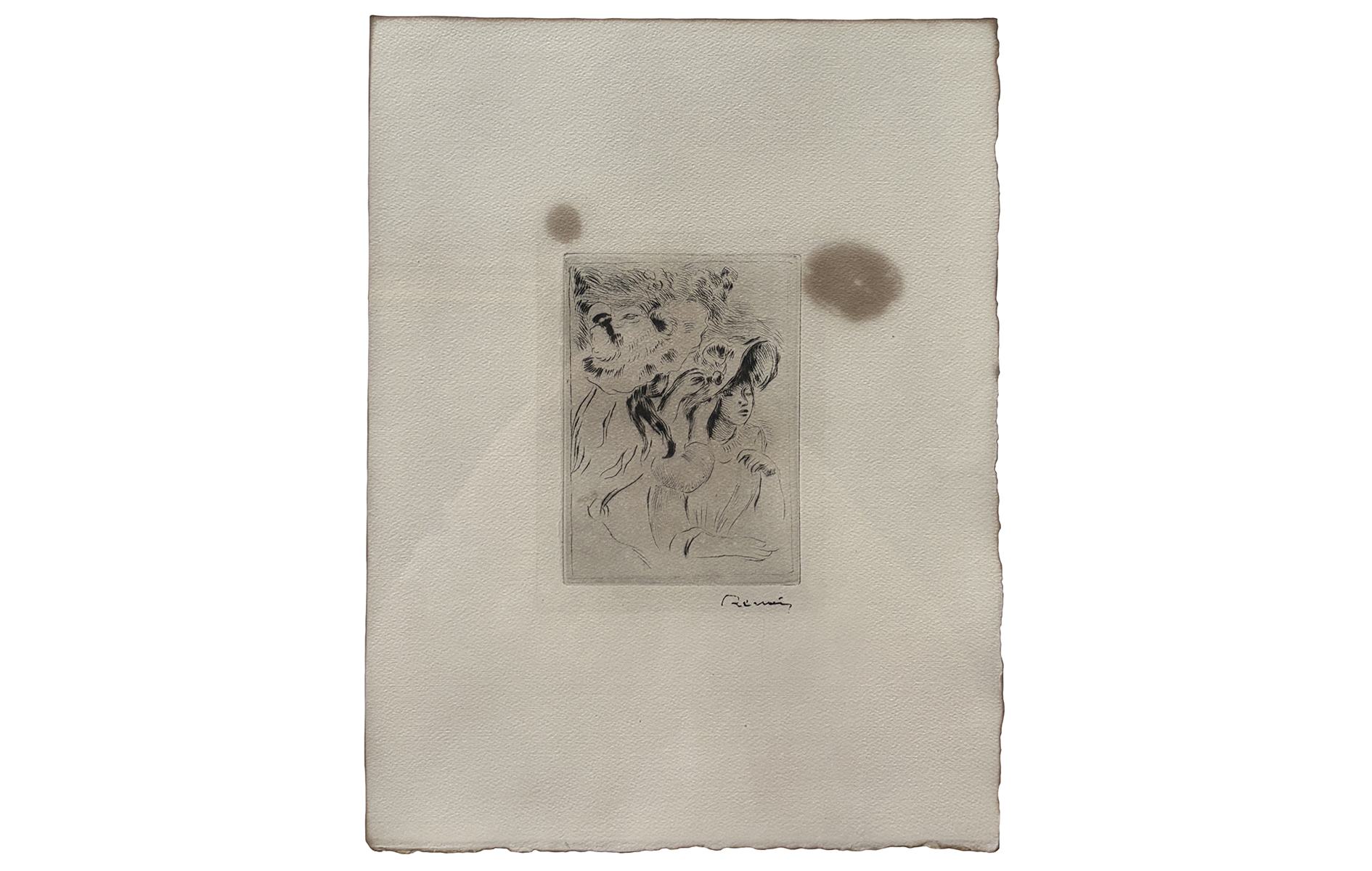
Before treatment could begin, our conservator needed to understand how the staining would respond and, importantly, how safely it could be reduced. Following assessment and controlled testing, the results were encouraging, allowing a programme of cleaning, washing and targeted stain reduction to begin.

If you have an etching, engraving, lithograph or other work on paper affected by staining or discolouration, our paper conservators can assess its condition and advise on the possibilities for restoration. Contact our team by filling out the form at the end of this page or email info@fineart-restoration.co.uk for more information and a free estimate.
The Story Behind Renoir’s Etching
By the time Renoir turned to printmaking, he was already firmly established as one of the leading figures of French Impressionism. Celebrated for his luminous paintings of Parisian leisure, landscapes and the human figure, he began making prints as he approached 50. Between around 1890 and 1908, he produced approximately 60, exploring printmaking alongside his painting and drawing.
Le chapeau épinglé (The Pinned Hat) captures a charming moment of friendship and girlhood. Julie Manet, daughter of Impressionist Berthe Morisot and Eugène Manet, is shown pinning flowers to the broad-brimmed hat of her cousin Paulette.
Set within the fashionable world of Impressionist Paris, the scene also touches on something familiar in childhood: the desire to dress up and imitate the grown-up world. As Julie carefully adjusts Paulette’s elaborate hat, the girls appear to be experimenting with the fashions and femininity of the women around them.
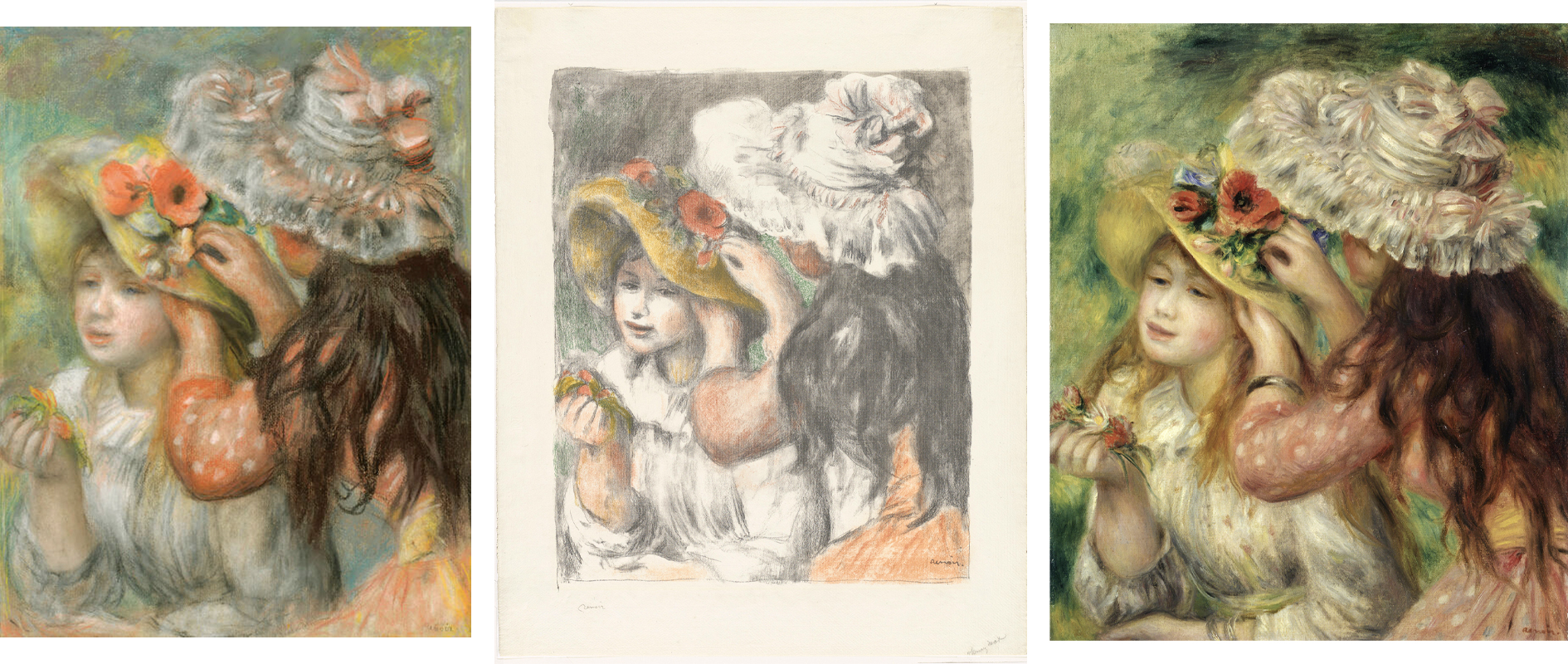
This everyday moment fitted naturally with the Impressionists’ interest in modern life, while giving the scene a quality that remains recognisable today. Renoir evidently found the subject compelling, returning to it in pastel, oil, etching and lithography. Above, you can see the same composition in pastel, lithograph and oil paint.
The print restored by our conservator dates from around 1894 and combines etching and drypoint on wove paper. In etching, acid is used to bite drawn lines into a prepared metal plate, while drypoint involves drawing directly into the metal with a sharp tool to create softer, richer marks. Together, the techniques gave Renoir a loose, sketch-like quality particularly suited to this informal scene.
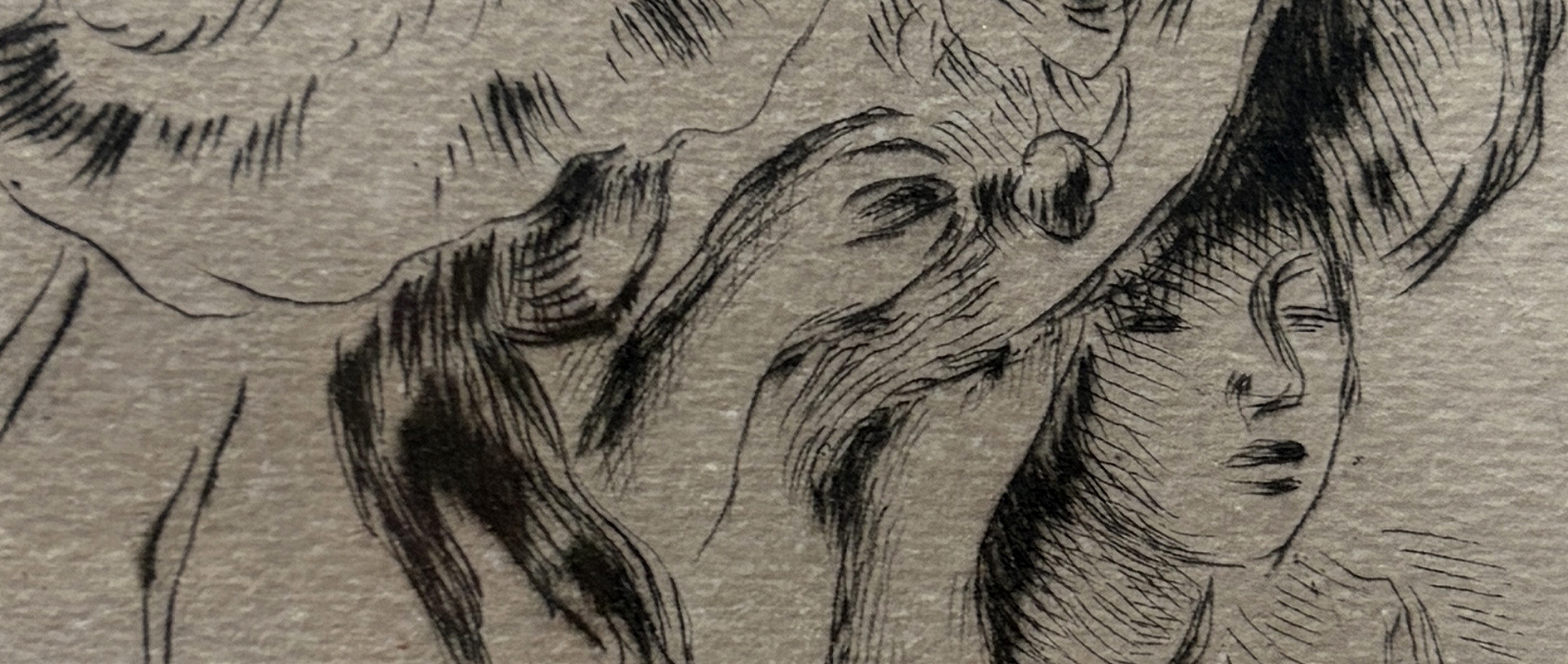
The composition depends upon the contrast between these fine lines and the open areas of paper around them. As a result, the dark brown stains and overall discolouration had become especially noticeable, competing with the image and drawing attention away from the youthful scene at its centre.
Investigating the Brown Stains
Before attempting to reduce a stain, it is important to understand both its possible cause and how the paper and printed media will respond to treatment. Brown marks can result from oils, moisture, atmospheric contaminants and prolonged contact with acidic materials.
Older mounts and backboards are a particularly common concern. Over decades, acids within unsuitable framing materials can migrate into the artwork, contributing to yellowing and brown discolouration and, over time, potentially weakening the paper fibres themselves.
In this case, the nature of the two darker marks was initially uncertain. If they were grease-based, they could prove particularly resistant to treatment. Our paper conservator therefore carried out small, controlled tests using carefully selected conservation solutions before recommending a full treatment.
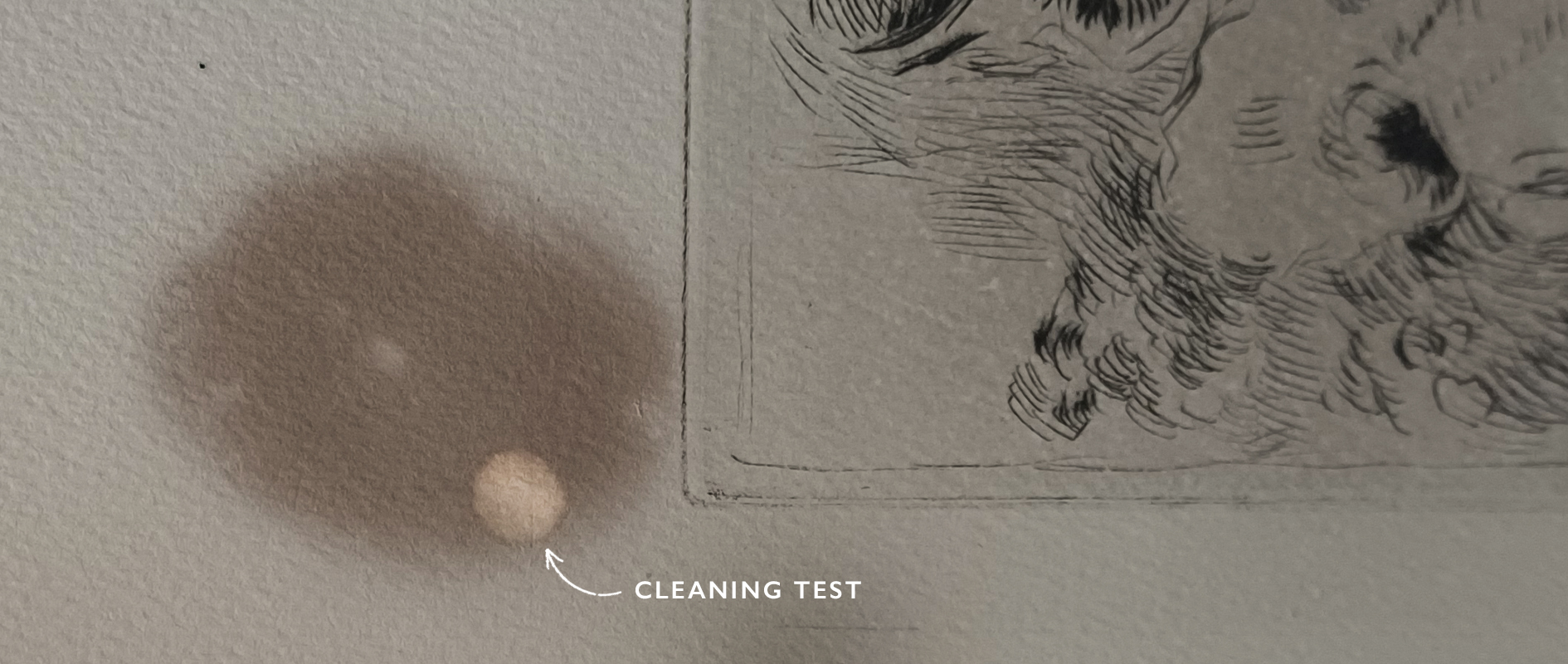
Encouragingly, the stains responded well. Testing demonstrated that a significant reduction could be achieved safely, giving our conservator confidence to proceed.
Restoring a Discoloured Print
Treatment began with careful surface cleaning to remove dirt and contaminants. The etching was then washed under controlled conditions to reduce the discolouration within the sheet, followed by targeted treatment of the more prominent brown stains.
Each stage was carried out gradually, allowing the conservator to monitor both the wove paper and Renoir’s printed lines throughout. Once treatment was complete, the sheet was carefully pressed and flattened.
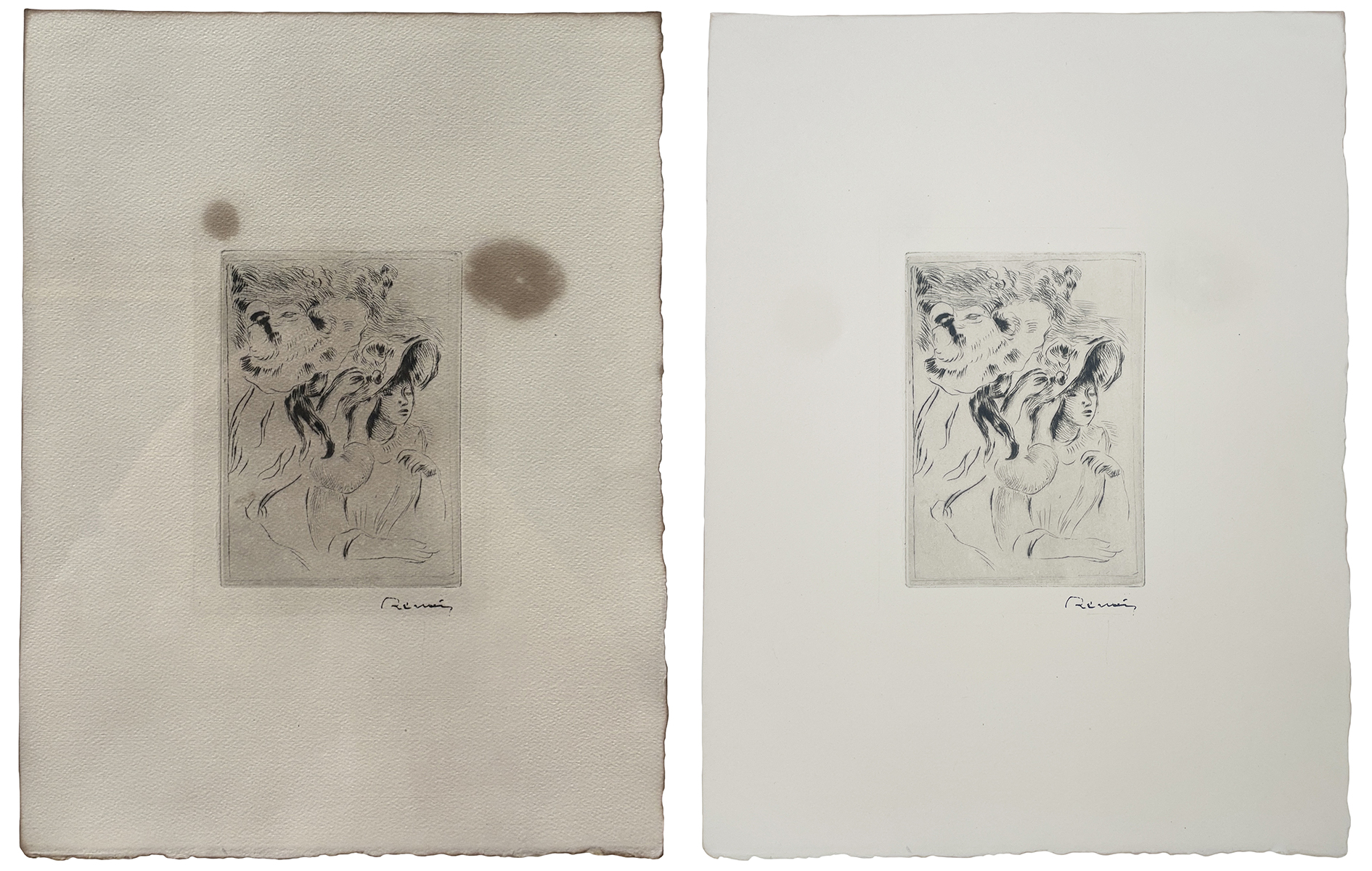
The improvement was significant. The brown marks were greatly reduced and the paper regained a cleaner, more even appearance. Upon seeing the result, our client remarked:
“I would like to take this opportunity to express my sincere appreciation for the restoration of my Renoir etching. The workmanship and professionalism demonstrated by you and your team have been truly exceptional.”
The intention was not to make a late 19th century print look artificially new, but to restore its visual balance. With the distracting stains diminished, Renoir’s delicate lines and the quiet interaction between Julie and Paulette could once again become the focus.
Protecting the Etching After Conservation
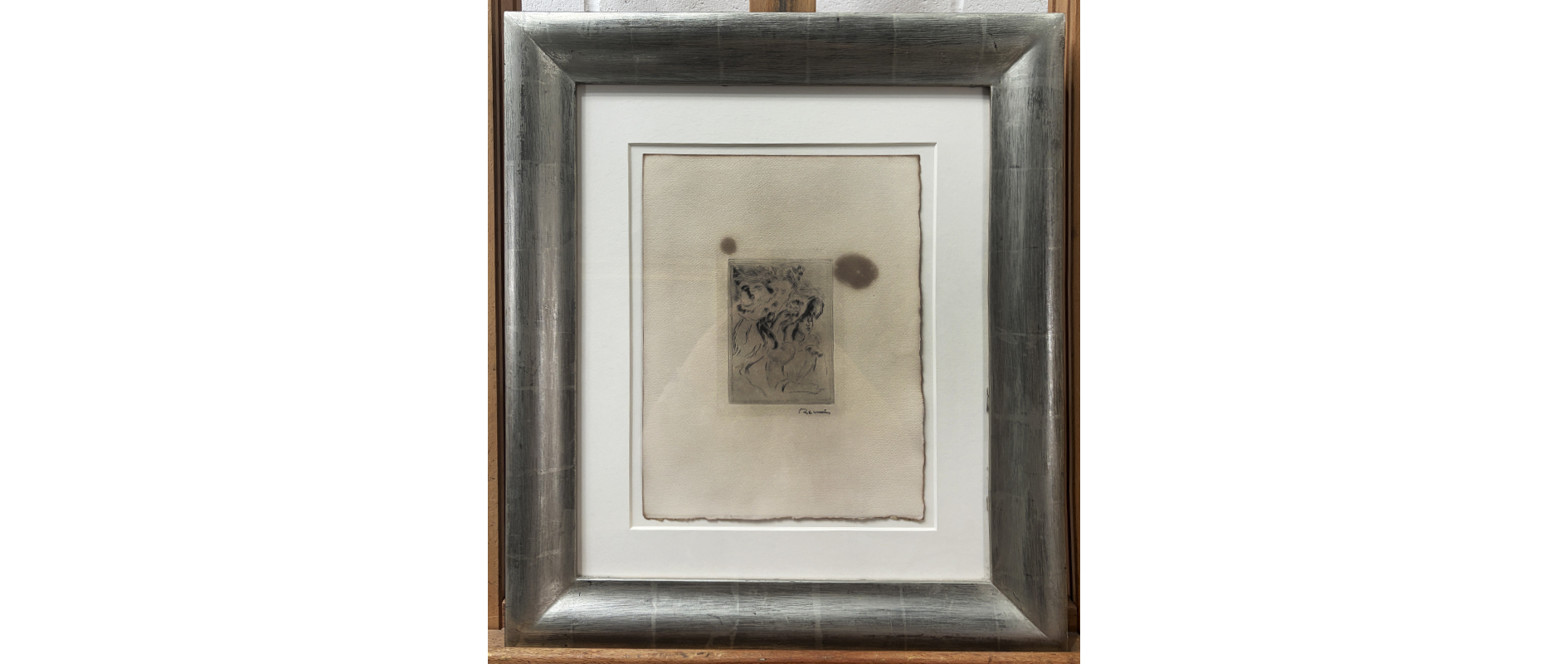
With treatment complete, attention turned to how the restored print would be protected in the future. The owner wished to retain the original frame, but the existing backboard presented an opportunity to improve the conservation materials immediately surrounding the artwork.
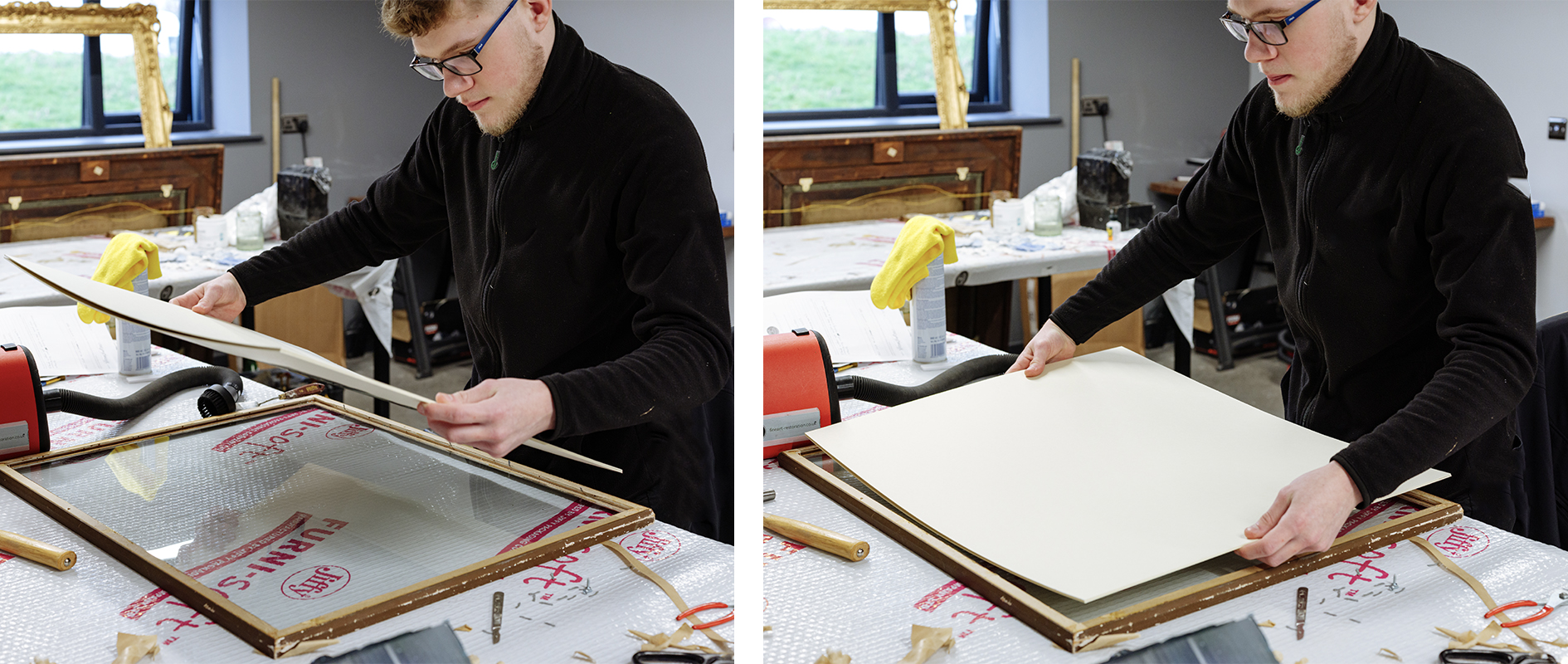
It was therefore replaced with a new acid-free conservation backboard, helping to protect the paper from future exposure to potentially harmful backing materials while allowing the original frame to be retained.
Expert Conservation for Antique Prints
Conserving a historic print requires an understanding of both the artwork and the materials from which it was made. The printmaking technique, paper, previous framing and causes of deterioration all help our conservators determine the most appropriate treatment.
Our paper conservation team works with etchings, engravings, lithographs and other historic prints, as well as modern and contemporary works on paper, treating issues including foxing, acidic deterioration, tears, creasing and discolouration.
Careful examination and testing can establish what may be causing the damage and how much of the artwork’s original appearance can be safely recovered.
If you have an antique or modern print showing signs of deterioration, contact our team for an initial assessment.
