WhatsApp us
Family portraits can become increasingly significant as they pass from one generation to the next.
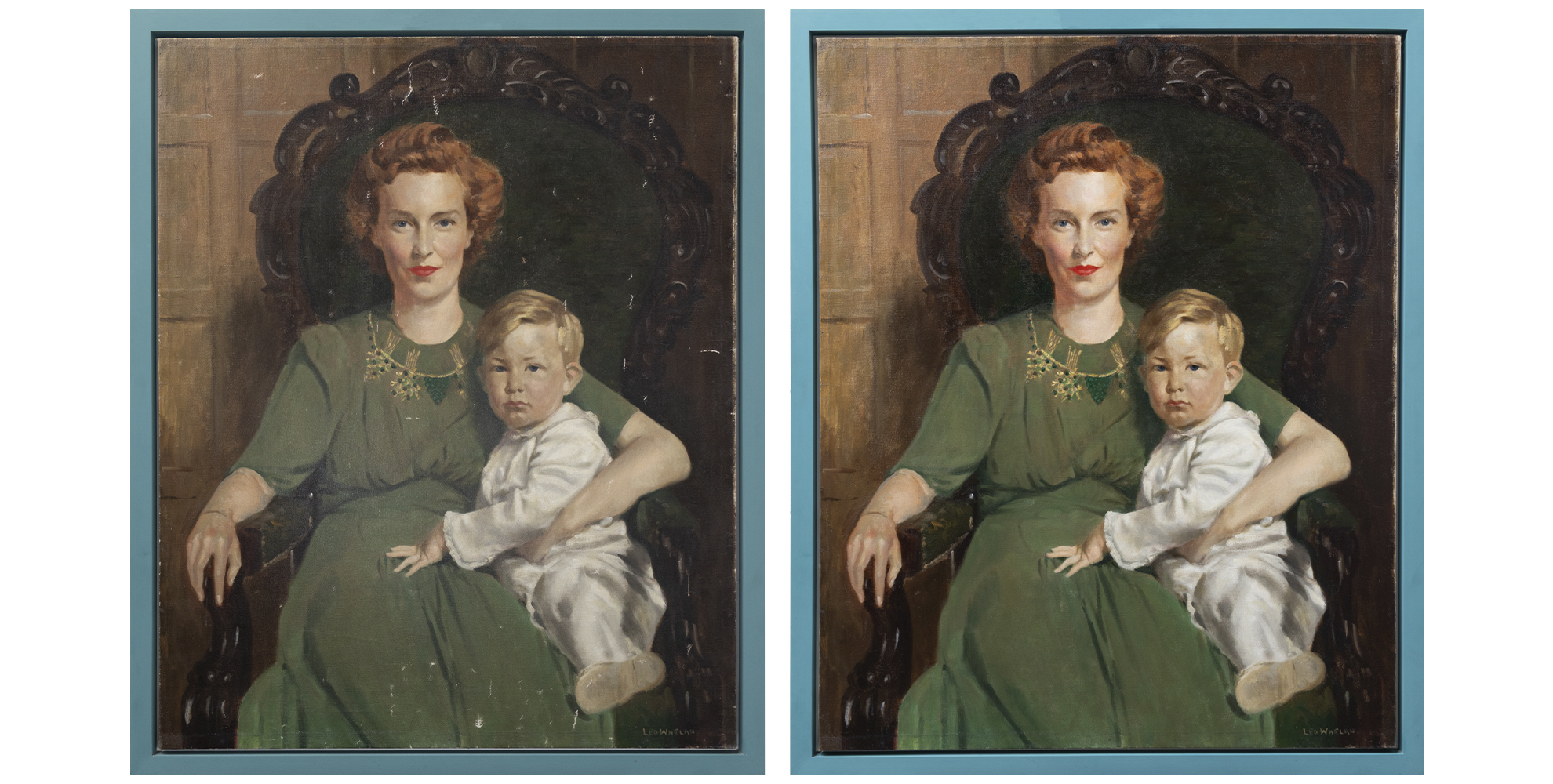
This early 20th century painting by Irish artist Leo Whelan RHA (1892–1956) depicts the owner’s father as a young boy with his grandmother, preserving a relationship that has since become an important part of the family’s history.
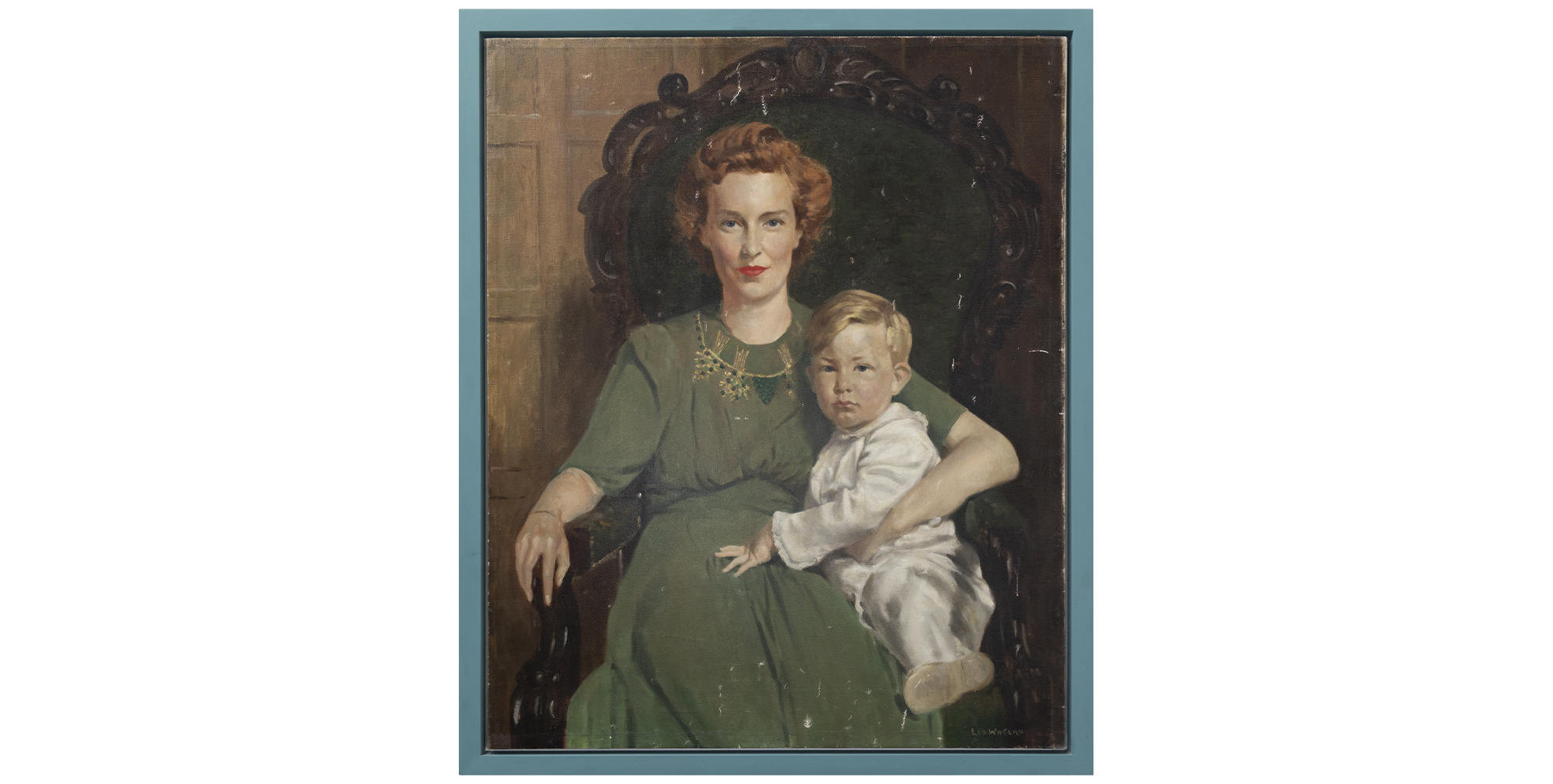
With plans for the portrait to eventually pass to his own children, its owner wanted to address the deterioration that had developed over time and ensure the painting was preserved for another generation.
This case study follows its restoration, exploring how expert conservation techniques were used to stabilise the original materials, recover obscured details and safeguard a treasured piece of family history.

If you have an inherited portrait or family painting showing signs of age or damage, contact our specialist team for specialist advice and an initial assessment by filling in the form at the end of this page or email info@fineart-restoration.co.uk
A Mother & Child by Leo Whelan
There is an intimacy to this portrait that softens its more formal qualities. A mother sits in an imposing carved chair with her young son tucked closely beside her, both meeting the viewer’s gaze. His bright white clothing stands out against the rich green of her dress and the darker background, while her jewellery, styled hair and vivid lipstick firmly place the portrait within the first half of the 20th century.
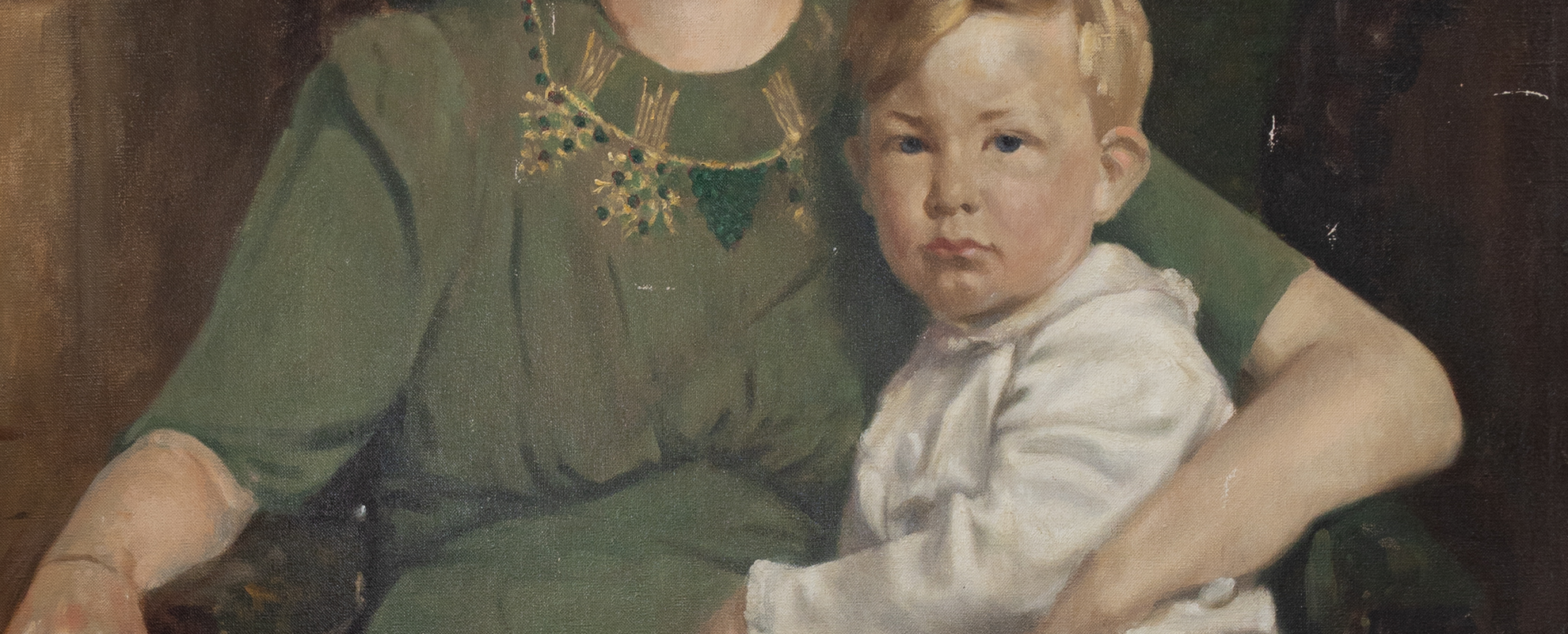
The closeness between the sitters gives the painting its warmth. The boy leans naturally against his mother as she holds him at her side – a small gesture that has taken on greater significance with time. To the current owner, they are his father and grandmother.
Their portrait was painted by Leo Whelan RHA (1892–1956), a Dublin-born artist who studied under William Orpen and became known for his skilled portraiture. Whelan exhibited nearly 250 works at the Royal Hibernian Academy and painted prominent figures in modern Irish history.
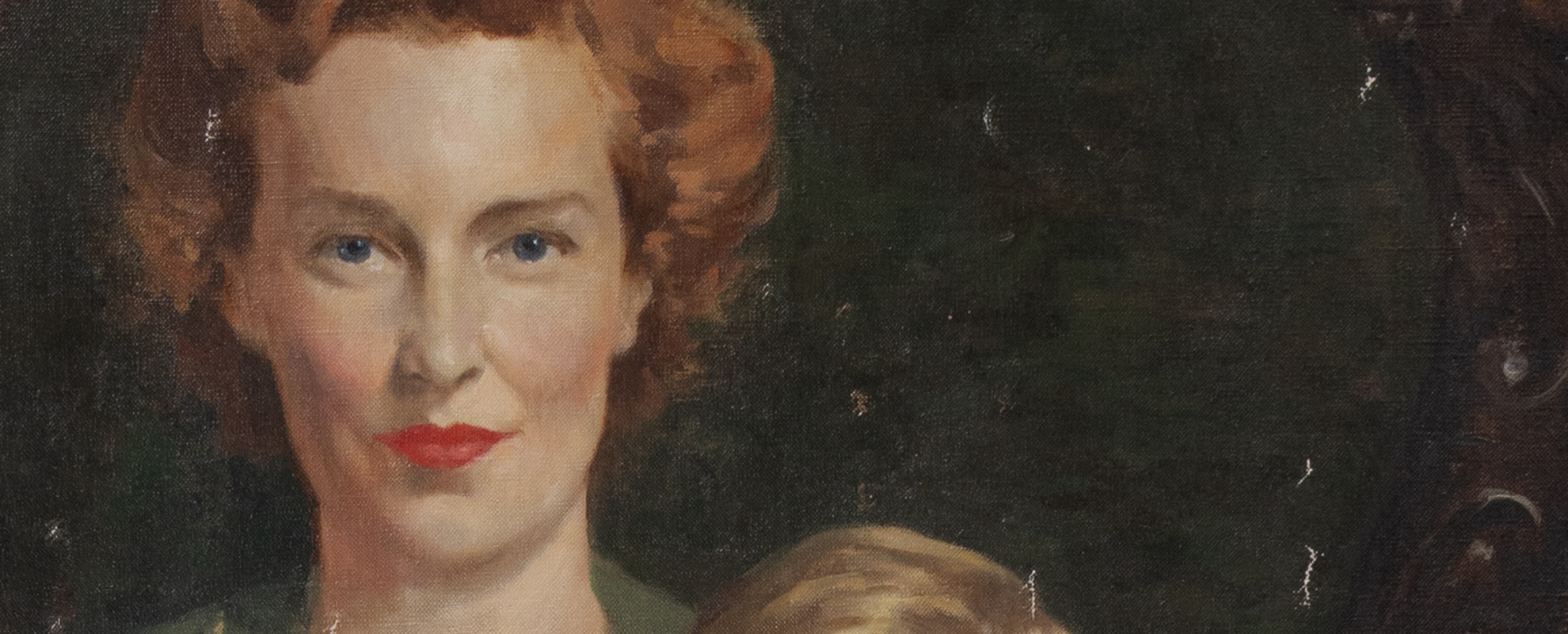
While many of Whelan’s sitters belonged to public life, this painting represents something altogether more private. What began as a portrait of a mother and son has become a family heirloom, allowing their likeness and relationship to remain present for generations that follow.
Supporting the Next Generation of Conservators
This restoration was undertaken through our Junior Conservator Scheme, an option that allows suitable projects to be completed by qualified conservators who are at the beginning of their professional careers, working under the close supervision of our senior conservation team.
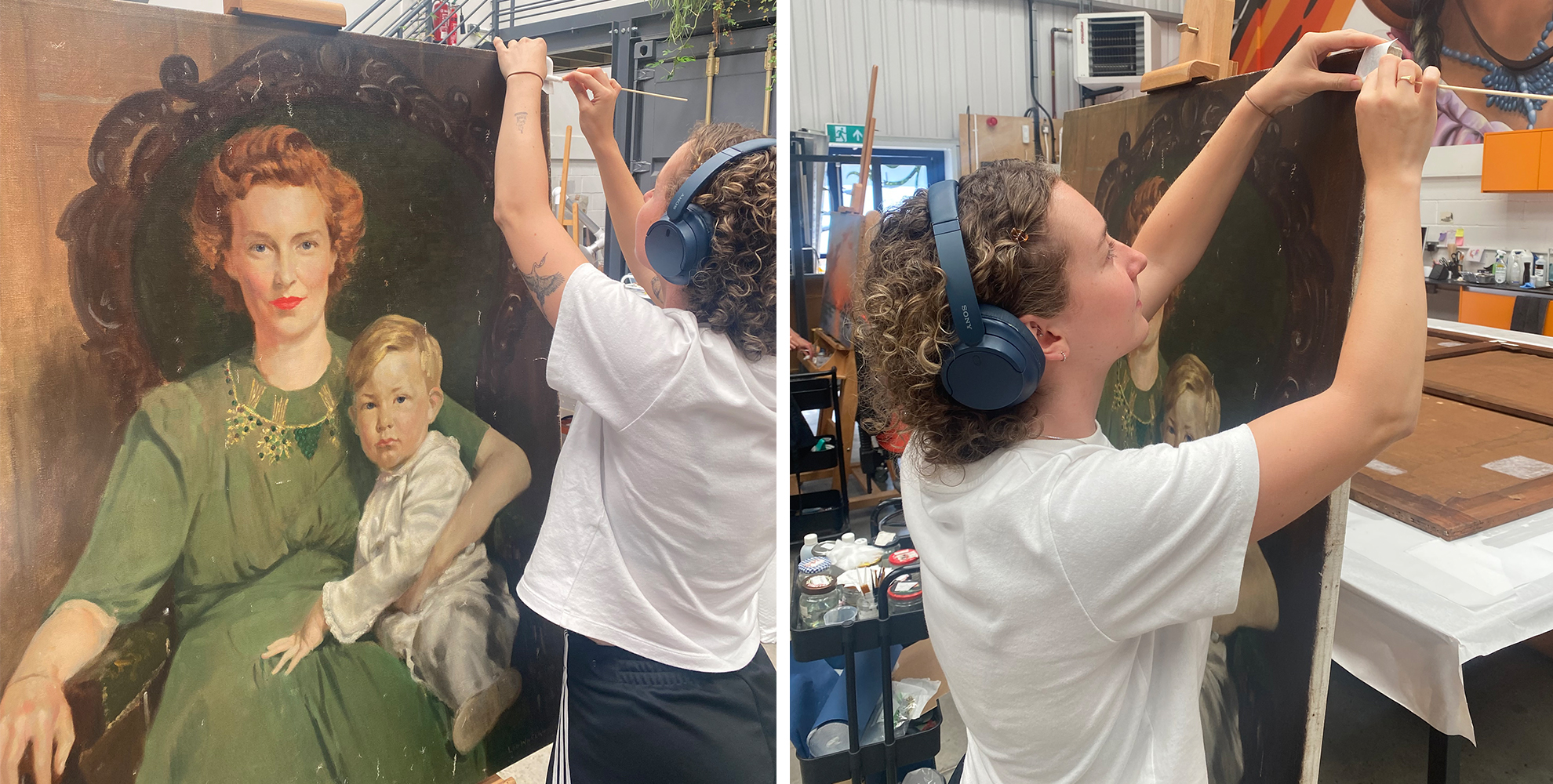
The same professional standards, conservation-grade materials and considered treatment methods apply throughout, with senior conservators overseeing testing, treatment decisions and progress. The scheme can offer clients a reduced rate, with treatments generally taking a little longer to allow for the additional supervision and careful pace of early-career practice.
For the owner of this portrait, whose priority was its long-term preservation rather than a particular completion date, the scheme was especially appropriate. It also offered the opportunity to support the development of the next generation of conservators while ensuring an important family heirloom received the specialist care it required.
Assessing the Portrait’s Condition
By the time the painting arrived at our studio, age and deterioration were beginning to distract from both Whelan’s composition and some of its finer details.
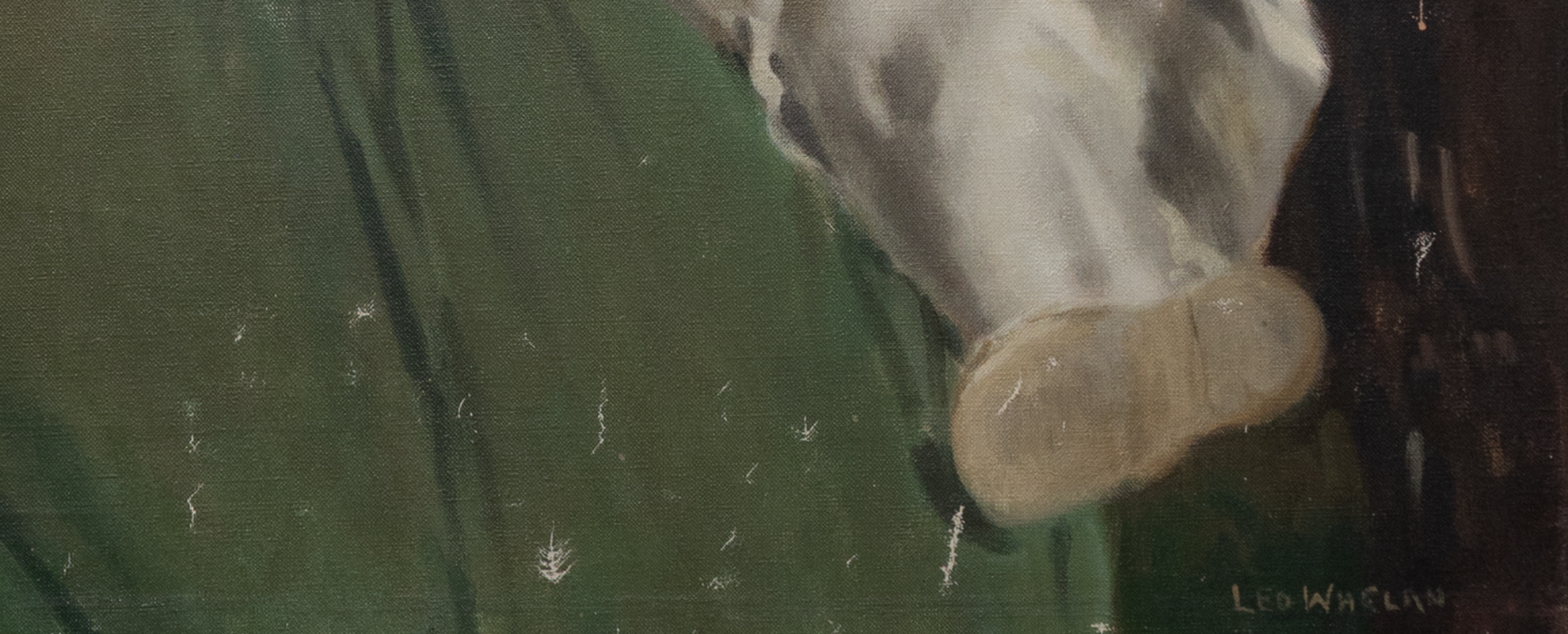
Numerous small areas of paint loss were visible across the canvas, many associated with slight creases that may have formed before the painting was originally stretched. Although the paint was not actively flaking, the areas surrounding these losses remained fragile and required consolidation before further treatment could safely begin.
A thin grey layer of accumulated surface dirt had also dulled the painting, reducing the contrast between the pale clothing, flesh tones and richer greens and darker colours surrounding the figures. The existing synthetic varnish had yellowed slightly with age, introducing a warmer cast across the composition and further altering the balance of the original palette.
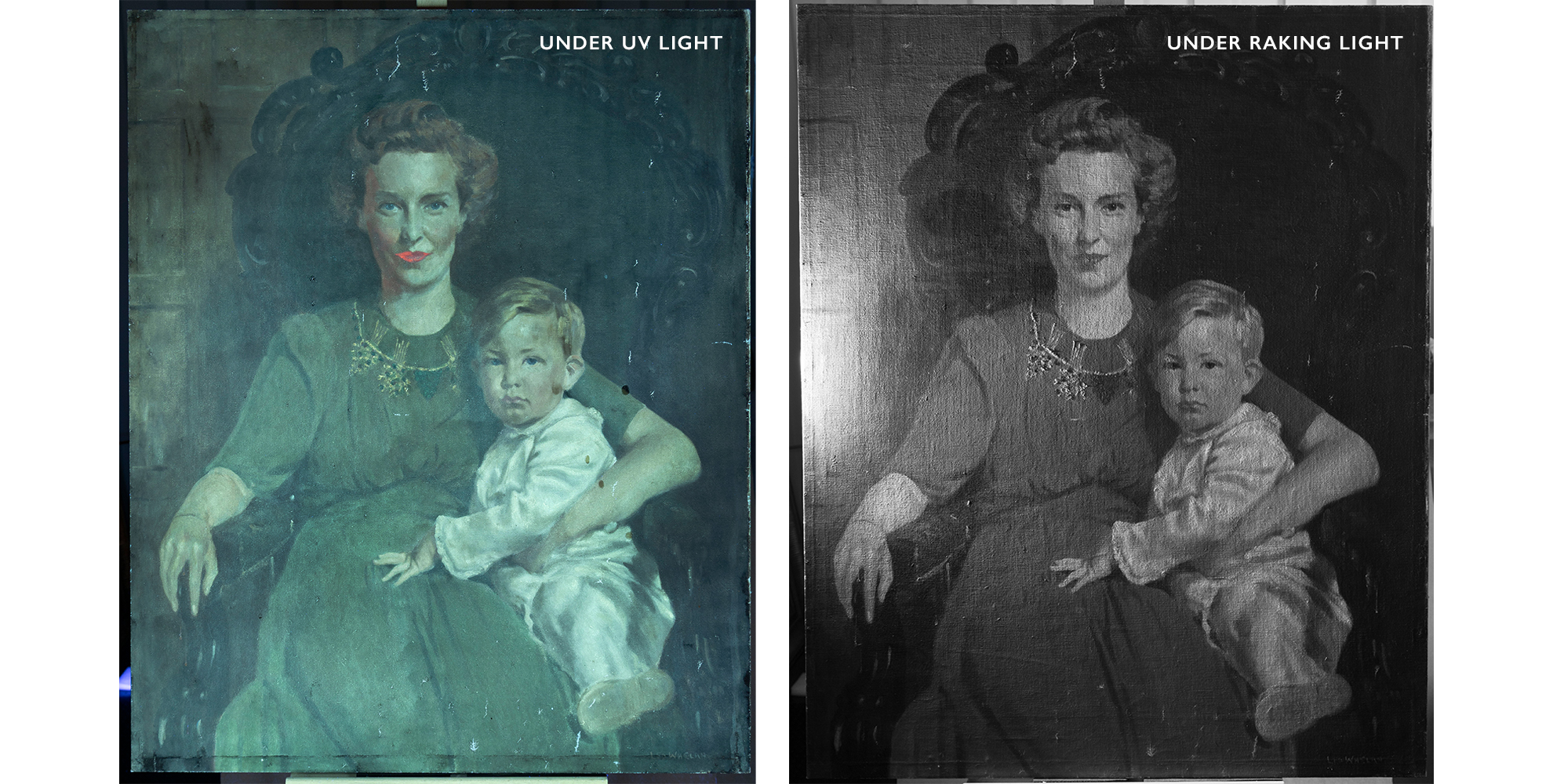
Importantly, the canvas itself retained good tension. This allowed our conservators to concentrate treatment on the vulnerable painted surface, cleaning and stabilising the original material before addressing the losses and abrasions that had become increasingly noticeable.
Cleaning & Stabilising the Painting
Before cleaning could begin, careful testing was carried out to establish how the original paint layers would respond to treatment. This was particularly important when approaching the synthetic varnish, allowing an appropriate solution to be selected without affecting the pigments beneath.
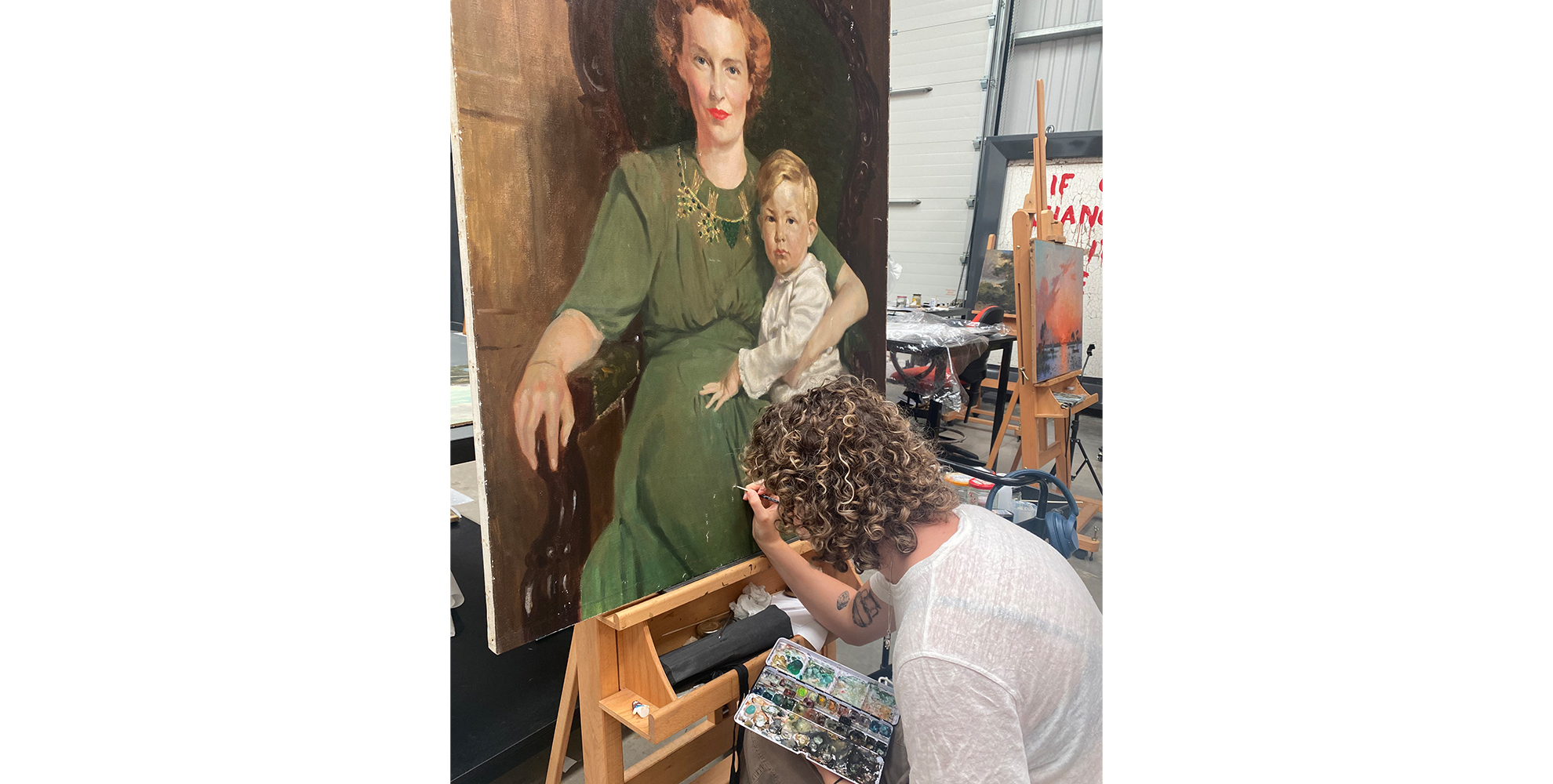
The fragile areas of paint were consolidated before the thin layer of accumulated surface dirt was removed. The aged varnish was then carefully removed, revealing a subtle but noticeable improvement to the colours beneath. An isolation varnish was subsequently applied, creating an important separation between the artist’s original paint and the restorative work that followed.
Once the painting had been stabilised and cleaned, attention turned to the numerous small losses visible across the composition.
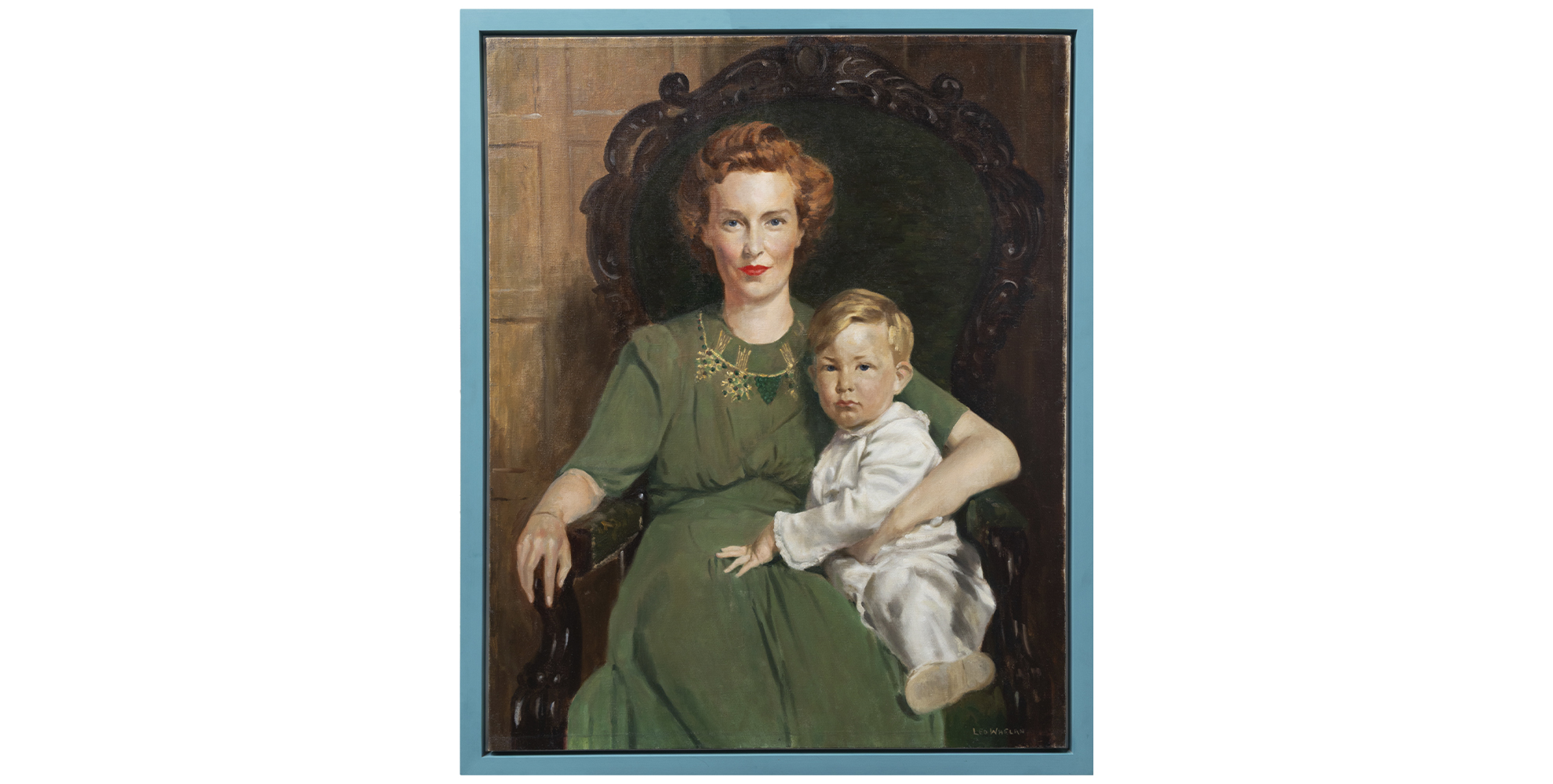
Each loss was carefully filled to correspond with the level and texture of the surrounding original paint before being individually retouched. Rather than repainting broader areas, conservation pigments were precisely colour matched and applied only where original paint was missing.
The new colour was gradually built up to integrate the losses with the surrounding paintwork while preserving as much of Whelan’s original work as possible. A final thin varnish layer completed the treatment, helping to unify and protect the surface.
“Superb work on restoring the portrait of my father and his mother and ensuring that it’s in a wonderful state for us and future generations to enjoy.”
The result is deliberately sympathetic. The distracting scratches, abrasions and areas of paint loss have been significantly reduced while the portrait retains the character and appearance of an original 20th century painting.
Preserving Family Paintings
Family portraits often become increasingly important as they pass from one generation to the next. Even when a painting appears relatively stable, surface dirt, discoloured varnish, cracking, abrasion and small areas of paint loss can gradually affect both its appearance and long-term condition.
Our easel painting conservators restore oil paintings ranging from historic family portraits and inherited artworks to museum-quality and valuable collections. Treatments are tailored to the individual painting, with careful testing and minimal intervention used to preserve as much original material as possible.
If you have a family portrait or oil painting showing signs of damage or deterioration, contact our team for an initial assessment and restoration recommendations.