 WhatsApp us
Few artists captured the sublime quite like John Martin. Vast cities, turbulent skies and biblical catastrophe made his works some of the most spectacular images of the 19th century.

This striking mezzotint of Joshua Commanding the Sun to Stand Still upon Gibeon recently arrived with our paper conservation team for treatment. Combining biblical history with an extraordinary imagined landscape, the antique print offered an opportunity to conserve a work connected to one of Britain’s most distinctive artists.
John Martin & the Art of Spectacle
John Martin (1789–1854) became enormously popular for his spectacular paintings of biblical destruction, ancient cities and apocalyptic landscapes. His unconventional compositions divided contemporary critics, yet captured the imagination of the public. Sir Thomas Lawrence reportedly described him as “the most popular painter of his day.”
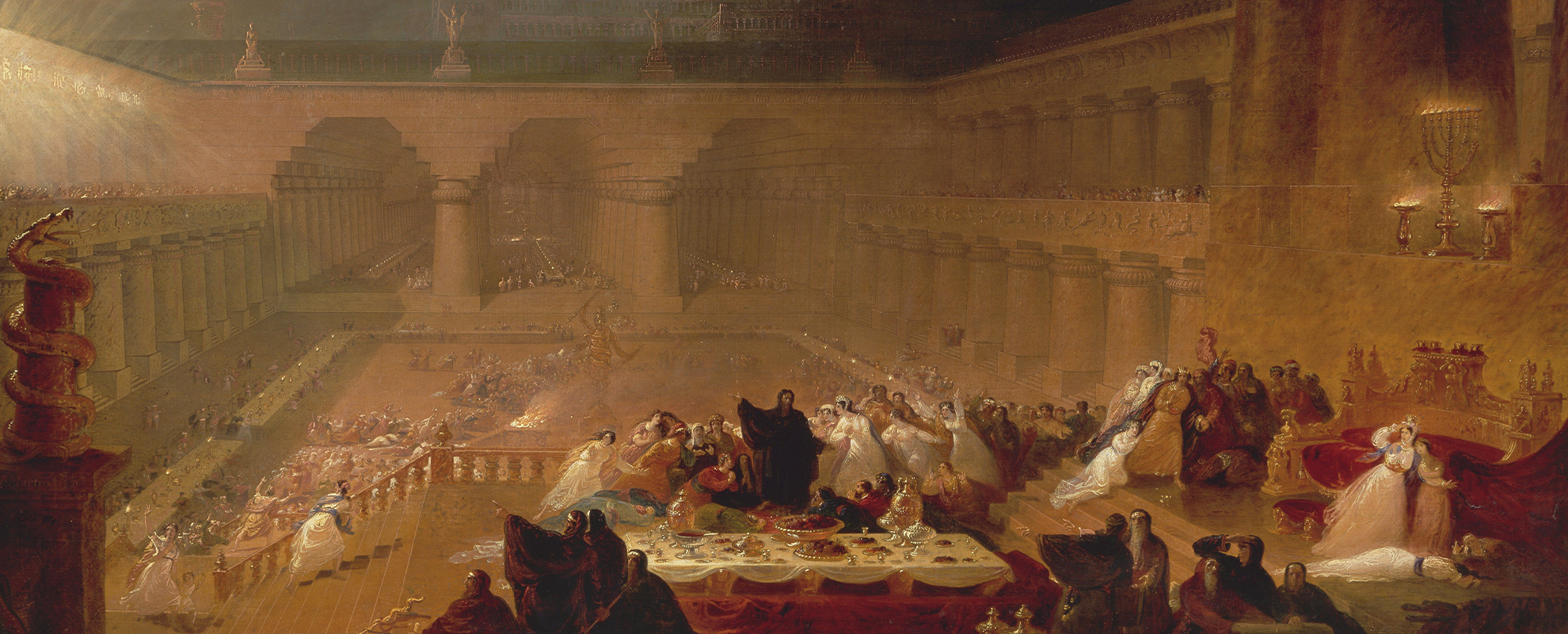 Above: detail from Belshazzar’s Feast by John Martin, 1820
Born in Haydon Bridge, Northumberland, Martin grew up surrounded by the rugged landscape of the North East. Its dramatic crags and valleys have often been connected with the character of his later landscapes, while the furnaces and ironworks of the Tyne Valley have been suggested as an influence on the fiery, otherworldly atmosphere of his apocalyptic scenes.
Part of Martin’s appeal was the sheer scale of his imagination. Tiny figures are overwhelmed by monumental architecture, violent weather and immense landscapes. This remarkably cinematic quality would go on to influence generations of filmmakers, from D. W. Griffith and Cecil B. DeMille to George Lucas, while his fantastical imagery also captured the imagination of the Brontë sisters.
 Above: detail from The Deluge by John Martin, 1834
Joshua Commanding the Sun to Stand Still upon Gibeon brought Martin significant public acclaim in 1816, despite breaking many of the established conventions of academic painting compositions.
A Biblical Epic
The subject of this mezzotint (and the painting that it is copied from) comes from the Old Testament story of Joshua and the battle at Gibeon. Joshua calls upon God to halt the movement of the sun, extending the daylight so that his forces can continue fighting. The biblical account also describes a devastating storm sent against the opposing army.
 Above: detail from Joshua commanding the sun to stand still upon Gibeon
Martin transforms the story into an extraordinary panorama. Joshua and the surrounding figures appear almost minute within the landscape. A city rises dramatically on the left beneath a break in the clouds, while darkness, rain and light sweep across the sky.
Lightning cuts through the distance as armies disappear into the landscape below. The result places human action against an overwhelming display of nature and divine intervention.
Assessing the Mezzotint
When the print arrived at our studio, it appeared to be in good structural condition, an important consideration when treating a work on paper of this age.
The principal concerns were visual. Dirt, general discolouration and areas of staining were visible across both the front and reverse of the sheet. The margins also showed signs of age and handling, while the sheet required flattening to improve its overall presentation.
 Above: one of our paper conservators assessing a work on paper
Our conservators therefore determined that extensive structural intervention was unnecessary. Treatment could instead concentrate on reducing the accumulated effects of age while preserving the historic paper and printed surface.
What Causes an Antique Print to Discolour?
Discolouration is common in 19th century works on paper and can develop for several reasons.
The quality and composition of paper changed considerably during this period, as growing demand for books, newspapers and prints encouraged manufacturers to move away from traditional cotton and linen rag papers towards cheaper, mass-produced papers containing wood pulp. These newer papers could be more susceptible to acidity as they aged, contributing to yellowing, browning and brittleness.
 Above: detail of the mezzotint before conservation
Historic framing can also contribute. Acidic backing boards, mounts and adhesives may transfer acidity into the sheet, causing localised staining or uneven discolouration. Exposure to light, airborne pollutants and fluctuating humidity can accelerate deterioration further.
Understanding the likely causes helps conservators determine how staining and discolouration can be safely reduced and how the print should subsequently be protected.
 Above: detail of the mezzotint before conservation
Reducing Staining and Discolouration
Works on paper require a particularly controlled approach to cleaning. Printed media and paper fibres can respond differently to moisture and conservation solutions, meaning treatments must be selected for the individual object rather than approached as routine cleaning.
 Above: one of our paper conservators working in the studio
For this mezzotint, treatment included surface cleaning to remove accumulated dirt and contaminants, followed by washing to reduce discolouration and staining. Remaining areas of staining were then addressed locally using carefully selected conservation solutions before the sheet was pressed and flattened as far as safely possible.
The print responded particularly well to this process. Following treatment, the tonal contrasts and intricate detail of Martin’s composition could once again be appreciated more clearly.

Preserving an Extraordinary Print
Printmaking was an important part of Martin’s career and allowed his spectacular compositions to reach a much wider audience. He was himself a skilled mezzotint engraver and, for periods of his life, earned more from engravings than from his paintings.
Mezzotint was particularly suited to his work. Its velvety blacks, subtle tonal gradations and luminous highlights could translate the atmosphere of his enormous paintings onto paper, allowing collectors to own versions of images that had caused a sensation when exhibited.
This makes the survival of prints such as Joshua Commanding the Sun to Stand Still upon Gibeon particularly interesting: they are not simply reproductions, but part of the way Martin’s extraordinary visual world was circulated and experienced during the 19th century.
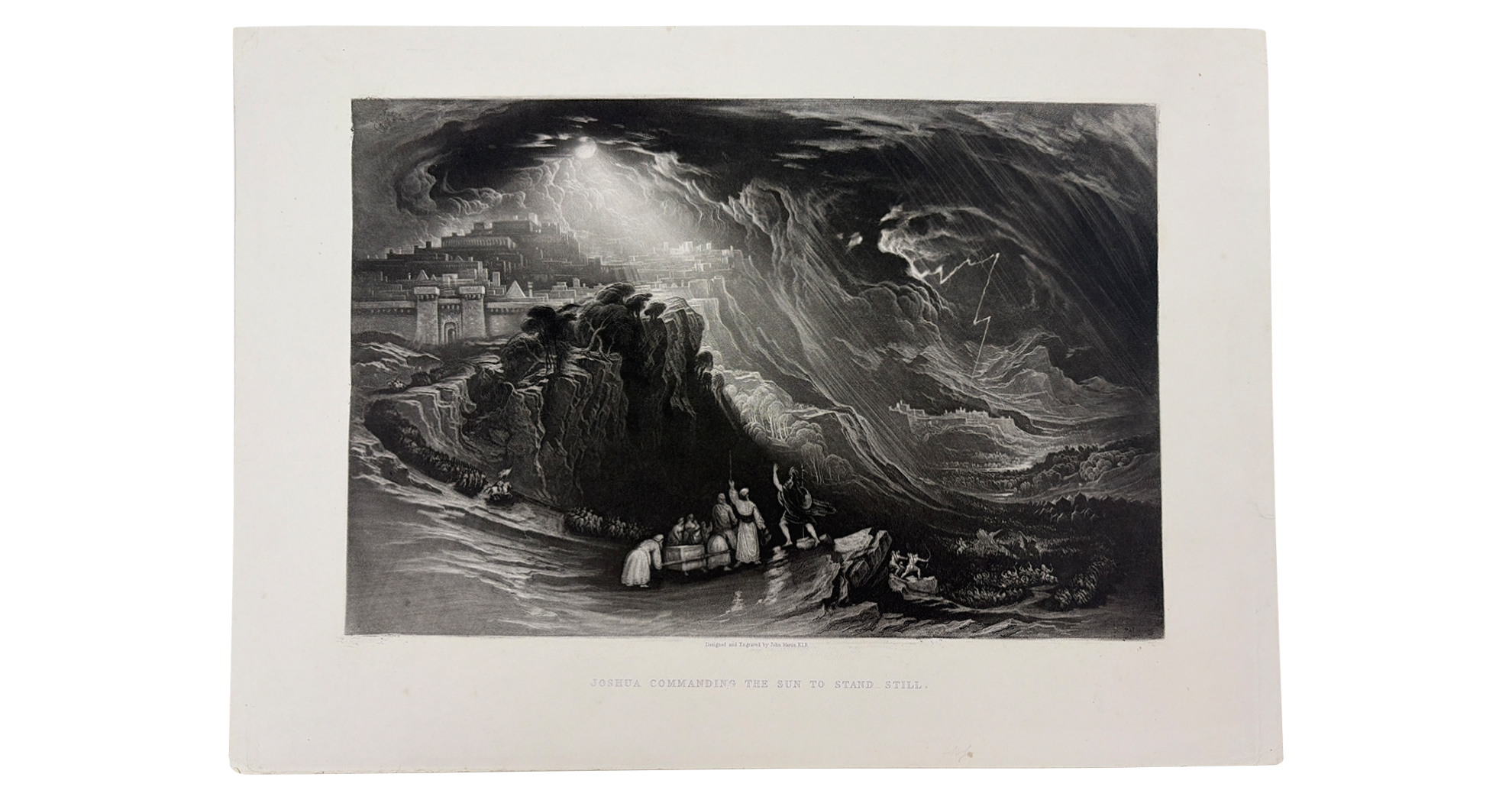
Following conservation, appropriate framing can now help protect the print during display. Conservation-grade mounting materials and suitable glazing can reduce exposure to some of the environmental factors that contribute to deterioration, while avoiding direct contact with unsuitable framing materials.
Do you have a historic print in need of conservation?
From mezzotints and engravings to lithographs, etchings, watercolours and other historic works on paper, our conservators can assess staining, discolouration, foxing, tears, creasing and previous unsuitable repairs.
Our team can also advise on conservation framing and UV-protective glazing, helping to ensure vulnerable works on paper are appropriately protected following treatment.
Contact our conservation team for specialist advice and a no-obligation assessment of your artwork.
Antique Print Restoration Services
If you have an antique print in need of care, contact our conservation team via the form above for specialist advice and a free assessment for our paper restoration and framing services.
As part of our service we offer a nationwide collection and delivery service as well as information on worldwide shipping to our studio.
Antique Prints often suffer from:
- Torn or Detached Fold Sections
- Failing or Acidic Linen Backings
- Surface Dirt and Staining
- Distortion and Creasing
Professional paper restoration can stabilise these issues while preserving as much original material as possible. Conservation framing with UV-protective glazing can then help ensure the map remains protected for generations to come.
