 WhatsApp us
How do you restore an intricate ivory carving when some of its smallest details have disappeared completely?
This was the challenge presented by a 19th century Japanese ivory figure of Guanyin that had been treasured by the same family for many years. Standing around 24 inches high, the figure is remarkable for its detail, from her flowing robes and elaborate hair to a flowering branch formed from dozens of tiny individual blossoms.
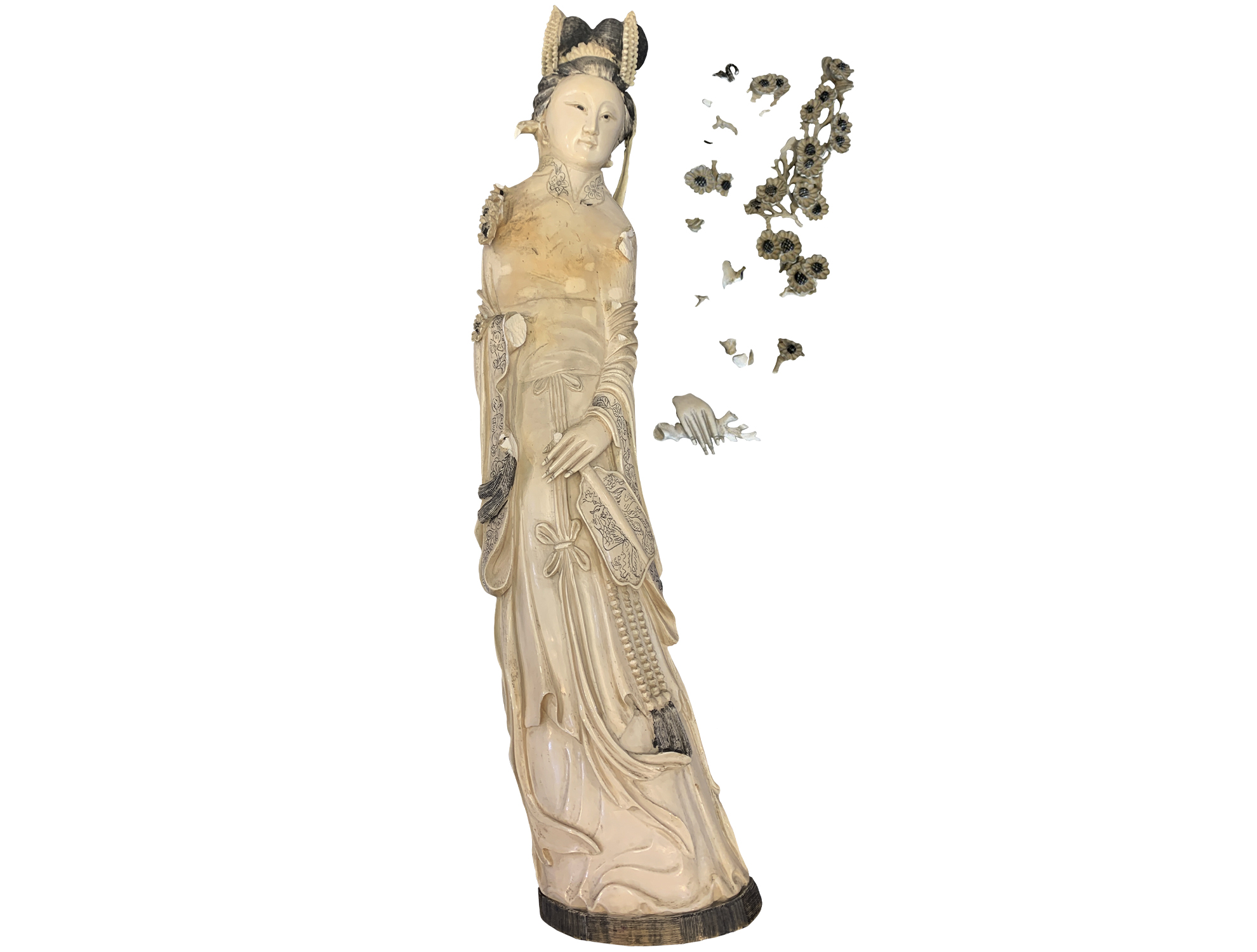
An accidental fall had caused the figure’s right hand and part of the flowering branch to break away. Several of the smallest carved flowers and other fragments were lost completely, meaning there was nothing to simply reattach.
For an ivory object, this presents a particularly interesting problem. Modern restrictions surrounding ivory mean that replacing losses with newly sourced ivory is not an appropriate solution. Instead, our conservator needed to find a way to recreate the missing details without introducing new ivory, while ensuring the additions remained sympathetic to the original carving.
This case study explores how our objects conservator restored the broken figure and recreated its intricate missing flowers without the use of new ivory.
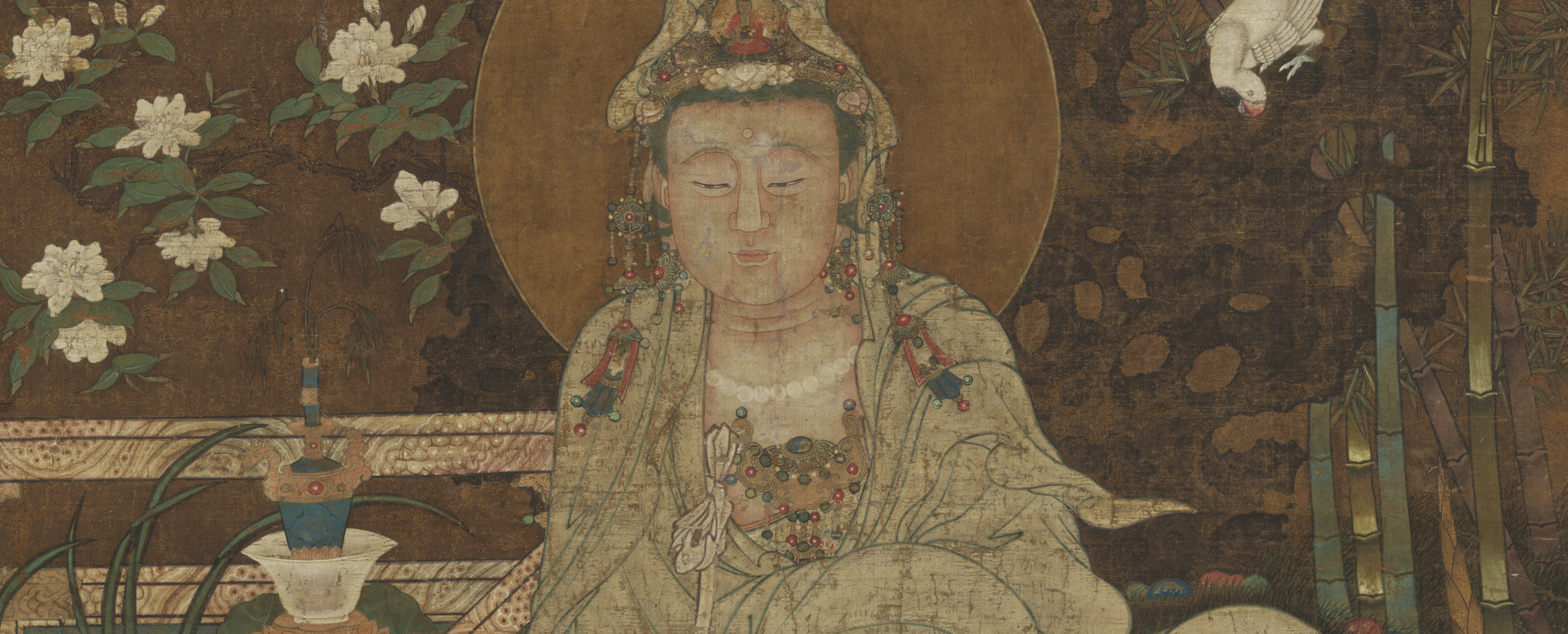 Above: scroll painting of Guanyin as the Nine-Lotus Bodhisattva, 1593
If you have an antique ivory carving, figurine or decorative object with breaks or missing elements, our experts can assess the damage and advise on an appropriate, conservation-led approach to restoration.
Guanyin, Goddess of Mercy
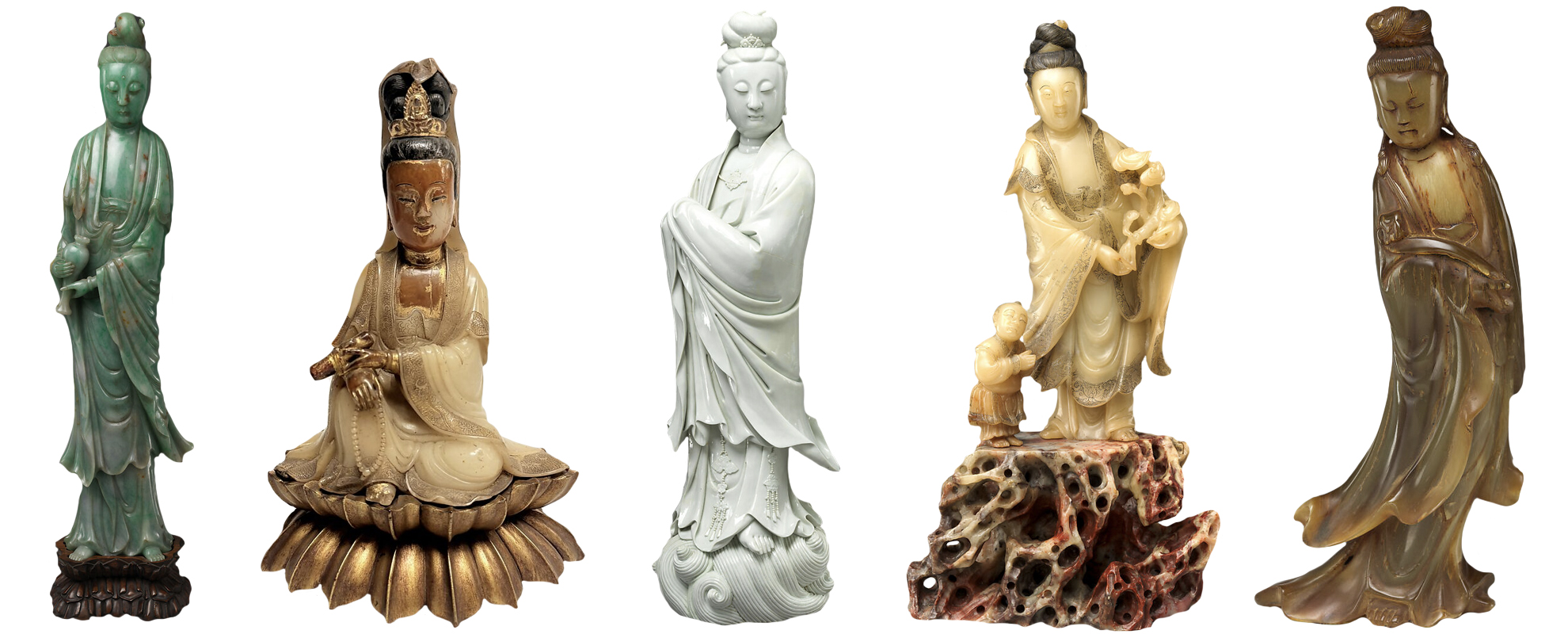
With her serene expression, flowing robes and flowering branch, this figure represents Guanyin, the Goddess of Mercy and one of the most enduring figures in East Asian Buddhist tradition. Associated with compassion, she has inspired countless representations over the centuries, evolving from earlier male depictions into the graceful female form widely recognised today.
This 19th century Japanese carving rewards a closer look. Black decoration picks out the folds and patterns of her robes, strands of hair are individually defined and even her fingernails have been carefully shaped. Across her body, dozens of blossoms form an elaborate flowering branch, each individually carved down to its petals and crosshatched centre.
Created as a Japanese okimono, an ornamental object intended for display, the figure demonstrates the extraordinary precision achieved by ivory carvers during the period. The material could hold exceptionally fine detail, allowing even a large figure such as this to be filled with tiny features that only become apparent when viewed up close.
Assessing the Damage to the Ivory Figurine
Once the figurine arrived at our London studio, objects conservator Amy could examine what had survived and establish how the missing areas might be reconstructed.
The right hand, flowering branch and paddle handle were broken, the sleeve was chipped and at least two flowers and several smaller elements were completely missing. Extensive grime and dust had also accumulated across the surface.
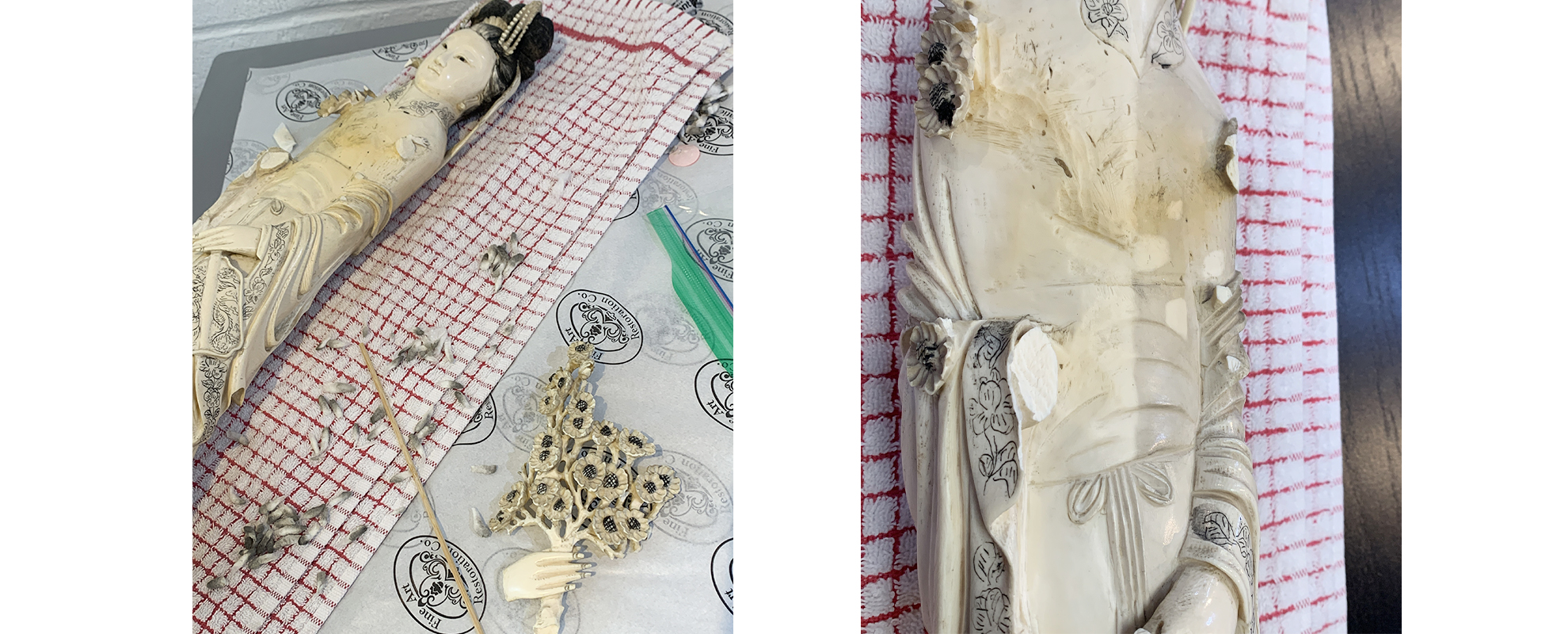
The ivory had also naturally developed warmer yellow tones with age. Rather than attempting to return the figure to a uniform white appearance, conservation needed to respect this inherent characteristic of the material. Cleaning would reduce surface dirt and brighten the overall appearance, but some deeply ingrained dirt and discolouration would remain.
The owners searched for the missing fragments and any old photographs that might show the figure before the accident, but unfortunately none could be found. The surviving carving itself therefore became the conservator’s most useful reference.
Recreating the Missing Ivory Flowers
Fortunately, enough of the original flowering branch survived to provide a reference for what had been lost.
A mould was taken from one of the surviving flowers and used to cast two replacements. Each new flower could then be individually refined and adjusted to sit naturally amongst the original blossoms. Other missing areas were carefully modelled and shaped by hand.
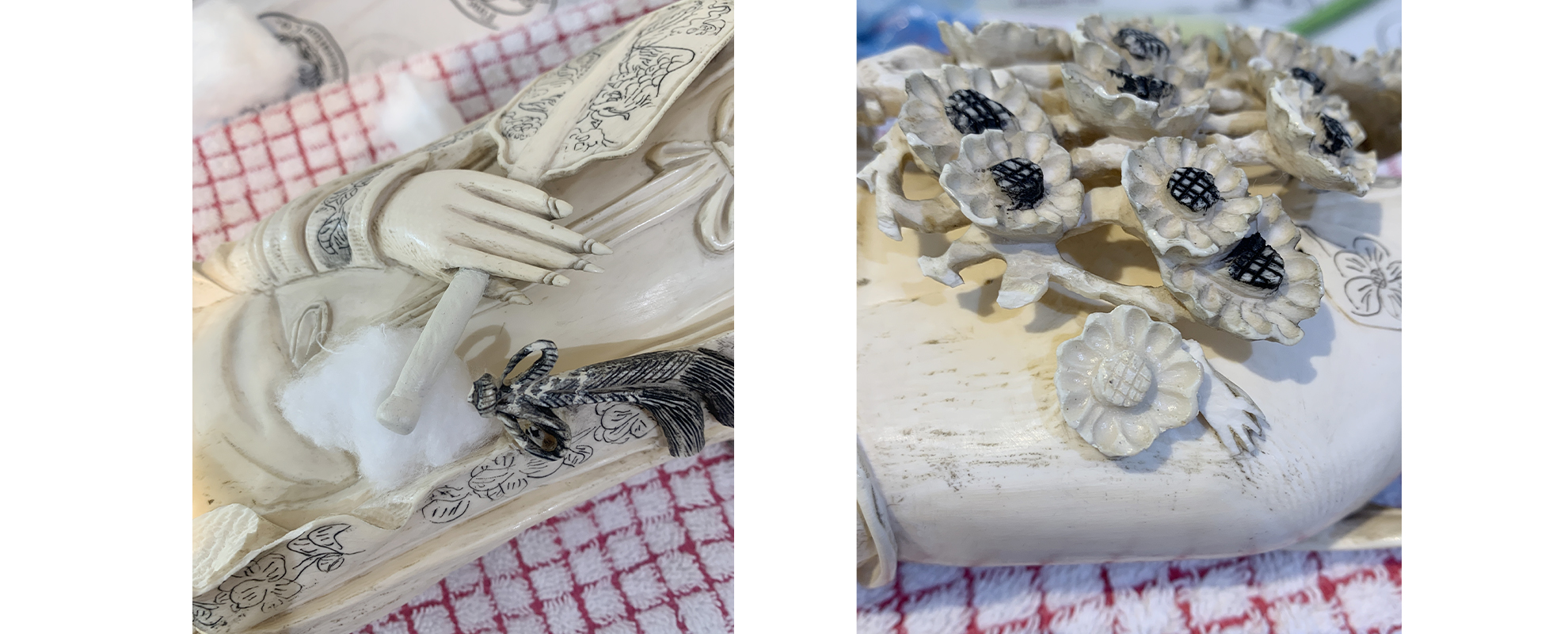
The detached hand and surviving sections of the branch were then carefully bonded back into position, gradually rebuilding the arrangement across the figure’s upper body.
The complete treatment involved cleaning, bonding, mould-making, casting, modelling, refinement and retouching, requiring around 20 hours of specialist conservation work.
Bringing the Figurine Back Together
Once the structural work and reconstruction were complete, attention turned to integrating the new elements with the historic ivory. The recreated areas were carefully retouched to complement the naturally aged surface. The intention was not to make the figure appear newly carved, but to reduce the visual disruption caused by the recent accident.
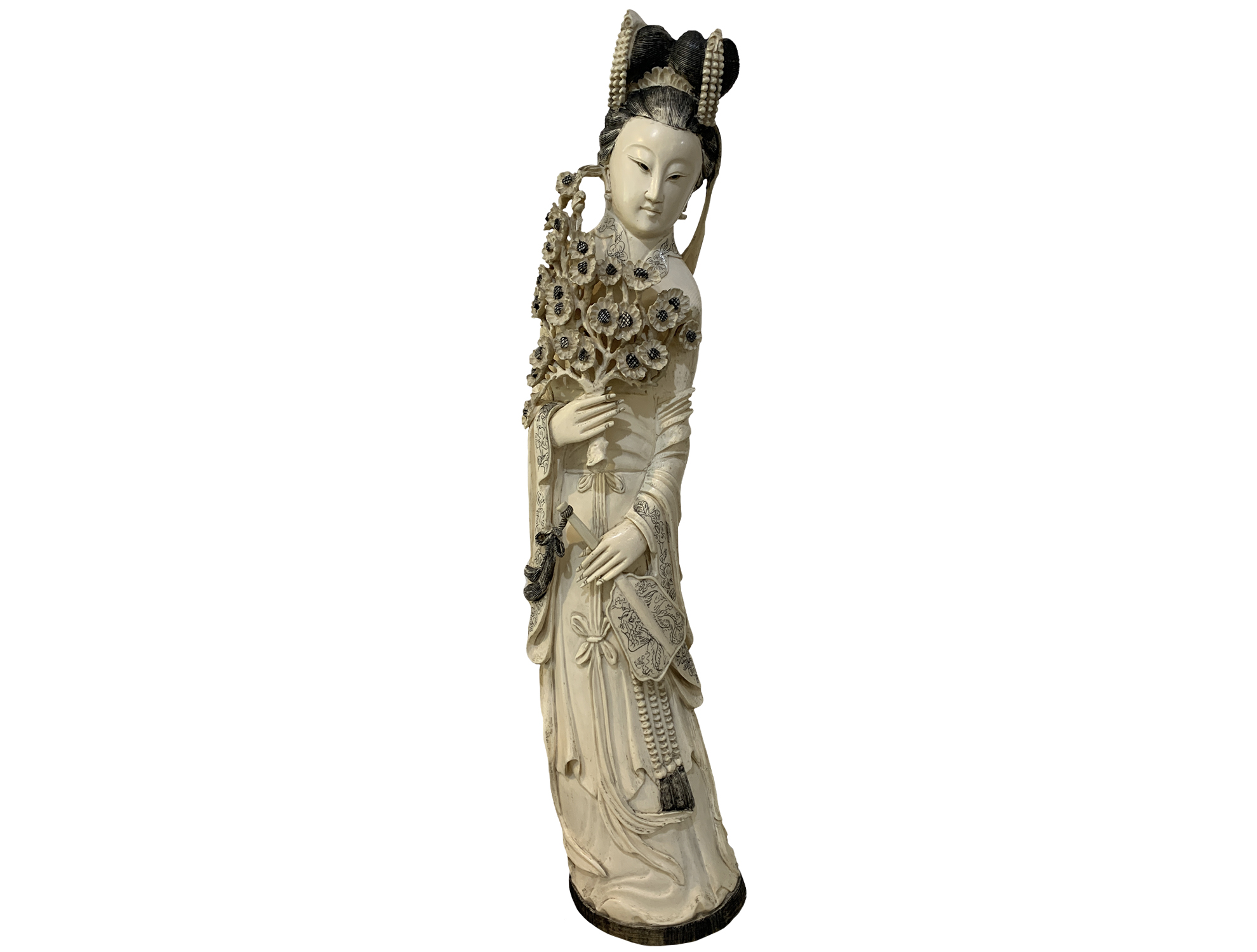
For the owners, the success of the restoration was ultimately about having a treasured object back, just as they remembered it.
“We are most appreciative of the fine way you restored our special figure. Please do express our great appreciation to Amy and all your team who took such special care with our treasured antique.”
From rebuilding the broken hand to recreating flowers that had been lost entirely, the project demonstrates how specialist conservation can restore intricate areas of damage while retaining the age and character of the original object.
The Ethical Restoration of Antique Ivory
Historic ivory requires a particularly careful approach. Conservation focuses on preserving the material that already exists, stabilising damage and, where necessary, finding alternatives to the use of newly sourced ivory when recreating lost elements.
Our objects conservators can assist with:
- Cleaning to reduce surface dirt and grime
- Stabilising cracks, breaks and vulnerable areas
- Bonding detached or broken pieces
- Filling and refining chips and losses
- Recreating missing details through moulding, casting and modelling
- Retouching repairs to complement naturally aged ivory
- Preserving natural patination and signs of age wherever appropriate
- Advising on the limitations and ethical considerations of ivory restoration
Each treatment is considered individually, balancing the visual result with the preservation of original material and the historic character of the object.
If you have an antique ivory figurine, carving or other historic object that has been broken or has missing elements, our objects conservators can assess the damage and advise on an ethical, conservation-led approach to restoration.
