WhatsApp us
Some objects occupy a home for decades, they are remembered from childhood and eventually pass from one generation to the next.
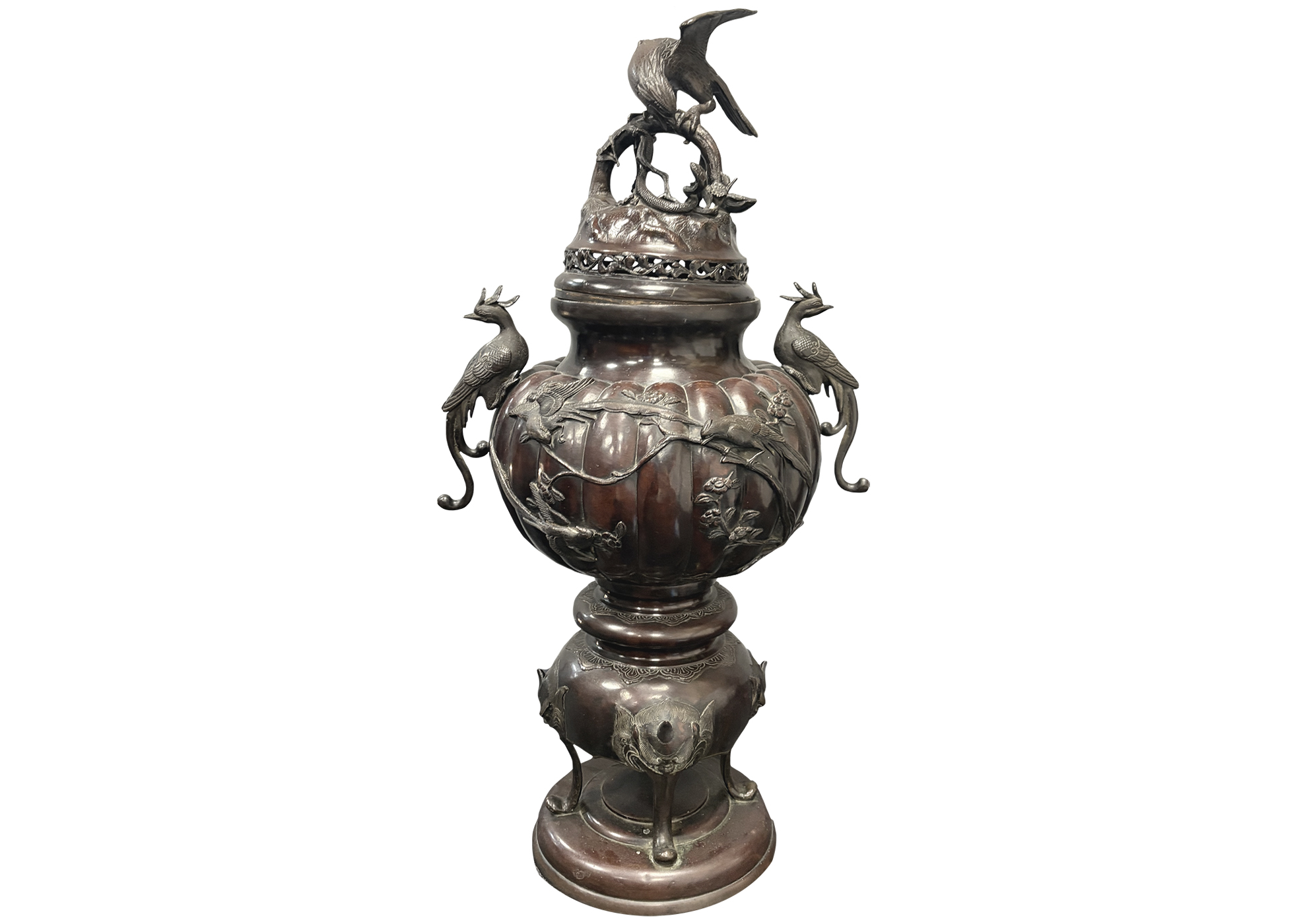
For the owner of this remarkable Japanese bronze censer, that connection stretches back through her family for generations, with the object believed to have been brought back from East Asia by her ancestors in the late 19th century.
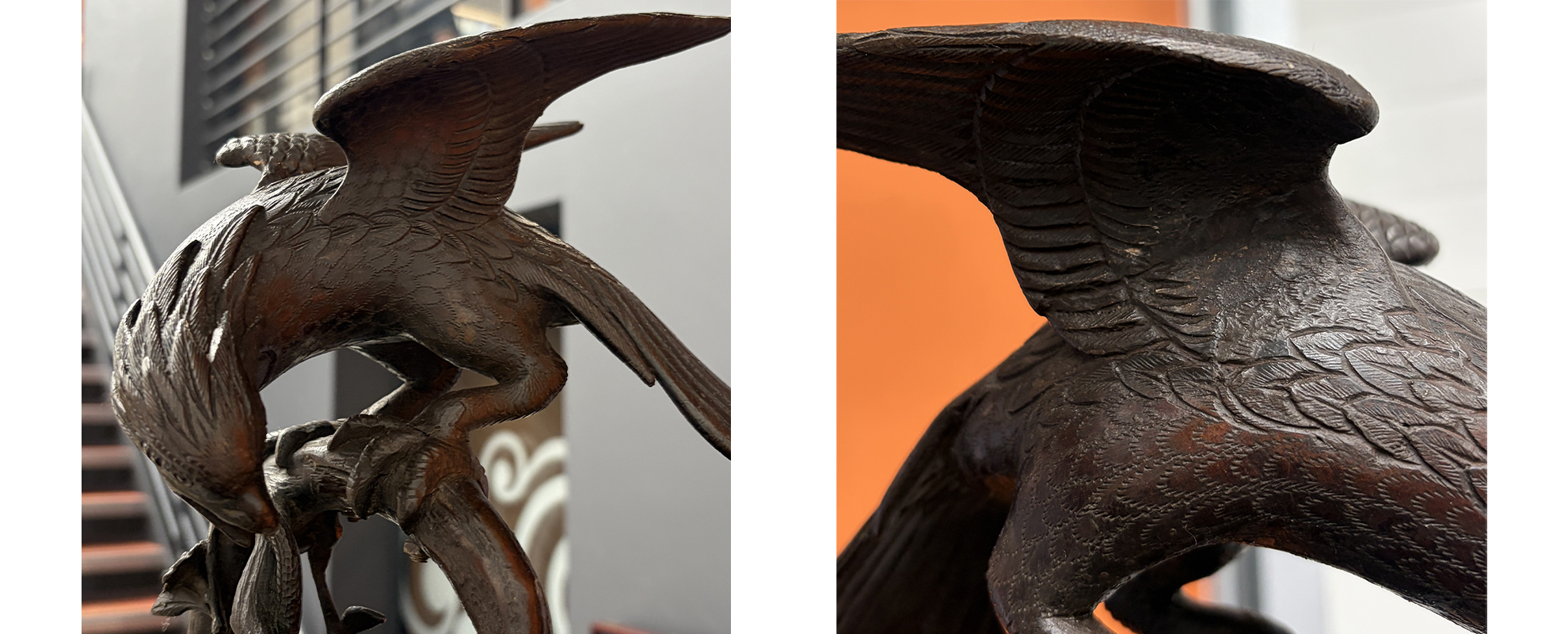
So, when an accident caused one of the details to break away, the damage was particularly upsetting. The wing had been professionally repaired at some point in the past, leaving an existing weak point that had failed when the object was knocked.
The challenge was not simply to put the wing back in place. Working with our experts, the aim was to create a secure and sympathetic repair while preserving the aged surface and character that this late 19th century object had acquired over more than a century.
Exploring the Censer’s Meiji Design
During the Meiji period (1868–1912), the censer, or koro, became an extraordinary showcase for Japanese metalworking. This era followed over 200 years in which Japan had maintained a policy of isolation, with foreign trade and contact heavily restricted. After the country began opening to international trade in the 1850s, Japanese art and craftsmanship reached new audiences on an unprecedented scale.

By the late 19th century, Japan was participating prominently in international exhibitions, where ambitious bronzes attracted considerable attention. Large-scale koro such as this could be extraordinarily elaborate, combining separately cast elements, intricate openwork and sculptural decoration.
This example is alive with imagery from the natural world. Birds appear amongst branches, flowers and foliage across the body, with further birds forming the handles at either side. Above them all is the most dramatic part of the composition: a large eagle confronting a twisting snake on the lid.

The pairing can be interpreted as a balance of opposing forces. The eagle represents Yang, associated with the heavens, sun, clarity and spiritual authority, while the snake represents Yin, connected with the earth, water, hidden wisdom and the cyclical nature of life. Together, they unite sky and earth, spirit and matter within a single dramatic scene.
There is an added significance to this imagery appearing on a censer. Traditionally associated with burning incense and ritual purification, the rising smoke provides an evocative parallel with the eagle above, while the struggle between bird and serpent can be interpreted as the overcoming of earthly attachments in pursuit of spiritual clarity. The imagery also has parallels with Buddhist traditions surrounding Garuda and the Nagas, bird and serpent beings whose conflict is eventually reconciled through Buddhist teaching.
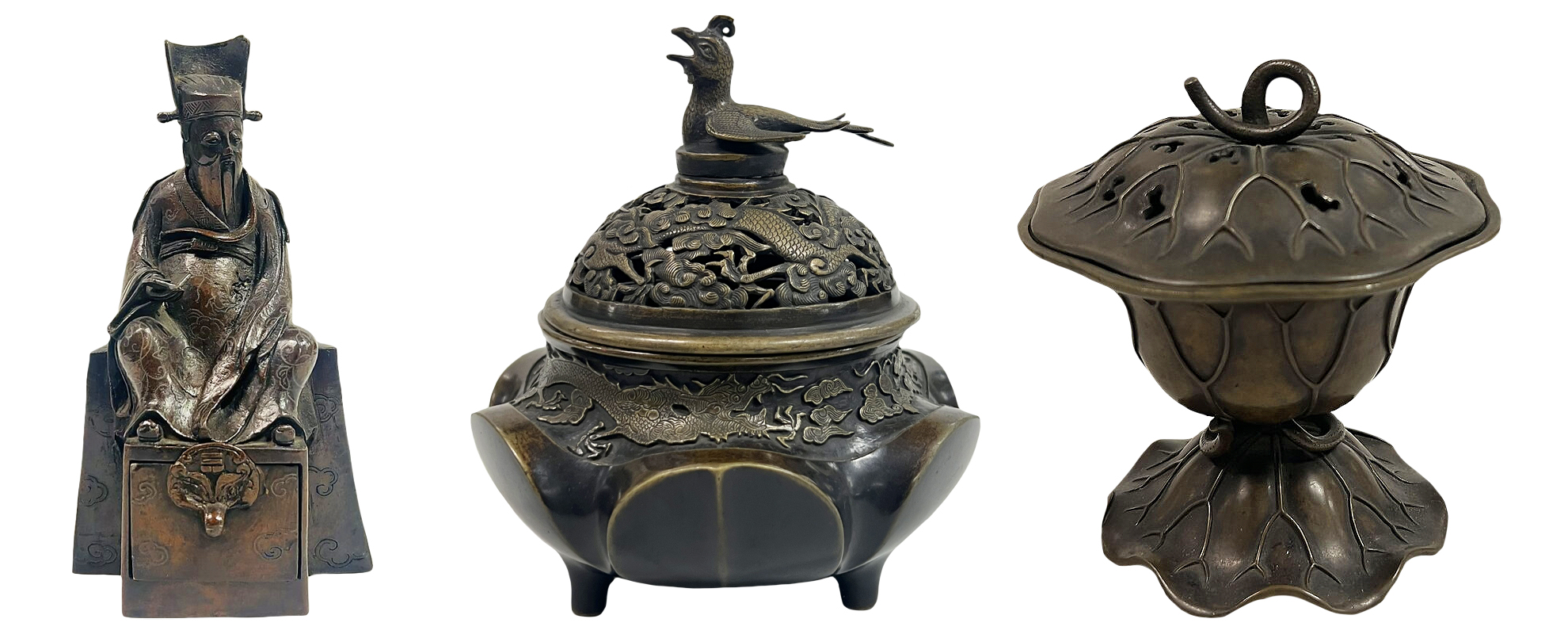
For this particular censer, however, its meaning is not confined to its original symbolism or craftsmanship. Having remained within the same family for generations, it has acquired another history altogether: one formed through inheritance, memory and more than a century of family life.
Repairing a Previously Restored Bronze
The detached wing was the most immediate concern during this project. Because it had already been repaired in the past, we first needed to assess the old intervention and the condition of the joining surfaces rather than simply reattaching the broken component.
Assessment of the complete censer also identified movement in some of its other elements, including the side-mounted birds and the bird on the lid, while the lid itself had become slightly misshapen.
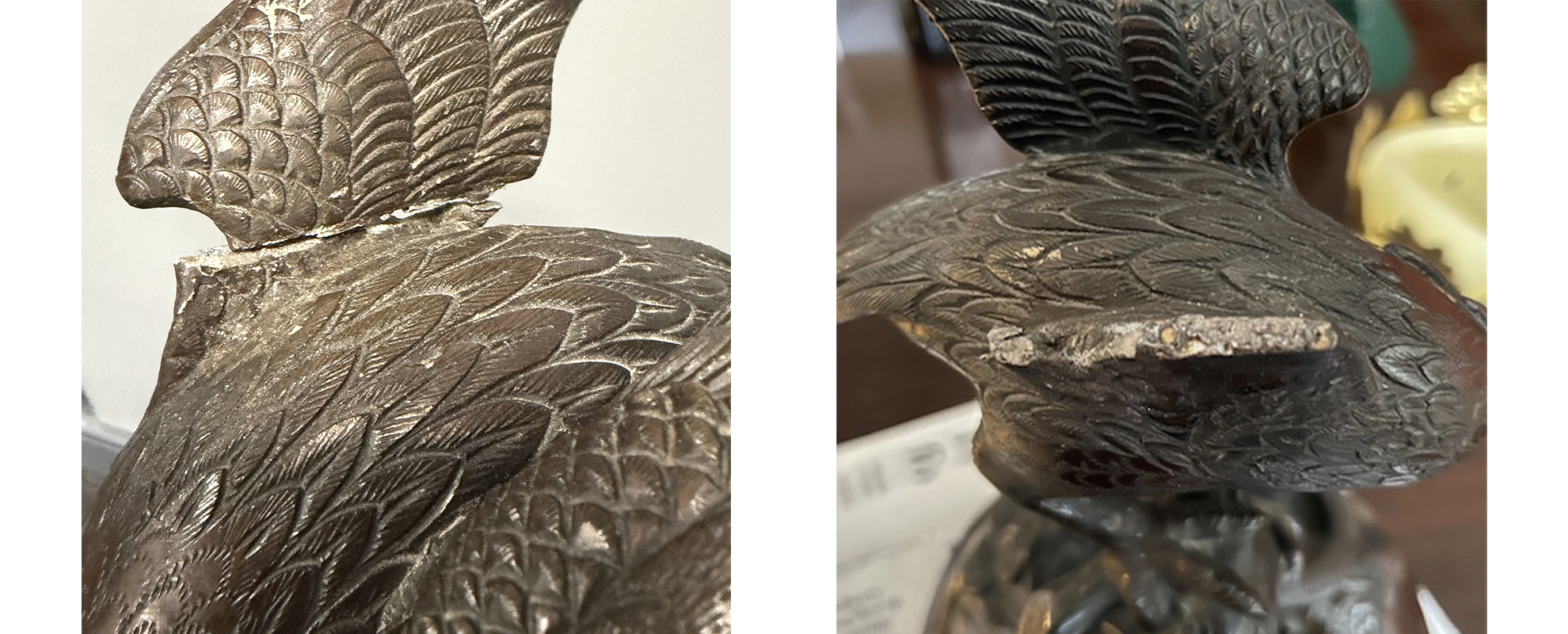
The broken area was carefully prepared for bonding before the wing was securely reinstated using a method appropriate to its weight and construction. The aim was to provide sufficient structural support while keeping the repair visually discreet and avoiding unnecessary disturbance to the surrounding historic surface.
Cleaning Without Removing Patina
The owner had initially approached us about the damaged lid, but after discussing the treatment, she decided to send the complete censer. There was a very practical reason for this: she was concerned that cleaning only the repaired section could leave the lid noticeably different from the base.
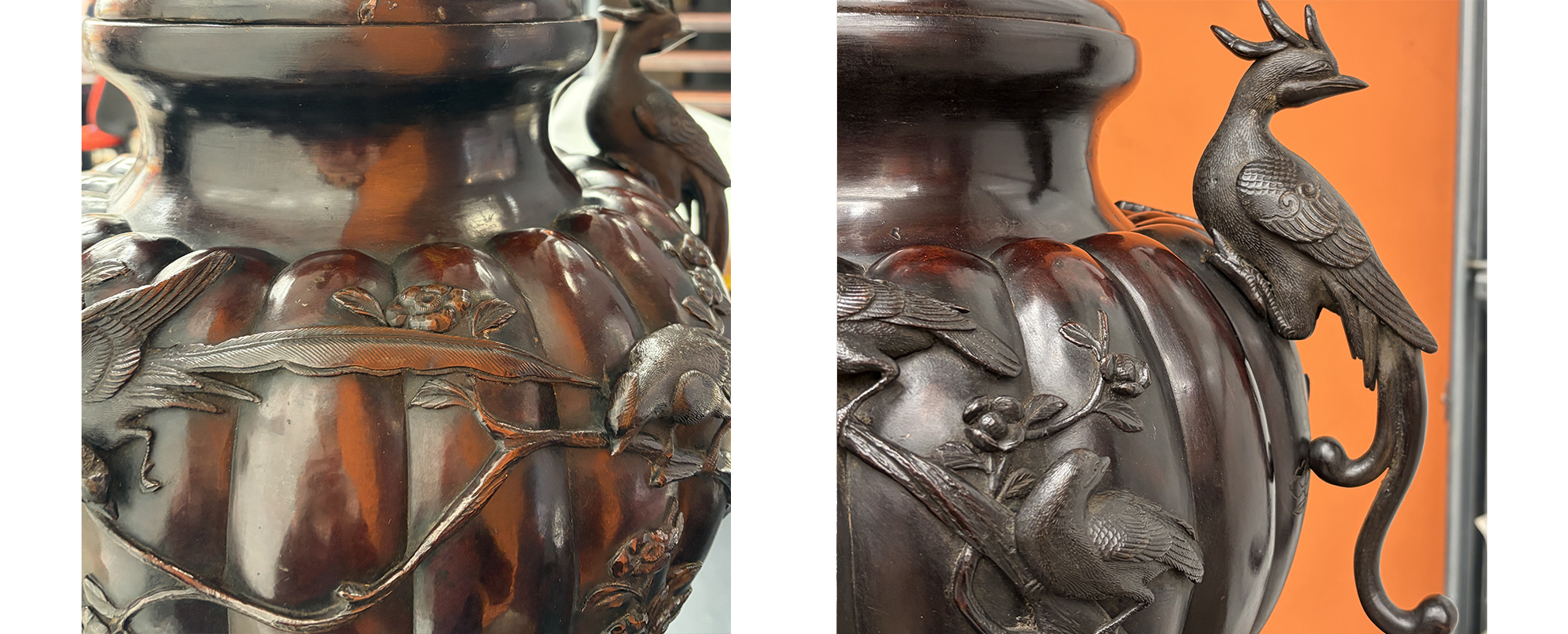
For an historic bronze, cleaning does not mean polishing the metal until it appears new. Its dark and subtly varied patina contributes significantly to its appearance and is part of the history of the surface. Treatment therefore concentrated on reducing accumulated dirt and contaminants while retaining this established finish.
This was particularly beneficial across the intricate decoration, where dirt had settled amongst feathers, flowers, branches and other deeply modelled details. Cleaning the complete object allowed these elements to become more legible while ensuring that the lid and body remained visually harmonious.
Returning a Family Heirloom Home
Once treatment was complete, the wing was once again securely integrated into the eagle and the censer could be appreciated as a complete composition. Its rich brown patina remained intact, but the cleaning allowed considerably more of the elaborate metalwork to be seen.
Importantly, the intention was never to erase the censer’s age. Previous repairs and an aged surface form part of an object that has survived for well over a century. The purpose of treatment was instead to address its vulnerabilities, minimise the visual impact of the recent accident and allow it to continue its life as a treasured family object.
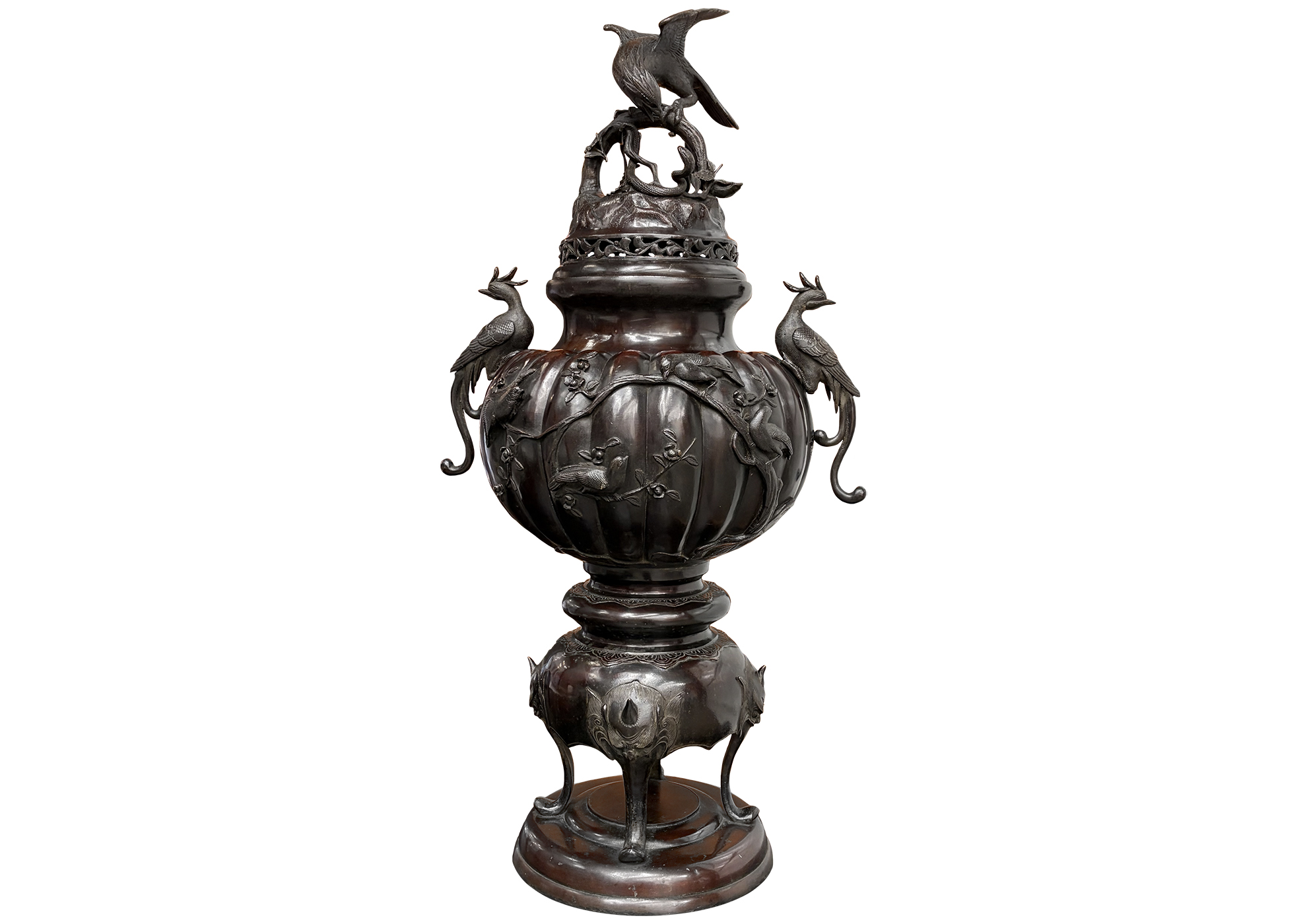
That was ultimately what mattered most to its owner. After the censer returned home, she wrote to tell us that she was “absolutely delighted with the repair and clean!”
If you have a bronze sculpture, Japanese metalwork, antique ornament or inherited object affected by breakage, previous repairs, loose components or surface contamination, our conservation team can assess its condition and advise on an appropriate approach to restoration.