 WhatsApp us
Ancient ceramics can survive for thousands of years, carrying with them evidence not only of the culture that created them, but of everything that has happened to them since.
Breaks, losses and historic repairs can all become part of this long material history, making their conservation a careful balance between stabilising new damage and respecting what has survived.
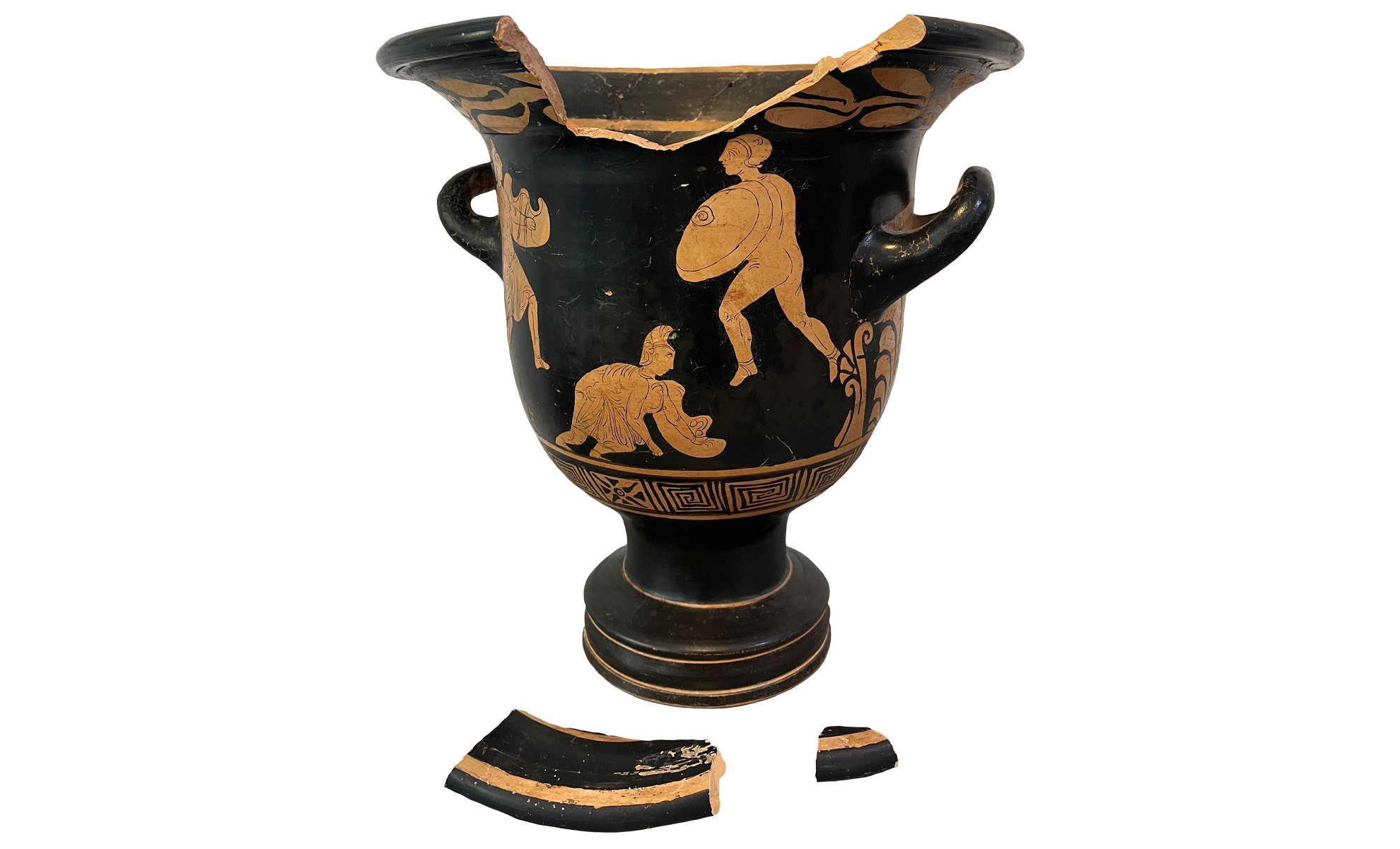
Dating to the 4th century BC, this ancient Greek bell krater had already undergone extensive restoration during its remarkable 2,300 year history. More recently, the vessel was damaged in transit when two previously repaired sections became detached, leaving part of the rim fragmented and several neighbouring areas vulnerable.
Its arrival in our studio presented our objects conservators with an interesting challenge. The aim was not to make an ancient object appear untouched, but to secure the recent damage, restore visual coherence and ensure the new conservation work remained sympathetic to the historic repairs already present across the vessel.
Understanding an Ancient Greek Vessel
Warriors play out an ancient drama across the surface of the krater. Created during the late Classical period, its painted decoration belongs to a world of powerful Greek city-states, flourishing art and architecture and enduring stories of gods and heroes.

Despite its fine craftsmanship, this was an object originally intended for use. Known as a bell krater, its wide bowl was designed for mixing wine with water before it was served. Vessels such as this played a central role in the Greek symposium – a social gathering centred around drinking, conversation and entertainment.
Today, its function has long since changed, but its construction, decoration and surviving surface provide a tangible connection with the society in which it was made.
Conservation Without Over-Restoration
Closer examination in the studio revealed the complexity of the vessel’s condition. Extensive joins and filled areas were present around the rim, while a hairline crack could also be seen through the foot. Several neighbouring joins had begun to open and some earlier repairs were slightly misaligned or differed in colour and finish from the original ceramic.
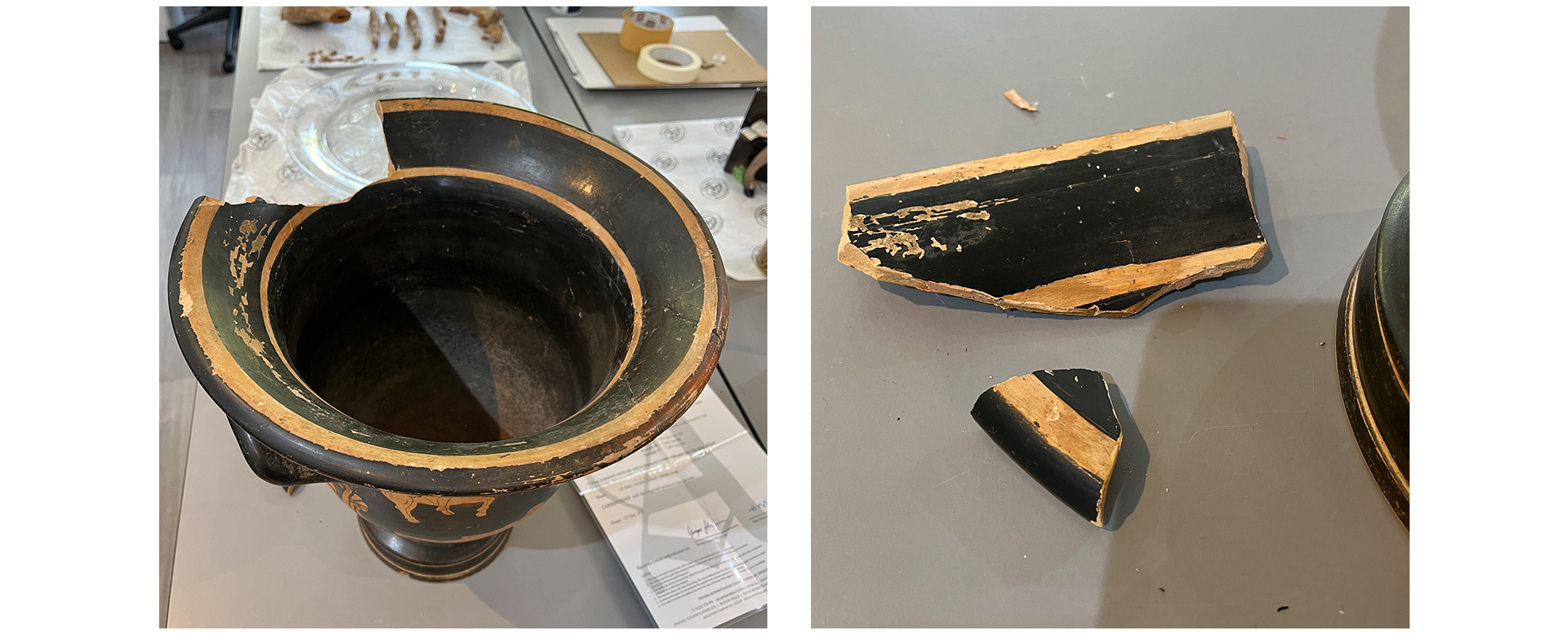
This assessment allowed our conservators to distinguish between areas requiring treatment and those that could safely remain undisturbed. Particular attention was given to the rim, where the detached fragments and opening joins required stabilisation to prevent further movement.
Treatment began with the consolidation of vulnerable cracks and joins. The detached fragments were then carefully positioned and bonded, restoring stability to the rim while ensuring they aligned appropriately with the surrounding ceramic.
Once secure, attention turned to the appearance of the recent break lines. These were filled and refined where required before being sensitively retouched to reduce their contrast against the surrounding surface.
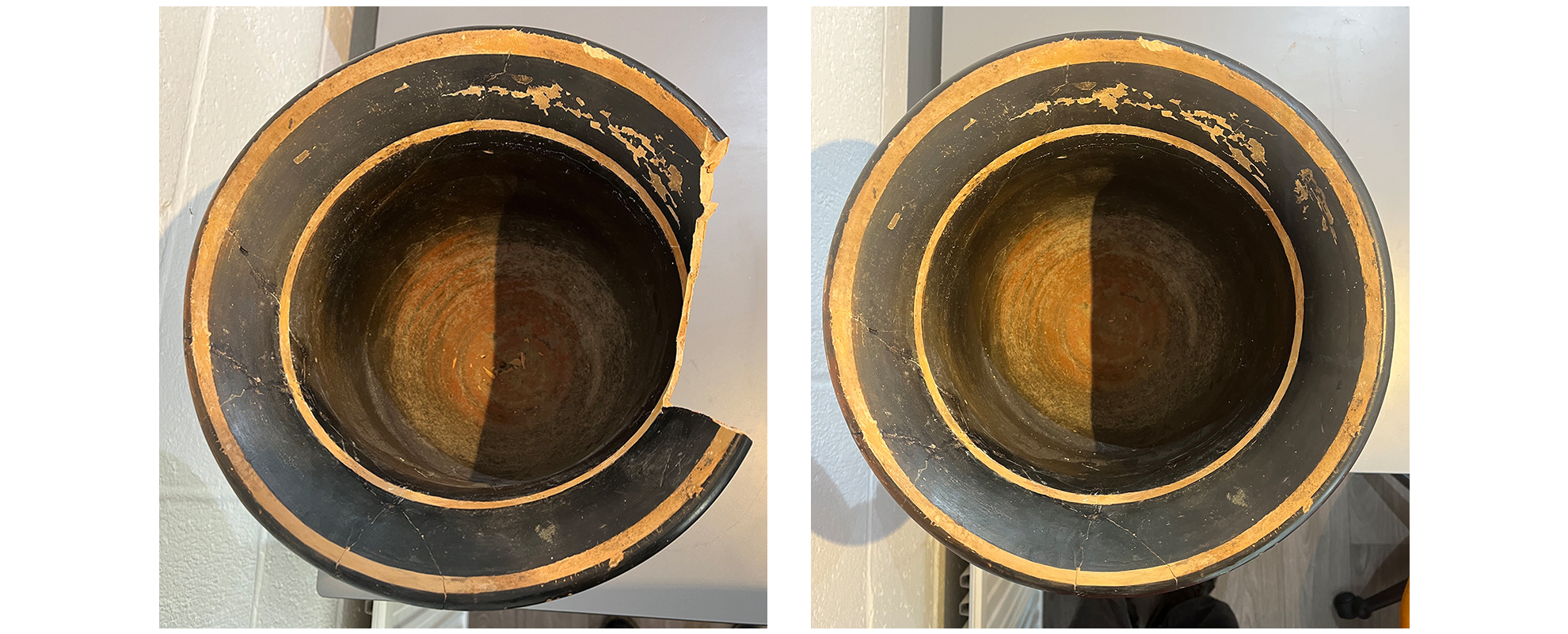
Importantly, this work was concentrated on the areas affected by the recent incident. Earlier fills and retouching elsewhere were not unnecessarily removed or replaced simply to create a more uniform finish.
The result is subtle, so that at normal viewing distance, attention returns to the form of the krater and its painted decoration rather than the recent damage. On closer examination, however, its repaired areas can still be understood as part of the object’s physical history.
Preserving the Evidence of Age
Ancient objects rarely reach the present day unchanged. They may have been buried, broken, excavated, collected, displayed and repaired many times, with each event leaving its own physical trace.
For this krater, those traces extend far beyond the ancient painted surface. Its old break lines and restored areas show that the vessel has required care at different points during its long existence, adding another dimension to how it can be understood today.
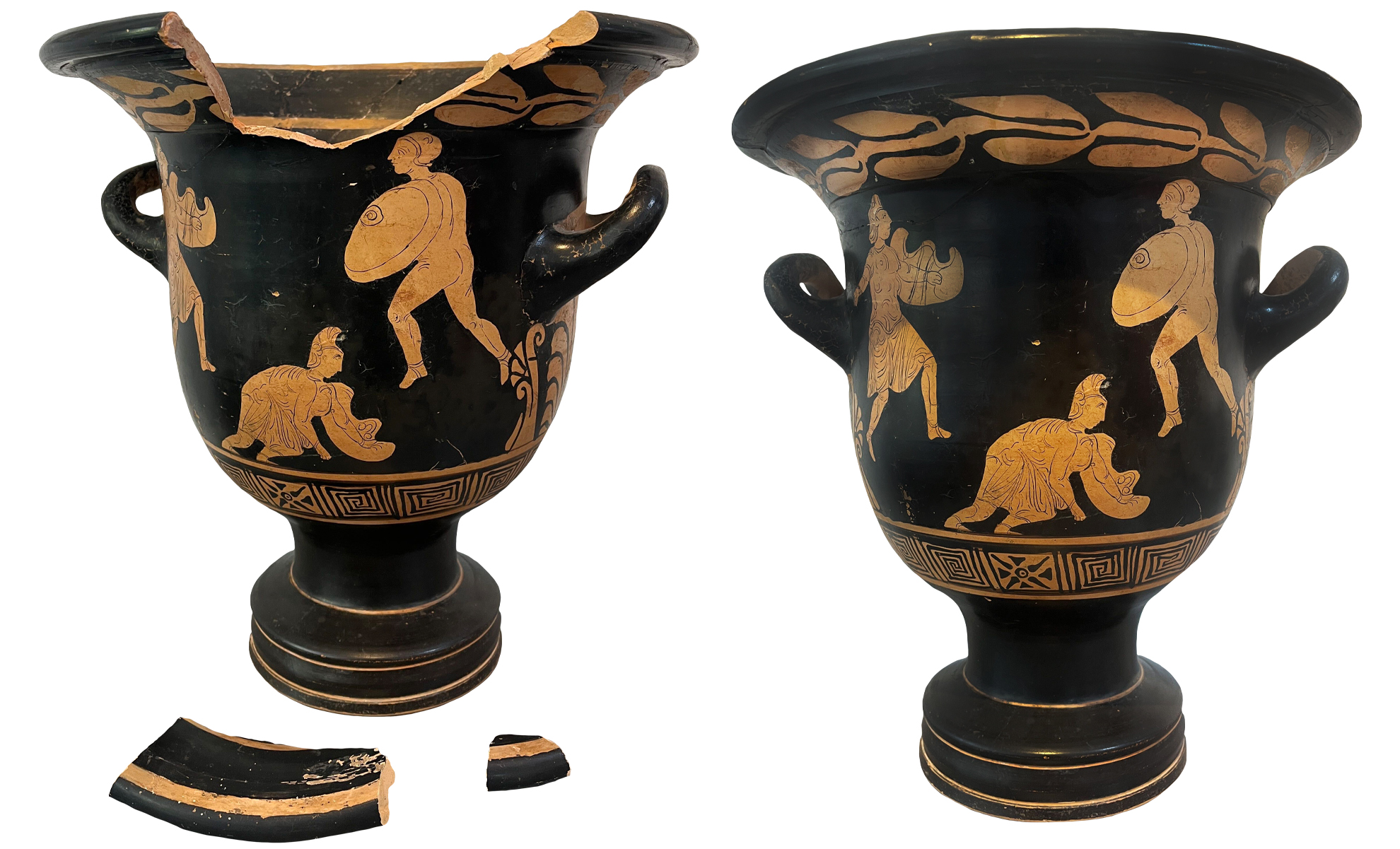
Following treatment, the vulnerable sections were secure once more and the newly repaired rim was visually integrated with the vessel as a whole. Rather than competing with its decoration, the conservation allows the eye to return to the ancient form and painted figures that have survived for more than two millennia.
Specialist Ancient Ceramic Conservation
Our expert objects conservators work with ancient ceramics and historic decorative objects, including pottery, glass, terracotta and porcelain. Treatment can range from securing individual breaks and cracks to reconstructing highly fragmented objects or addressing complex historic repairs.

Each object is assessed individually, taking into account its materials, construction, condition and existing restoration before an appropriate treatment is recommended.
If an ancient ceramic has been damaged, contact our conservation team for specialist advice and an initial assessment. Nationwide collection and delivery can also be arranged for fragile and valuable objects.
