WhatsApp us
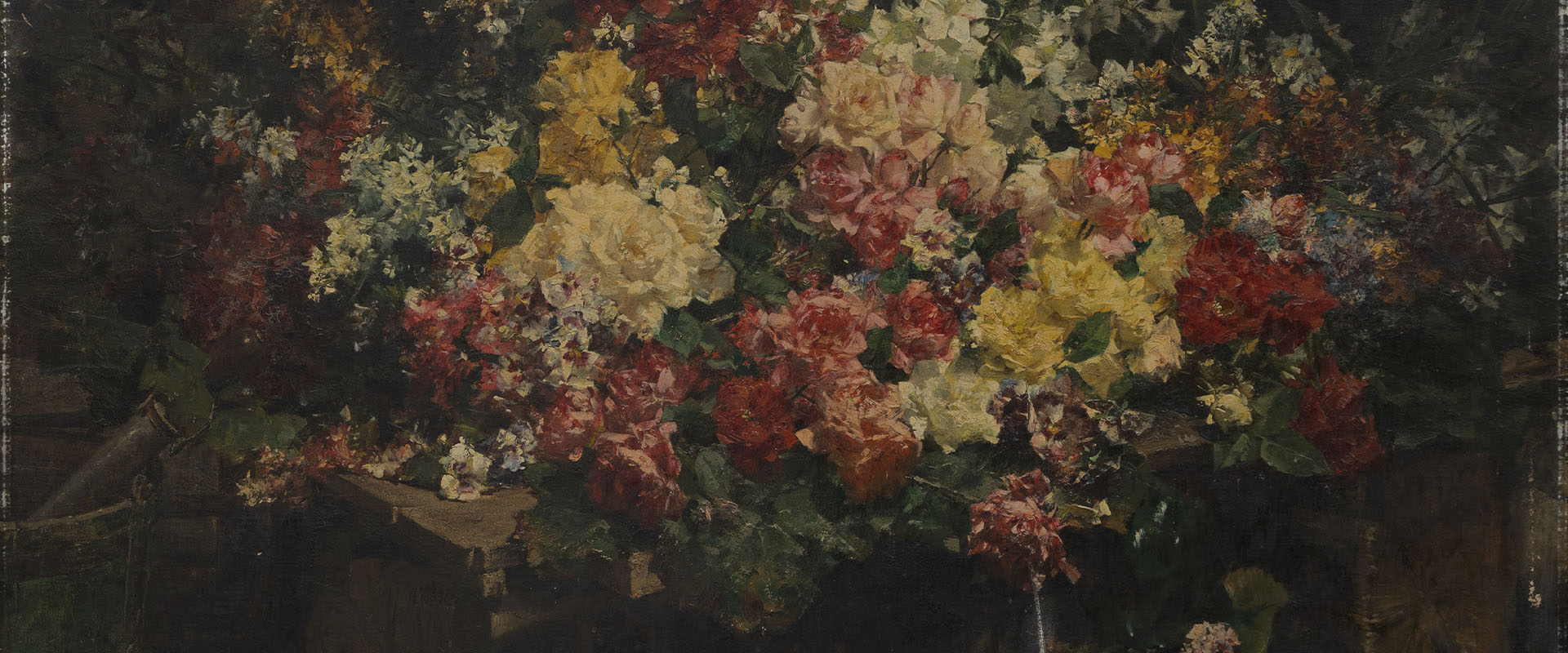
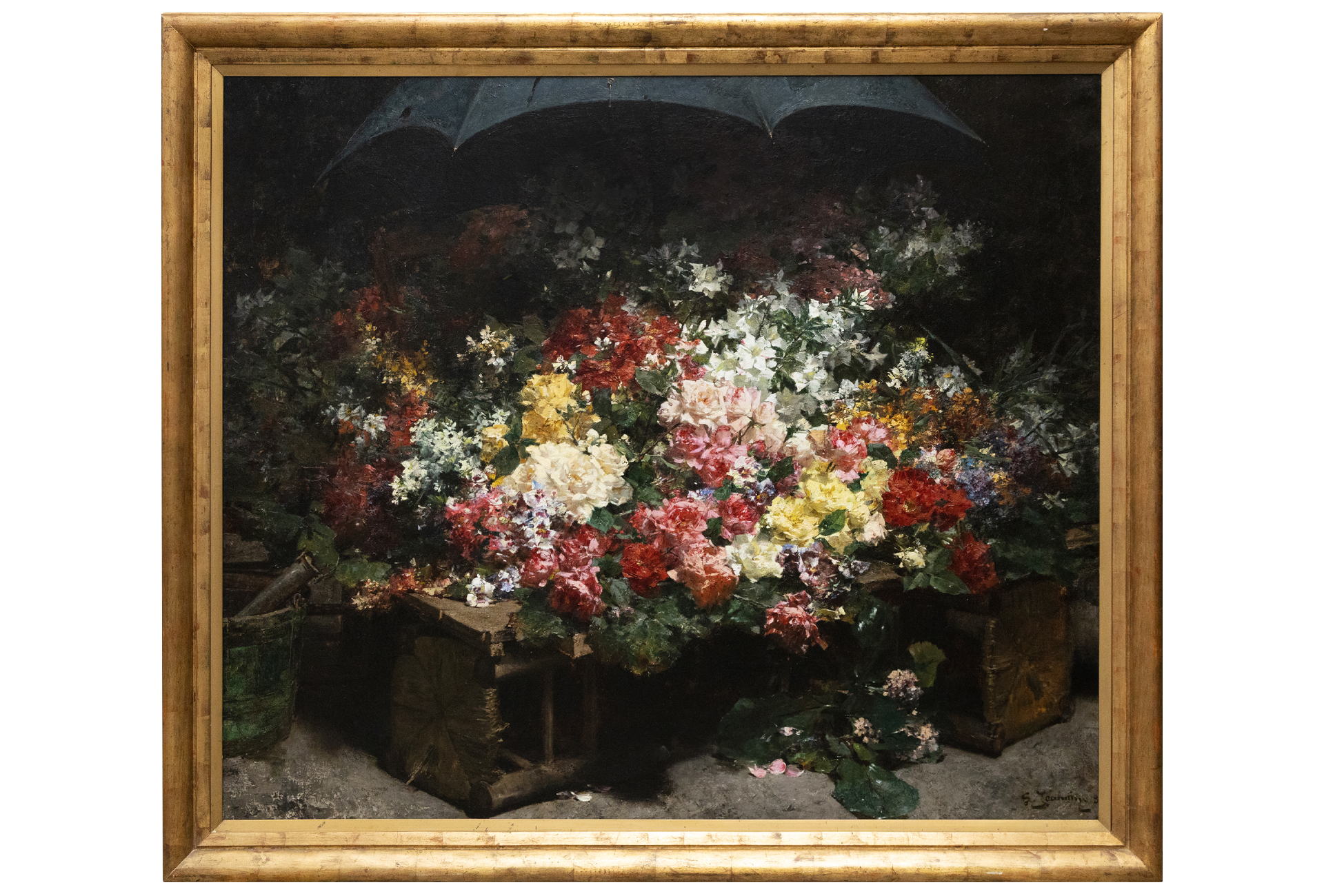
A profusion of roses and brightly coloured blooms emerges from the shadows in this monumental floral painting by Georges Jeannin, one of the leading French flower painters of the late 19th century.
More than a century after it was painted, Au stand des fleurs arrived at our studio following an auction purchase. At first glance, the most pressing concerns were recent scratches and paint losses thought to have occurred during post-auction handling or transit.

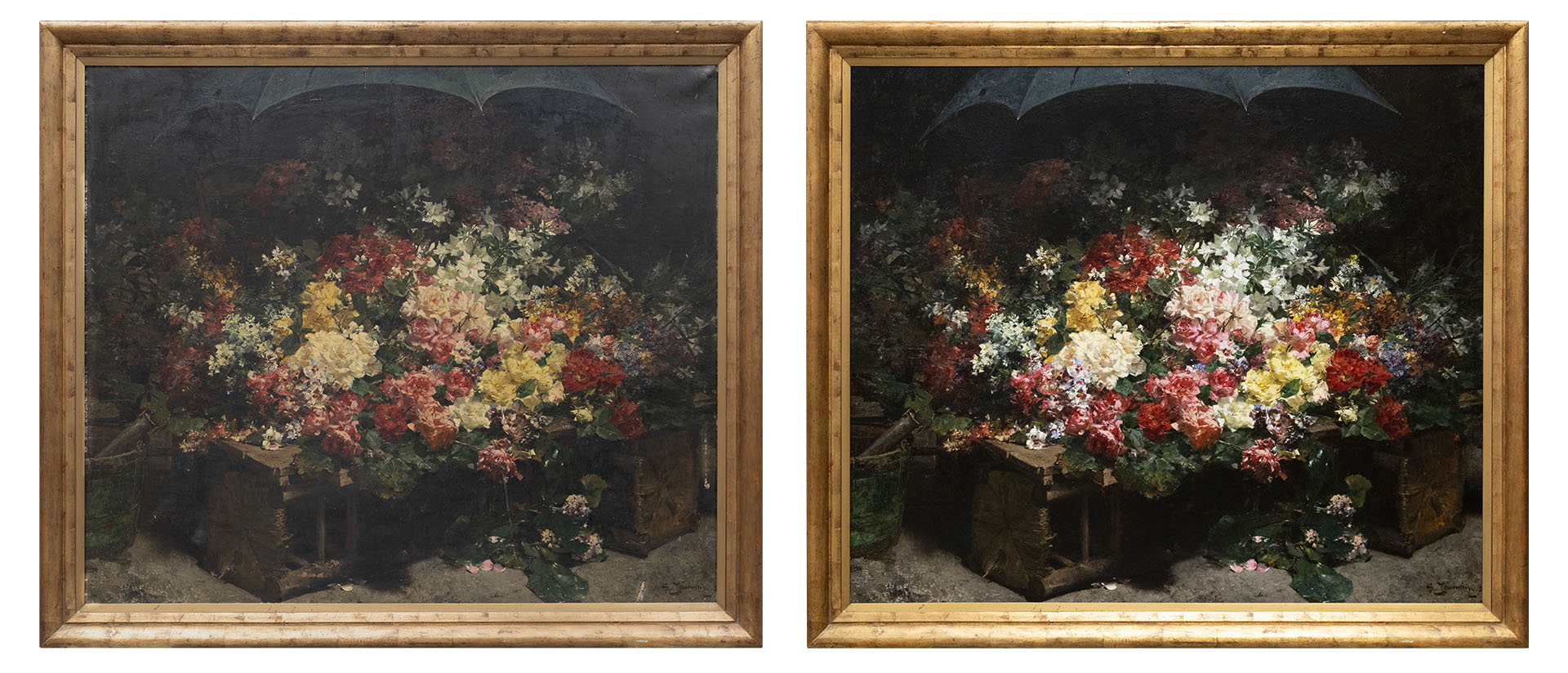
Closer examination, however, revealed a much longer conservation story beneath the surface: historic repairs, areas of unstable paint and an aged, discoloured varnish that had gradually muted the remarkable depth and vibrancy of Jeannin’s flowers.
Our conservators were tasked with addressing both the recent damage and the painting’s wider condition, carefully stabilising the original material while bringing greater clarity back to this dramatic floral scene.
 Above: the painting being varnished by hand as part of the conservation treatment
If your painting has been damaged following an auction purchase or during transit, contact our specialists for expert advice on restoration and repair.
Georges Jeannin: Master of Flowers
Georges Jeannin (1841–1925) was one of the leading French flower painters of his generation. Born in Paris and a pupil of Vincelet, he exhibited regularly at the Paris Salon, with works acquired by the French State. He later served as chairman of the Société des Peintres de Fleurs and was appointed a Chevalier de la Légion d’honneur in 1903.
 Above: a detail from a Georges Jeannin painting entitled A Day of Celebration, composed in 1882. The bust of Marianne and bouquets celebrate the French Republic, it is now displayed in the Petit Palais museum in Paris.
In Au stand des fleurs, you can almost smell the sweet perfume of the roses. Rather than presenting a carefully arranged domestic bouquet, Jeannin immerses us in the abundance of a flower market. Roses and complementary blooms spill from the darkness of the stand, with brilliant yellows, reds, pinks and whites emerging against deep greens and browns.
 Above: a detail from au stand des fleurs following restoration
The scene also reflects a Paris undergoing profound social change. The growth of a prosperous middle class brought new patterns of consumption, as luxuries once associated with aristocratic households became increasingly accessible. Flowers belonged not only in grand interiors, but in the homes and everyday lives of the expanding Parisian bourgeoisie.
 Above: a flower market in paris – detail from a painting by Marie-François Firmin-Girard, 1875
Against this backdrop, the sheer profusion of Au stand des fleurs feels evocative. Flowers fill almost every available space, creating an overwhelming impression of plenty and celebrating the colour, choice and prosperity of modern Parisian society. Yet fallen petals and drooping stems in the foreground offer a quieter counterpoint: amid all this abundance is a reminder that the beauty of flowers is inherently fleeting.
 Above: a detail from au stand des fleurs following restoration
Damage After Auction Transport
One of the principal concerns was damage that had become apparent following the painting’s auction purchase and transport.
A prominent abrasion extended from a red flower towards the table, with further losses visible near the signature. These areas had not appeared in the original auction photographs, raising concerns that the damage had occurred during subsequent handling or transit.

Unfortunately, transport damage is something we encounter with auction purchases. Large paintings can be particularly vulnerable to movement, pressure or accidental contact, resulting in scratches, torn canvas, paint loss and distortion – especially where an older paint layer is already fragile.
Photographing an artwork before collection and immediately after delivery can provide valuable evidence if new damage is discovered.
Where conservation is anticipated, our trained art handlers offer a collection and delivery service that brings an artwork directly from an auction house, antique dealer or storage location safely to our studio for professional assessment or treatment.

Once conservation is complete, the artwork can be carefully transported to your home, ready to be displayed in its best condition.
Restoring An Antique Oil Painting
Treatment began by securing areas of unstable and flaking paint so that further work could be undertaken safely. Surface dirt was removed from the front and reverse, the canvas was correctly re-tensioned and distortions were carefully reduced.
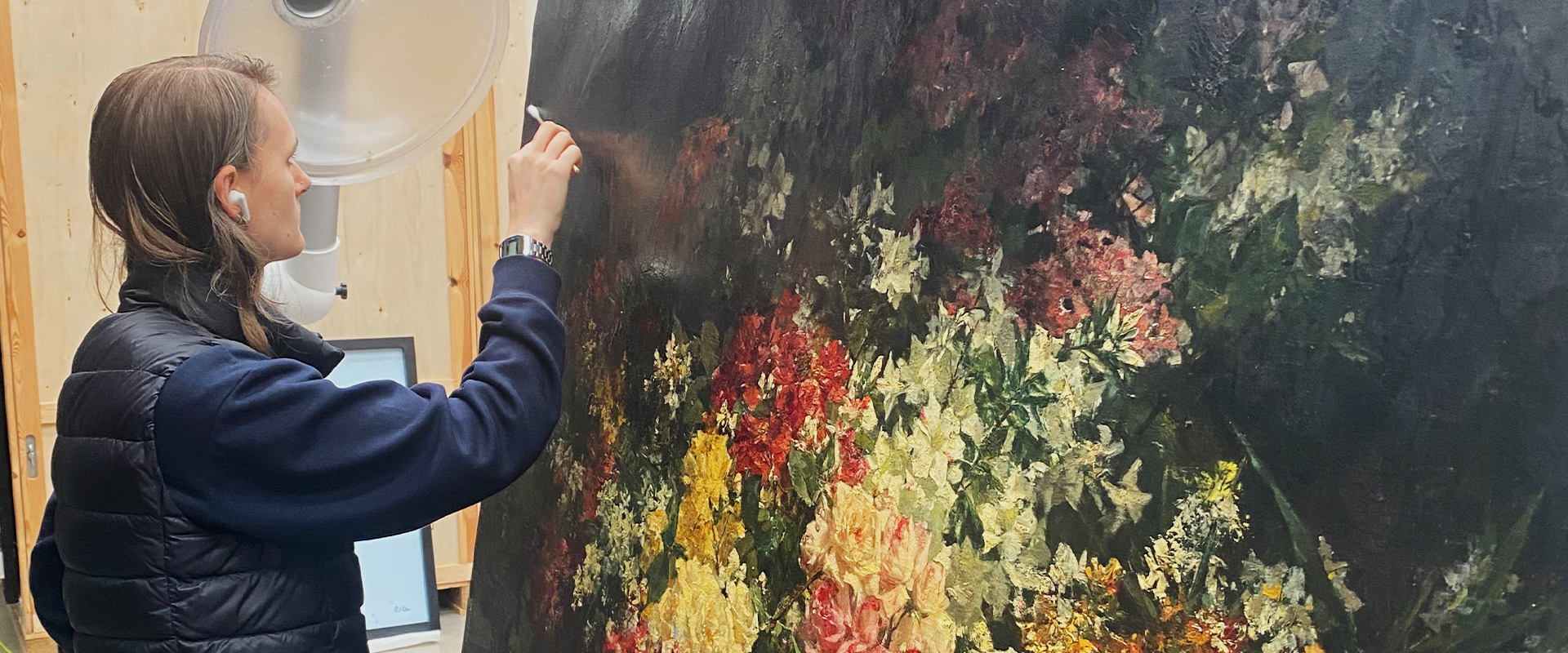 Above: our conservator Anna removing the discoloured varnish
Historic tear repairs were addressed where appropriate before the damaged areas were stabilised and reintegrated. Our conservator also carried out extensive testing to establish a safe method of reducing the old varnish and overpaint, with particular care required in some of the darker colour fields.
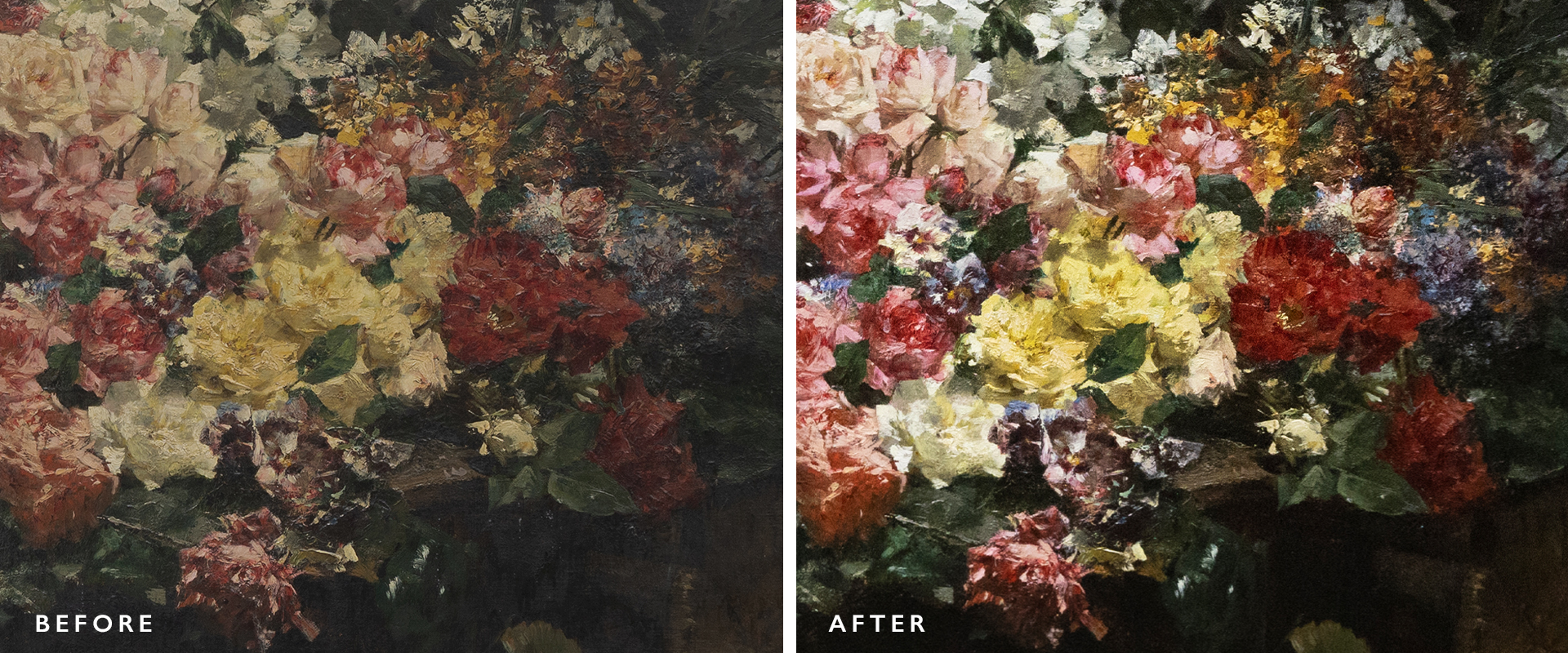
Varnish removal produced one of the most striking changes. As the discoloured coating was gradually reduced, the reds, yellows, pinks and greens became much clearer and the darker areas regained greater depth.
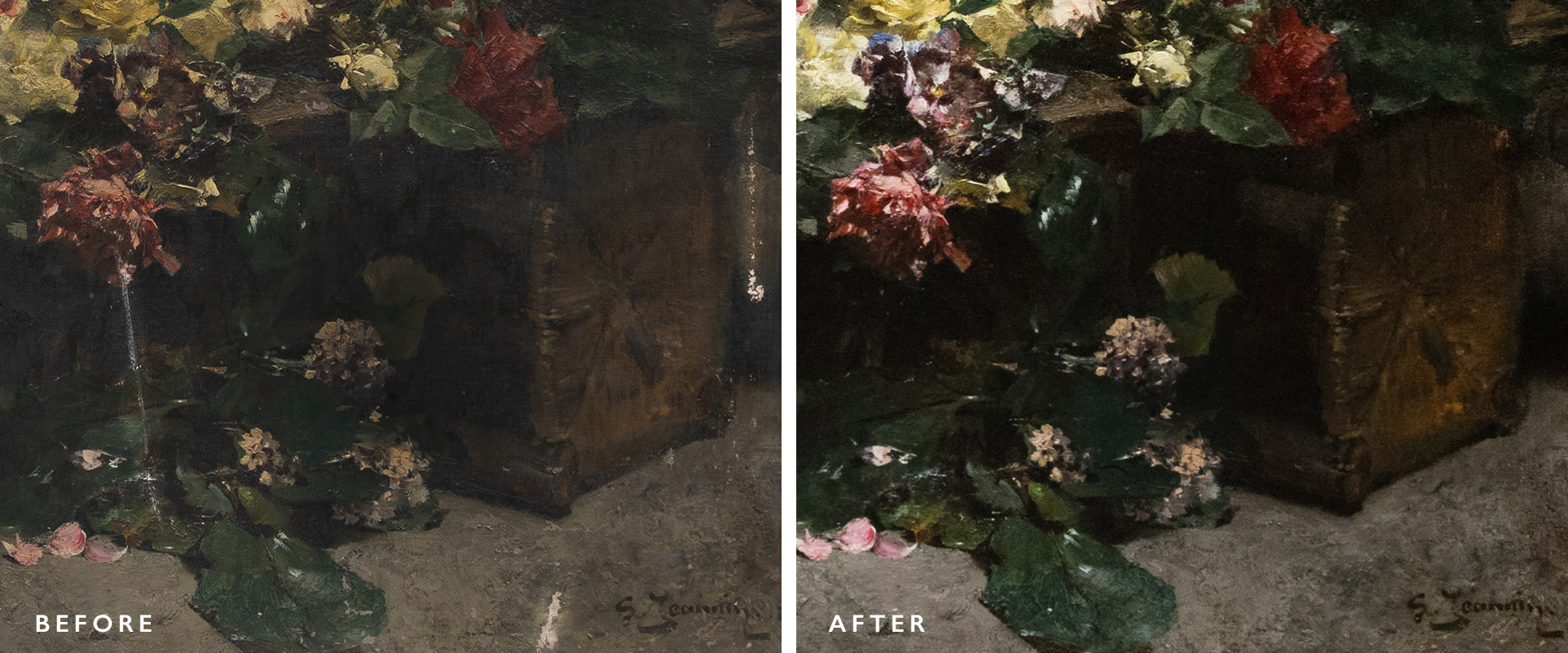
Finally, areas of paint loss were carefully retouched with conservation pigments before the painting received a final conservation varnish.
Bringing the Flowers Back to Life
The completed treatment allowed the extraordinary scale and colour of Jeannin’s flower arrangement to come forward again, while also addressing the structural problems that threatened its long-term stability.
The project is also a useful reminder that damage discovered after an auction purchase may be only one part of the story. An in-studio conservation assessment can reveal historic repairs, unstable paint and ageing materials that are difficult to identify from catalogue photographs alone.
Contact Our Experts
If you have purchased a painting at auction and discovered a scratch, tear, paint loss or other damage following delivery, our conservators can assess its condition and advise on the most appropriate next steps.