WhatsApp us
Following the death of David Hockney in 2026, renewed attention has naturally turned to the extraordinary breadth of work he produced across more than six decades.
When two prints from the very beginning of that career arrived at our studio for conservation, they offered a fascinating glimpse into the artist Hockney was becoming.
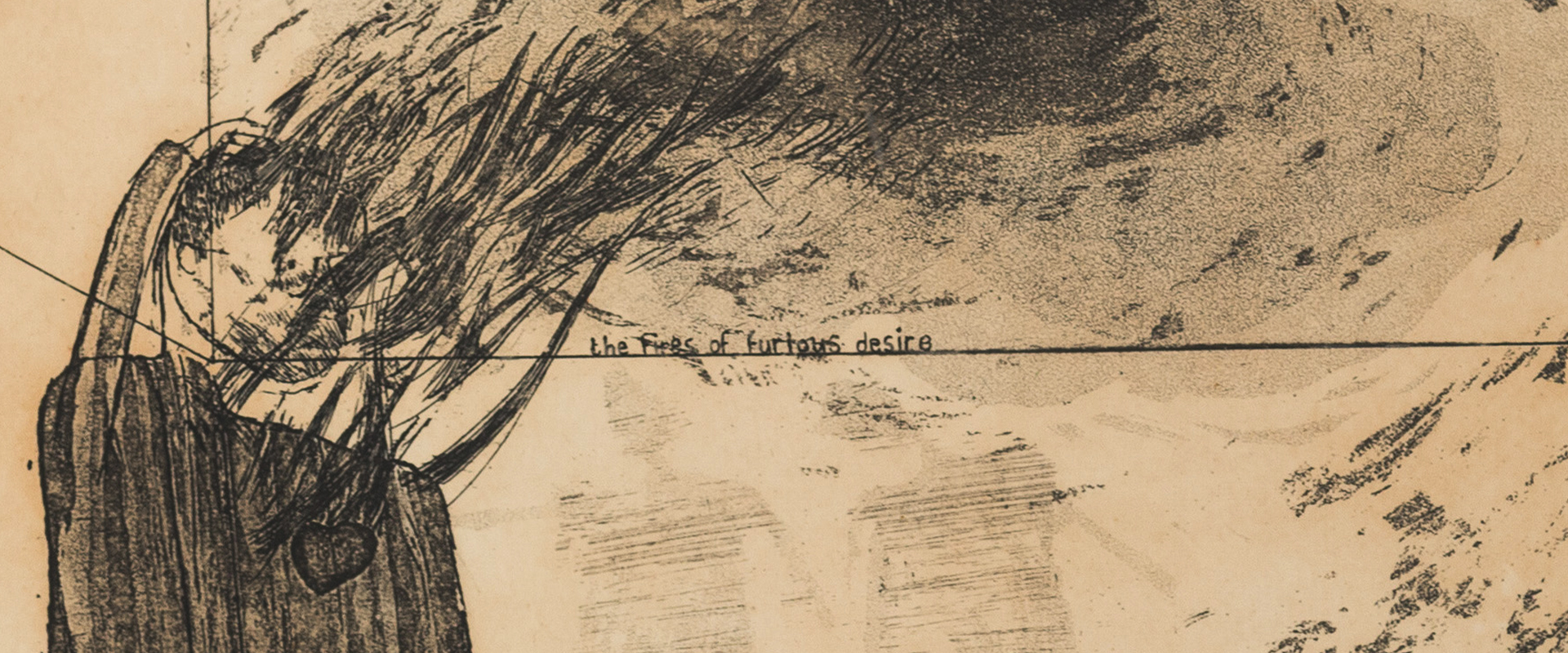
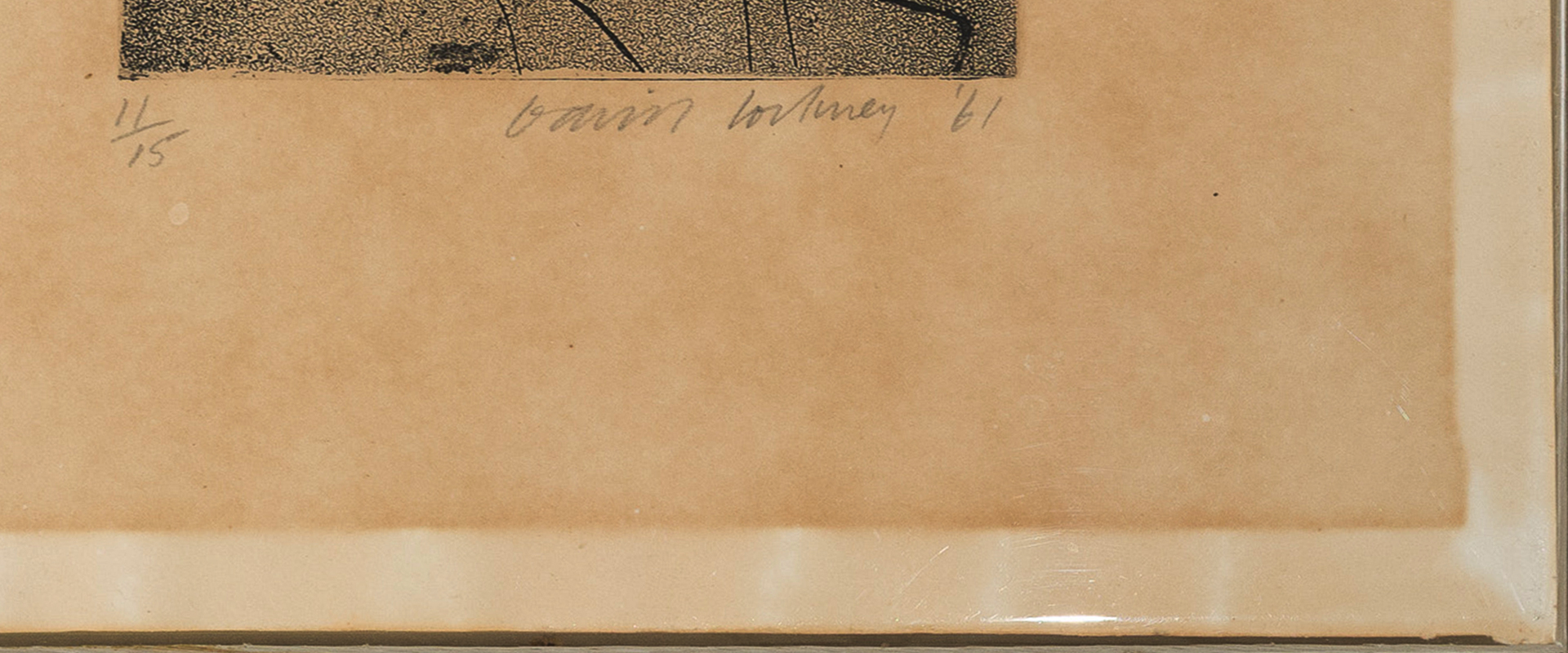
Created in 1961 while Hockney was still studying at the Royal College of Art, Alka-Seltzer and Fires of Furious Desire had remained in their original acrylic box frames for at least 50 years.
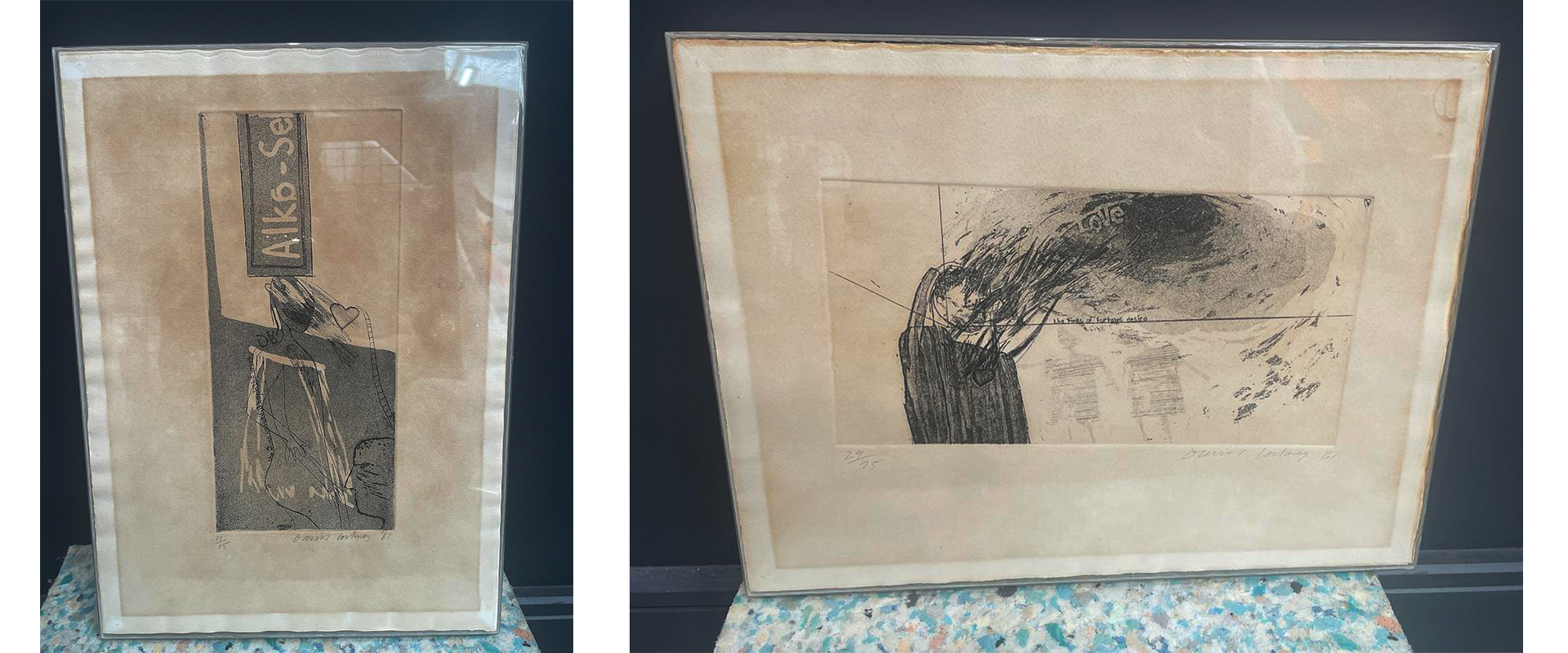
Over those decades, the paper had become heavily discoloured, with one work developing extensive yellow-brown staining that dramatically altered its appearance and reduced the contrast of Hockney’s printed image.
Their conservation demonstrates not only what can be achieved with historic works on paper, but also a less obvious risk to important prints: the ageing framing materials that may have surrounded them for decades.

For owners of older prints, drawings or watercolours, this type of deterioration can develop gradually and may not become obvious until many years have passed. If you are concerned about discolouration, staining or the materials used to frame a work on paper, contact our conservation team for an assessment.
Hockney’s Alka-Seltzer & Fires of Furious Desire
Both prints reflect the highly personal nature of Hockney’s early work. At this stage, he was experimenting with text, figures, symbols and references drawn from his own experiences, using printmaking to explore themes of attraction, identity and desire.
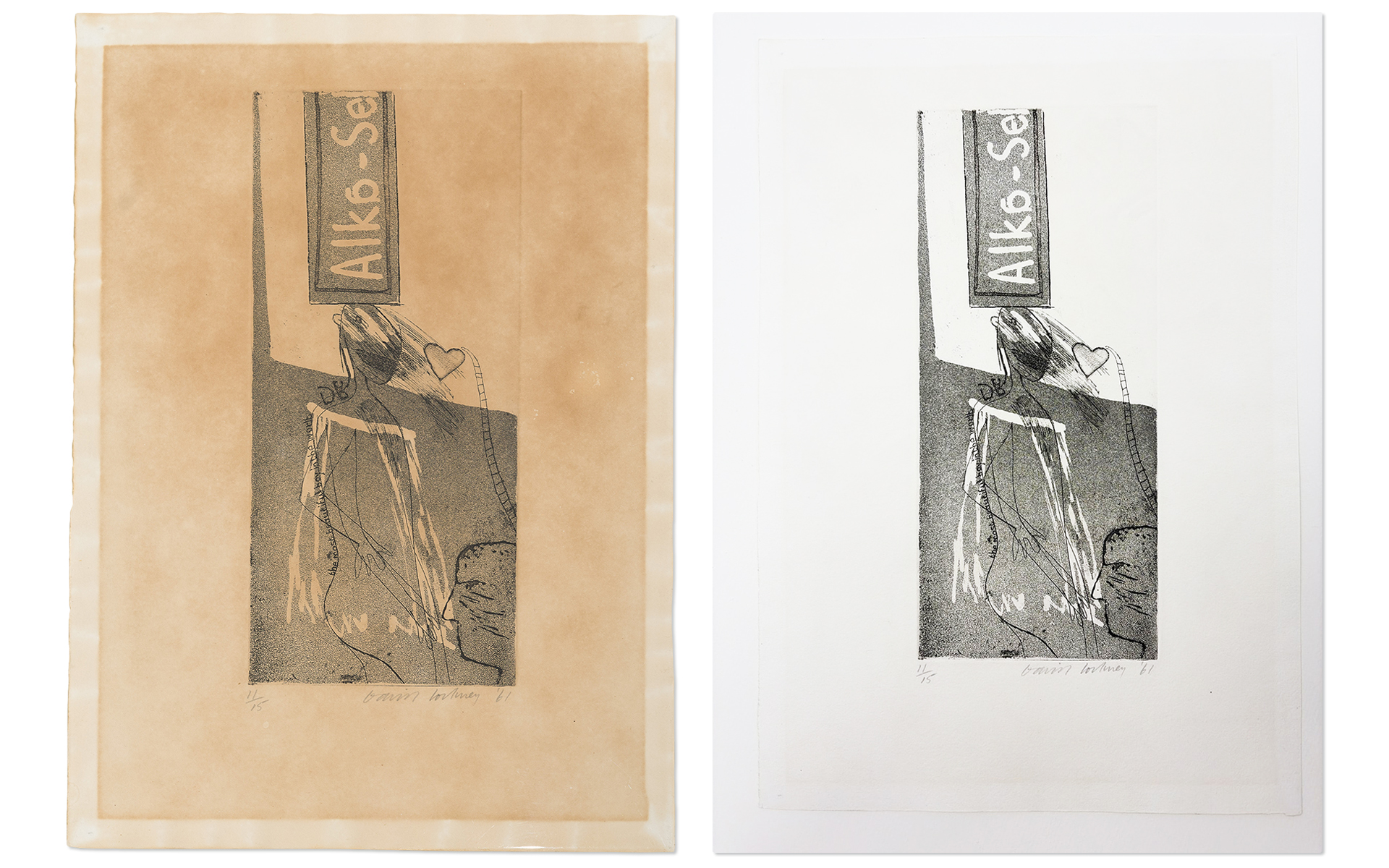
In Alka-Seltzer, Hockney combines a male figure with fragments of text and the conspicuous branding of an Alka-Seltzer sign. The figure is identified by the initials ‘DB’, referring to Hockney’s ‘Doll Boy’ – a persona inspired by fellow Royal College of Art student Peter Crutch and developed in response to Cliff Richard’s song Living Doll.
Hockney playfully reverses the song’s conventional romantic subject, making a young man the focus of attraction instead. The Alka-Seltzer imagery adds another layer of visual wordplay, suggesting the fizz and excitement of infatuation while introducing the commercial imagery that was becoming increasingly prominent in British Pop Art.

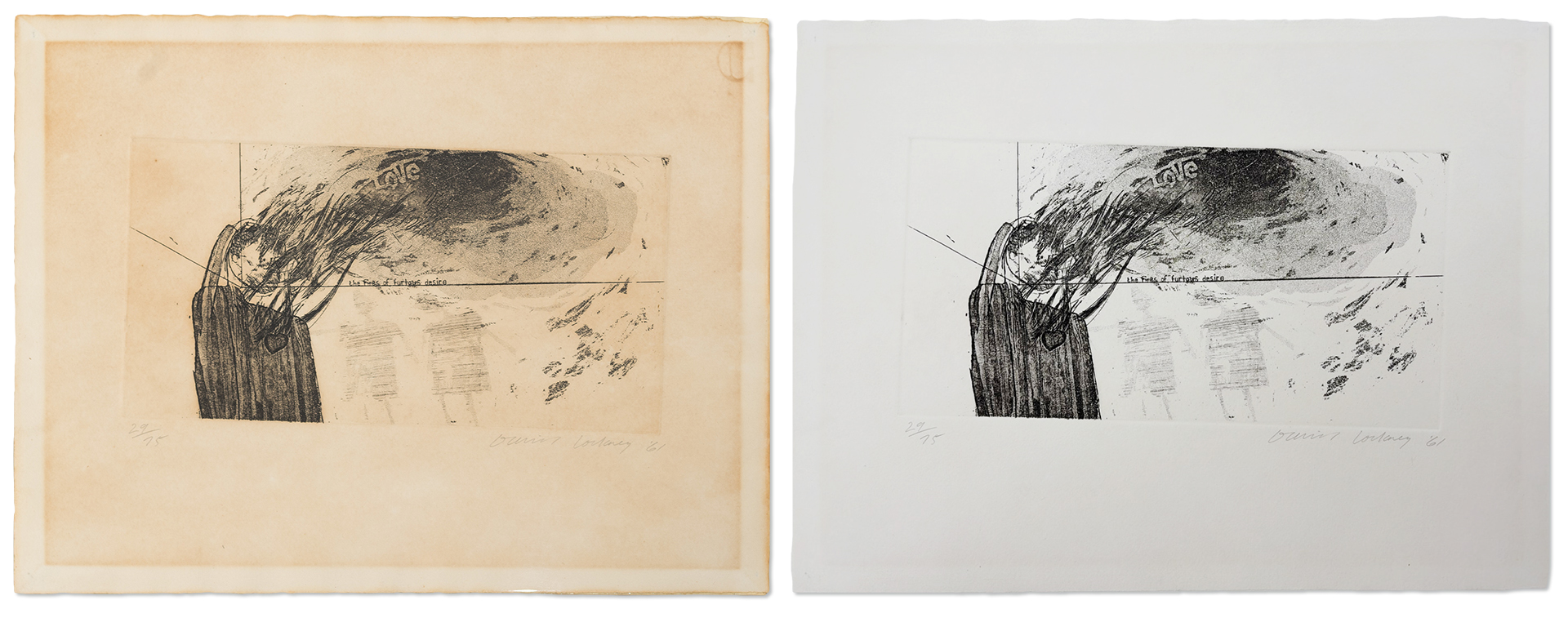
Fires of Furious Desire is even more overtly personal. The composition centres on two male figures, with the bespectacled figure on the left generally understood as a stylised self-portrait of Hockney. A heavily etched heart appears prominently on his chest, while the title and surrounding words evoke the intensity of concealed love and desire.
Hockney was drawing on literary influences including William Blake and Walt Whitman at this time, using their language alongside his own imagery to explore sexuality and identity. Created when homosexual acts between men were still illegal in Britain, the print belongs to a remarkably candid group of early works in which Hockney began making his own experiences and desires visible.

Beyond their importance within Hockney’s early career, these particular impressions also had a long family history. They had remained in the same collection for more than half a century, having originally been purchased by the current owner’s father, while Fires of Furious Desire had been awaiting restoration for around 20 years.
That history also meant the prints had spent decades within the same original framing. Although the frames themselves were retained, the materials concealed behind the works were no longer suitable for their long-term preservation. Once the prints were removed, the extent of the discolouration associated with decades in an older framing environment became particularly apparent.
The Risks of Old Framing Materials
Frames can be an important part of an artwork’s history, and there is no reason to replace an original frame simply because it is old. The materials hidden inside it, however, are another matter.
Older framing systems frequently contain backing boards, mounts, tapes and other components that would not meet modern conservation standards. Over many years, acidic or unstable materials can contribute to yellowing and staining of paper. They may also offer insufficient protection against changing humidity, airborne pollutants and other environmental factors.
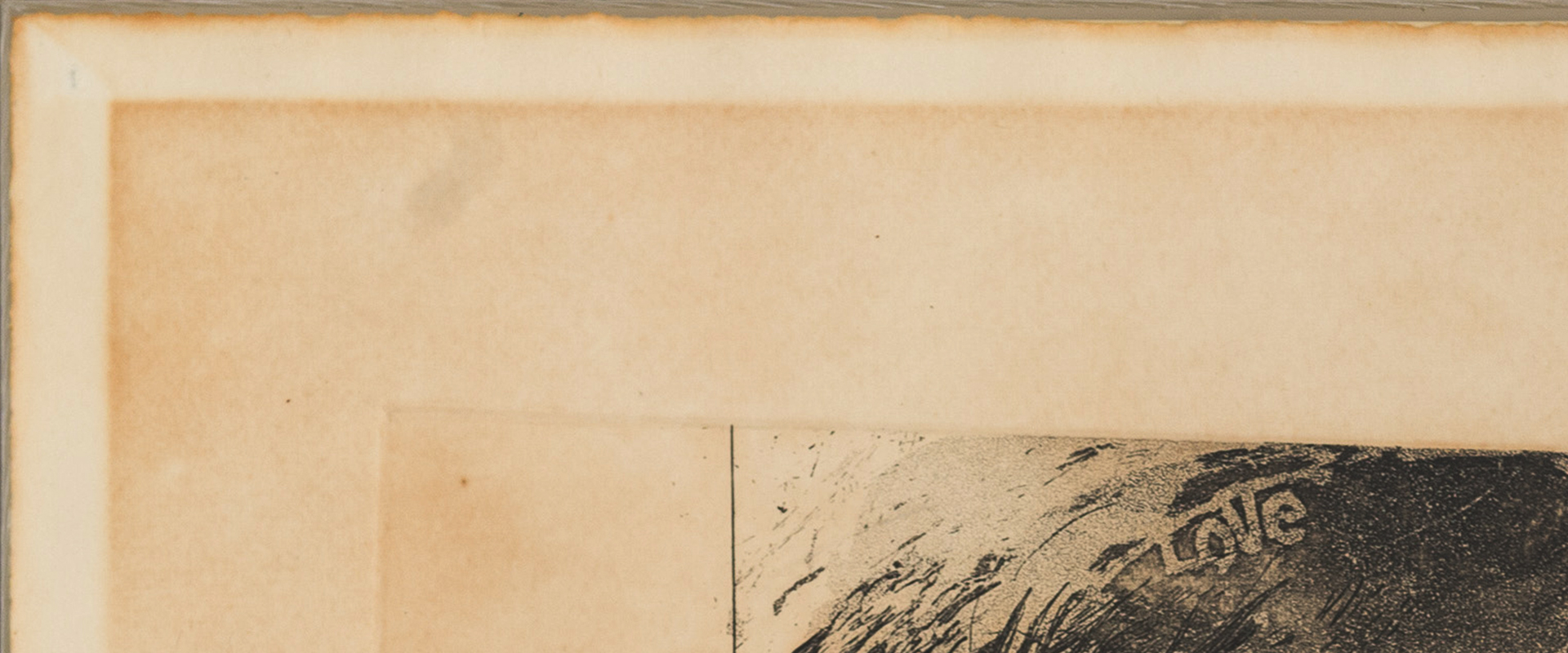
In this case, the prints had spent more than half a century within their acrylic box frames. Once conservation was complete, the existing backboards were found not to be acid-free conservation-grade materials and replacement was recommended.
This is an important consideration for any valuable or treasured work on paper. A frame may look perfectly sound from the front while unsuitable materials remain concealed behind the artwork.
Reducing Decades of Discolouration
Before treatment began, the conservator assessed and tested both prints to establish how the paper, inks and staining would respond. As with any work on paper, treatment needed to be carefully tailored to the individual artwork rather than approached as a standard cleaning process.
The conservation treatment included:
- Careful surface cleaning to remove loose dirt and pollutants
- Controlled washing to reduce ingrained dirt, contaminants and overall discolouration
- Testing to establish safe methods for addressing more persistent staining
- Targeted treatment of remaining areas of discolouration
- Careful pressing and flattening of the sheets
Following assessment and testing, the conservator confirmed that these treatments were suitable for the works. It was also explained that some residual discolouration could remain; the aim was to achieve the best possible improvement while working safely within the limitations of the original materials.

The difference was striking. The heavy yellow-brown cast was substantially reduced, returning the paper much closer to a clean, even appearance and allowing Hockney’s printed lines, tonal passages and subtle details to become far clearer.
Keeping the Original Frames
The owner was keen to retain the original 1960s frames if this could be done without compromising the newly conserved prints. Rather than replacing the frames unnecessarily, our team looked at how they could be adapted for safer continued use.
The original backing boards were removed and replaced with acid-free conservation-grade boards before the prints were returned to their respective frames.
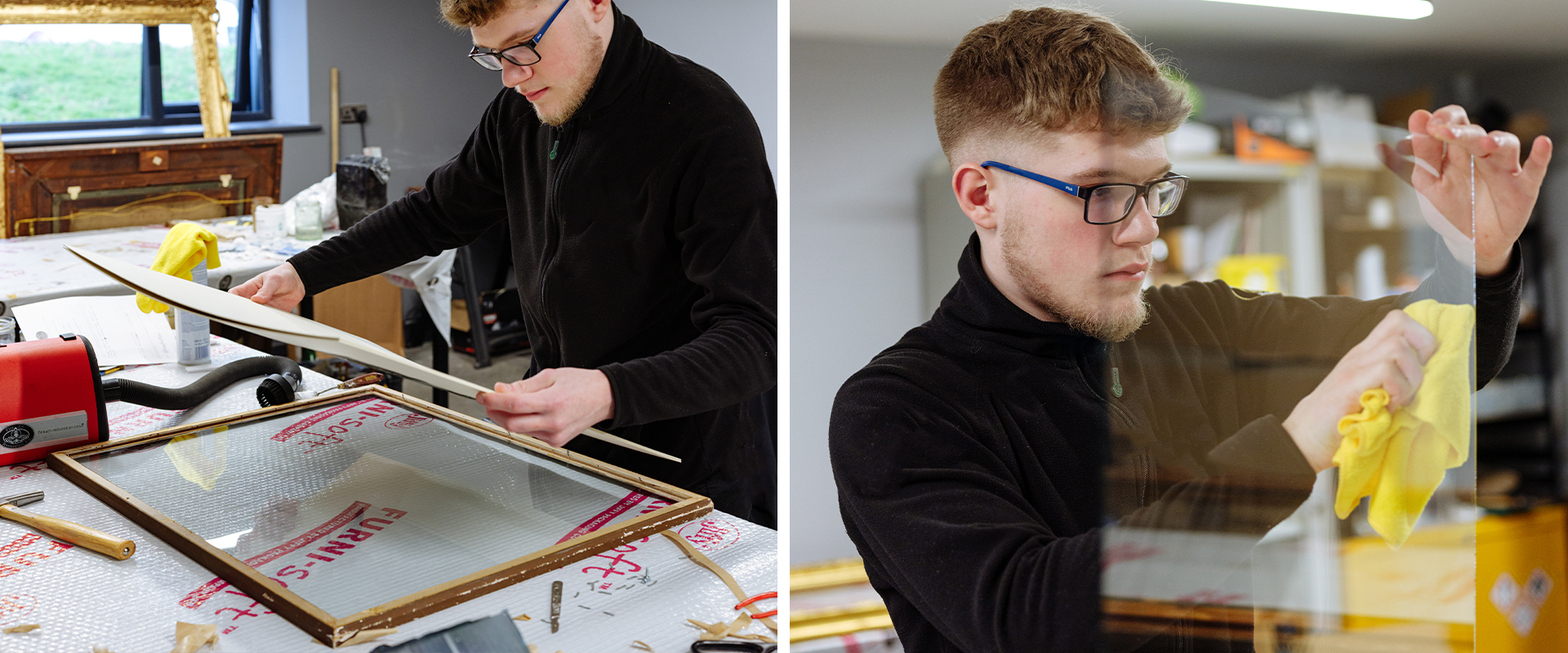
This approach retained an element of the works’ history while removing one of the unsuitable materials that had been in close proximity to the paper.
For historic framing, the solution is therefore not always an entirely new frame. In many cases, existing frames can be retained while mounts, backboards, glazing or other internal components are upgraded to provide a more conservation-appropriate environment.
Reviving Modern Prints
The project is a valuable reminder that deterioration caused or accelerated by acidic framing materials does not necessarily mean that a work on paper is beyond recovery.
“I just wanted to say a massive thank you for the phenomenal job that’s been done on the Hockneys. Your paper conservator is an absolute miracle worker! My whole family is bowled over at the transformation – especially my dad, who bought the pieces more than half a century ago, and so it means a great deal to see them back to their former glory.
Thanks for being such a pleasure to deal with, and as I mentioned to Amy, there will very likely be a few more pieces from my family’s collection in need of similar work (albeit not in quite such a sorry state), so I will definitely be in touch then!”
With appropriate testing and specialist paper conservation, substantial improvements are possible while respecting the original print and its history.
Contact Our Team
If you have an older print, drawing, watercolour or other work on paper showing signs of yellowing, staining or deterioration, our paper conservators can assess both the artwork and its existing framing materials.
Contact Fine Art Restoration Company to discuss conservation, restoration and conservation framing options for your collection. You can speak to our experts by filling out the form below or emailing info@fineart-restoration.co.uk