 WhatsApp us
Charcoal is one of the rawest artistic mediums, collected from burnt vegetation and applied straight to the page. Used for hundreds of years, this jet black pigment can be found in drawings from the renaissance through to the modern day.
Traditionally, one of the highest forms of artistic achievement is measured by the use of light and shadow – called chiaroscuro. Charcoal was the perfect tool in allowing light to pour through a dark composition. Charcoal can often be found mixed with chalk, graphite pencil and colour pastels due to its versatility.
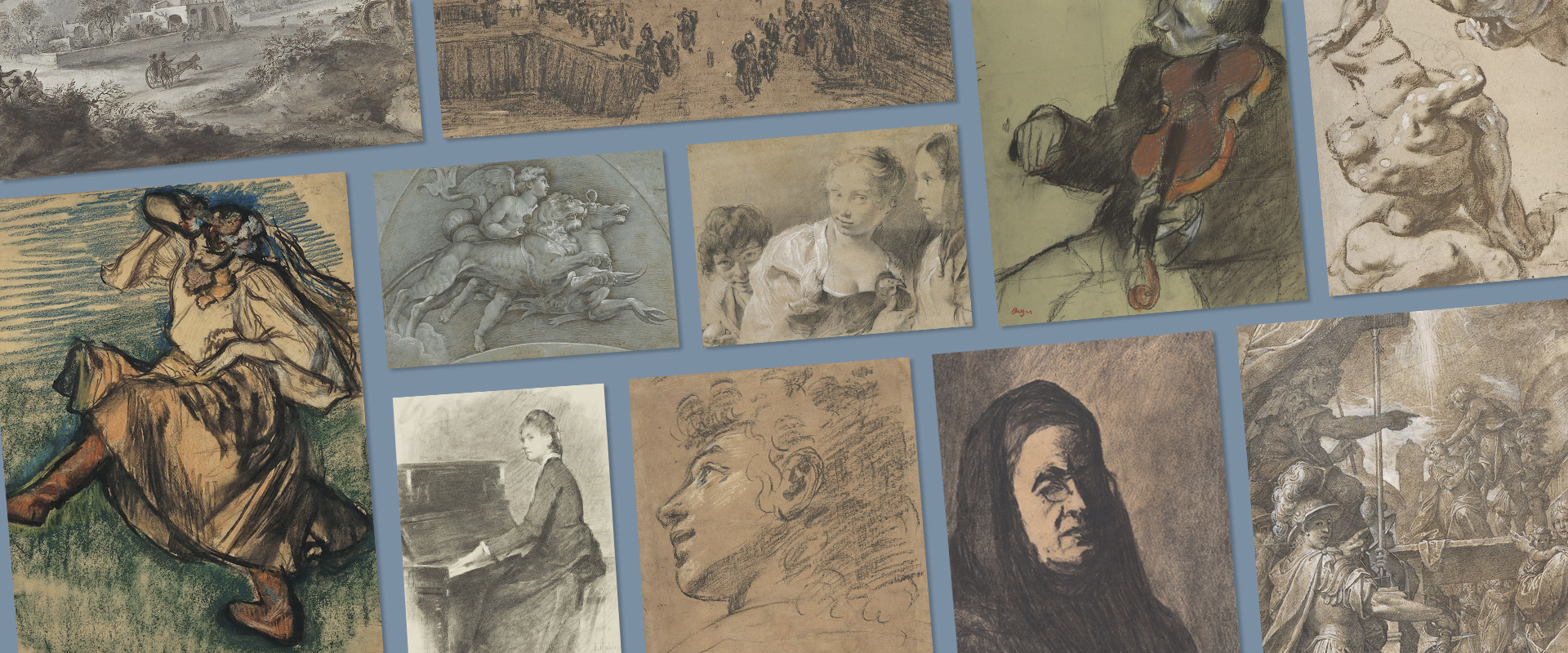 Above: a selection of charcoal drawings by artists of all eras from the renaissance to the impressionists
However, the powdered finish of charcoal allows it to easily become smudged and visually disturbed. It can also face challenges from a dry or humid environment, as well as issues caused by the paper it sits upon.
This article will cover the use of charcoal, as well as how charcoal art should be cared for and professionally repaired.
What is Charcoal?
Charcoal is traditionally made from heating vines and twigs, usually sourced from the willow tree. In an enclosed chamber, a process called pyrolysis is produced by depriving the twigs of oxygen and slowly heating them to over 400°C. This removes all of the moisture with only carbon remaining.
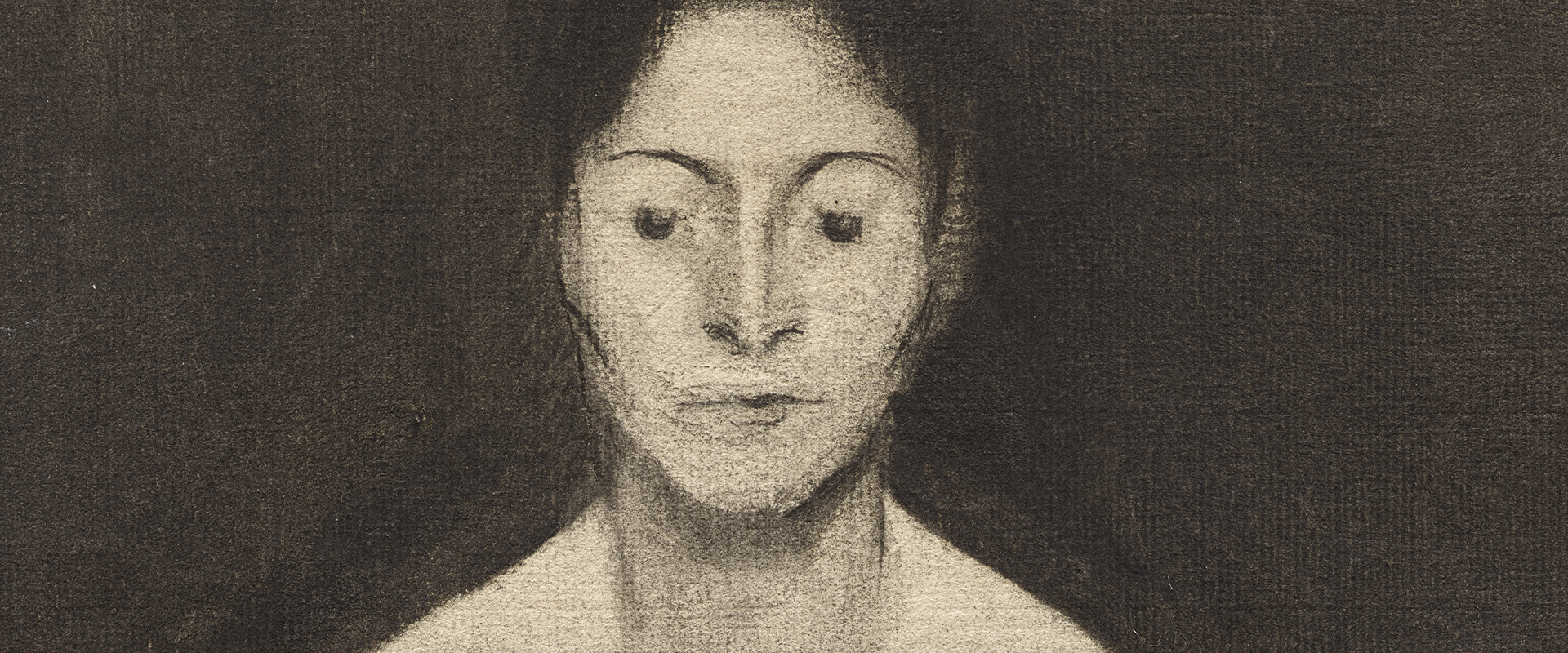 Above: detail of Seated Female Nude by Paula Modersohn-Becker, 1899
Charcoal allowed artists of various abilities and resources to compose drawings, as it did not require the wealth to purchase many pigments and the utensils required for a full studio.
There are various ways to use charcoal other than drawing in a linear fashion. Stumping is the term used for spreading the particles with a finger or piece of cloth. Charcoal can also be used on its side, rather than a point, to achieve a wide and dark area.
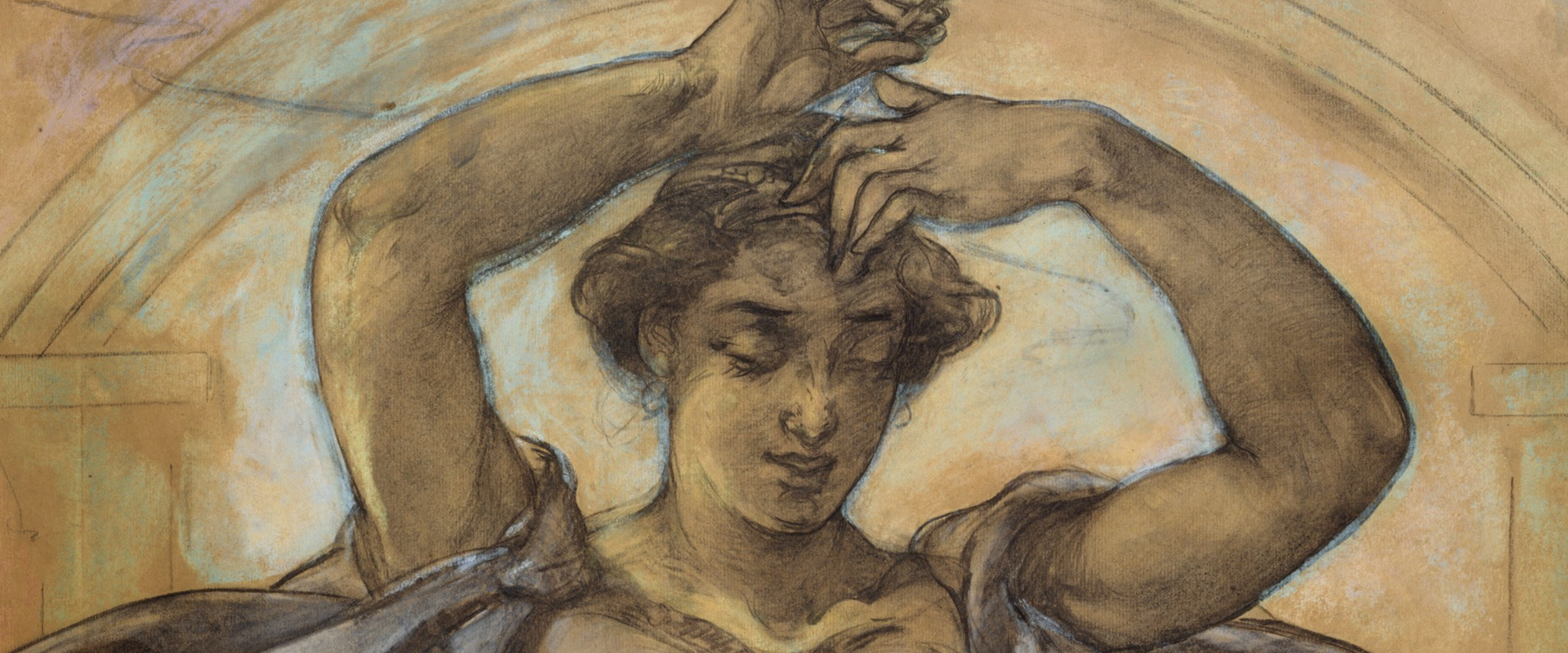 Above: detail of Coral by Walter Shirlaw, 1892
Charcoal Art
Many artists used charcoal in their preparatory sketches, along with chalk to provide a sense of light, shadow and scale. Many renaissance drawings that hold high value today were not made with the purpose of being displayed and were simply a way to instruct a final composition, whether this was a mural, sculpture or oil painting. On these pieces, you can often see chequered lines to make it easier for the artist and their assistants to upscale onto a wall or canvas.
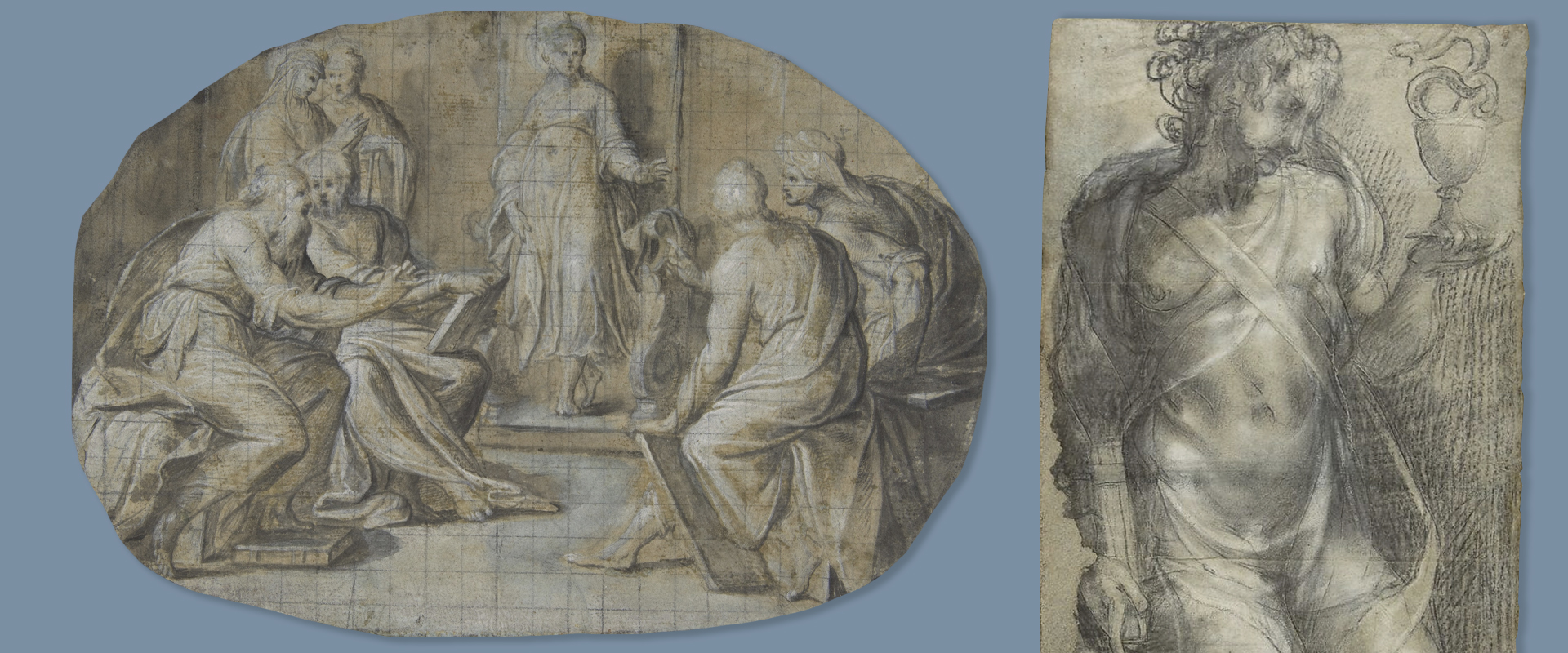 Above: two 16th century charcoal studies by Camillo Procaccini and Francesco Salviati
Modern and contemporary artists favour charcoal as a bold substance, allowing them to produce heavy waves of jet black in abstract forms, as well as impressionist pieces. Artists who have used charcoal in many of their drawings include:
- Picasso
- Degas
- Mondrian
- Gauguin
- Cezanne
- Toulouse-Lactrec
- Matisse
In the 19th century, professional and amateur artists enjoyed practicing their craft outdoors. Charcoal was the perfect tool for a dramatic composition with little preparation required. It allowed artists to easily form shaded areas of woodland and landscapes without requiring a sharp pencil or portable colours. The natural substance was also in keeping with a love for the great outdoors and pure simplicity in the face of the industrial revolution.
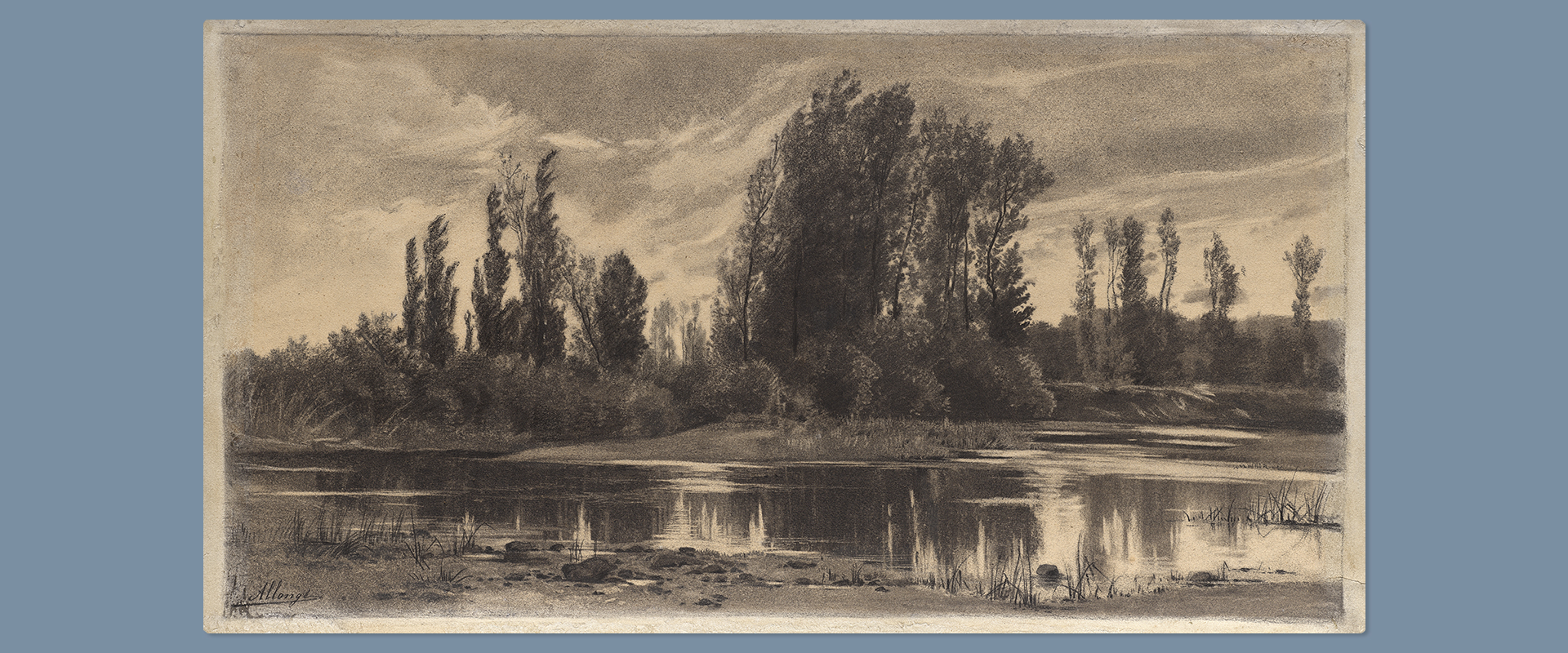 Above: Gust of Wind on the Poplars by Auguste Allongé, 1873–80
Care & Restoration
Delicate works on paper like charcoal should be handled as infrequently as possible. If they need to be moved, keep them within a protective frame or mount so that you can avoid any accidental touching of the surface area.
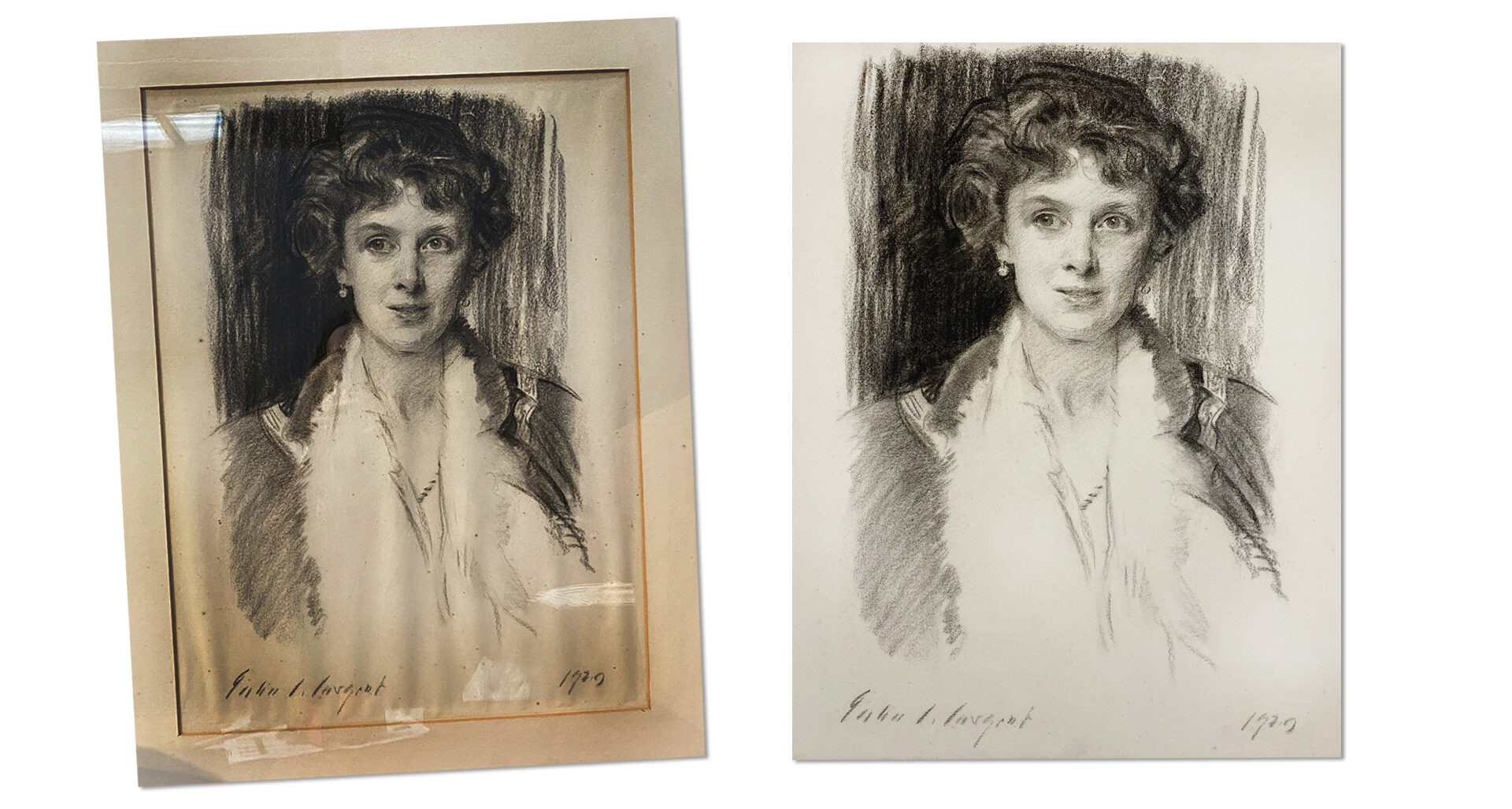
Charcoal can flake and become dusty over time, with particles sometimes pulled away by static on the interior glass of a frame. Loose pigment should always be stabilised by a conservator, rather than adding an off-the-shelf fixative that may be unsuitable for the materials – especially if the piece has significant age. Below is a portrait by John Singer Sargent, before and after conservation treatment by our team.
Display the drawing away from radiators and other areas that may have a fluctuation in temperature, as well as bathrooms and kitchens with rising humidity. Paper artworks should be kept at a relative humidity of 50% to avoid drying out or becoming overly moist. Temperatures should be no higher than 20 degrees celsius, as a dry and hot atmosphere may cause the charcoal to loosen and fall away from the paper.
Faced with a fire or flood, these parameters may be impossible to maintain and therefore the artwork should be removed to a safe location as soon as possible to avoid further deterioration. Carry and store a charcoal artwork upright in these circumstances, to avoid any losses if the charcoal surface has become powdered and loose.

Avoiding humidity and acidic mount board and framing materials should avoid the spread of foxing and yellowing. Sometimes paper can yellow due to the quality of the material, but in most cases this can be reversed through sensitive conservation methods. We can clean paper and re-mount and re-frame it in a pH neutral option, including museum quality glass for added protection. The example above shows the restoration result following the removal of embedded contaminants in the paper.
Speak To Our Team
Please contact us to discuss your restoration project, no matter how complex it may seem. Our team of experts is happy to help.
As part of our service we offer a nationwide collection and delivery service as well as information on worldwide shipping to our studio. E-mail us via info@fineart-restoration.co.uk or call 0207 112 7576 for more information.
