WhatsApp us
A childhood accident had left this family portrait with a tear through the canvas for more than six decades. But the damage was also part of what made the painting such a remarkable record of one family, connecting three generations.
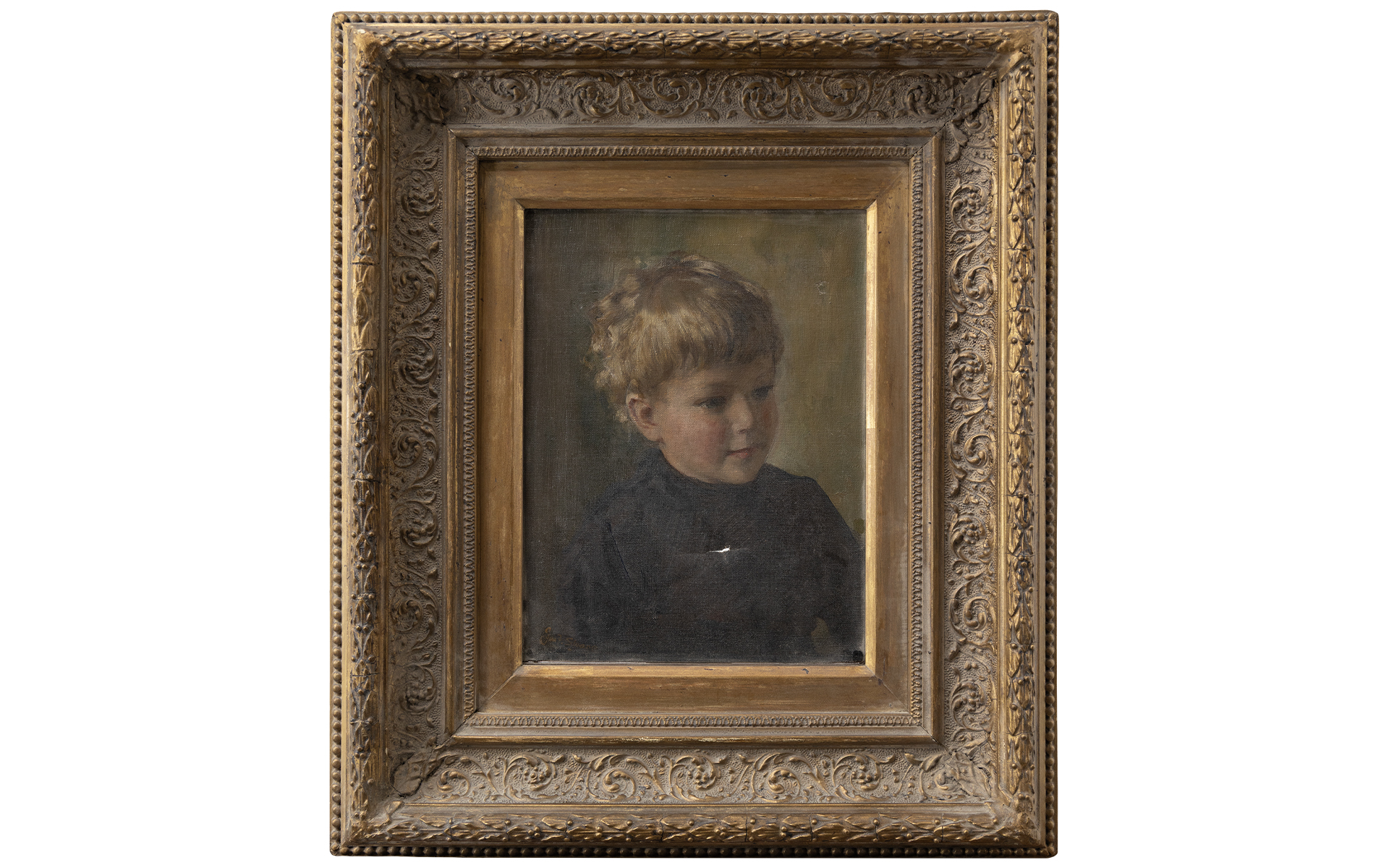
Painted around 1912, the oil on canvas depicts Robert Wood Sloane at three years old. The artist was his father, James Fullarton Sloane, who had exhibited at the Royal Scottish Academy. It was an intimate family portrait: a father’s painting of his young son.
The third generation would leave his own, rather more accidental, mark on the painting. As a boy, Robert’s son Iain decided to use the portrait for target practice. His arrow struck the canvas over his father’s chest, leaving damage that would remain visible for more than 60 years.
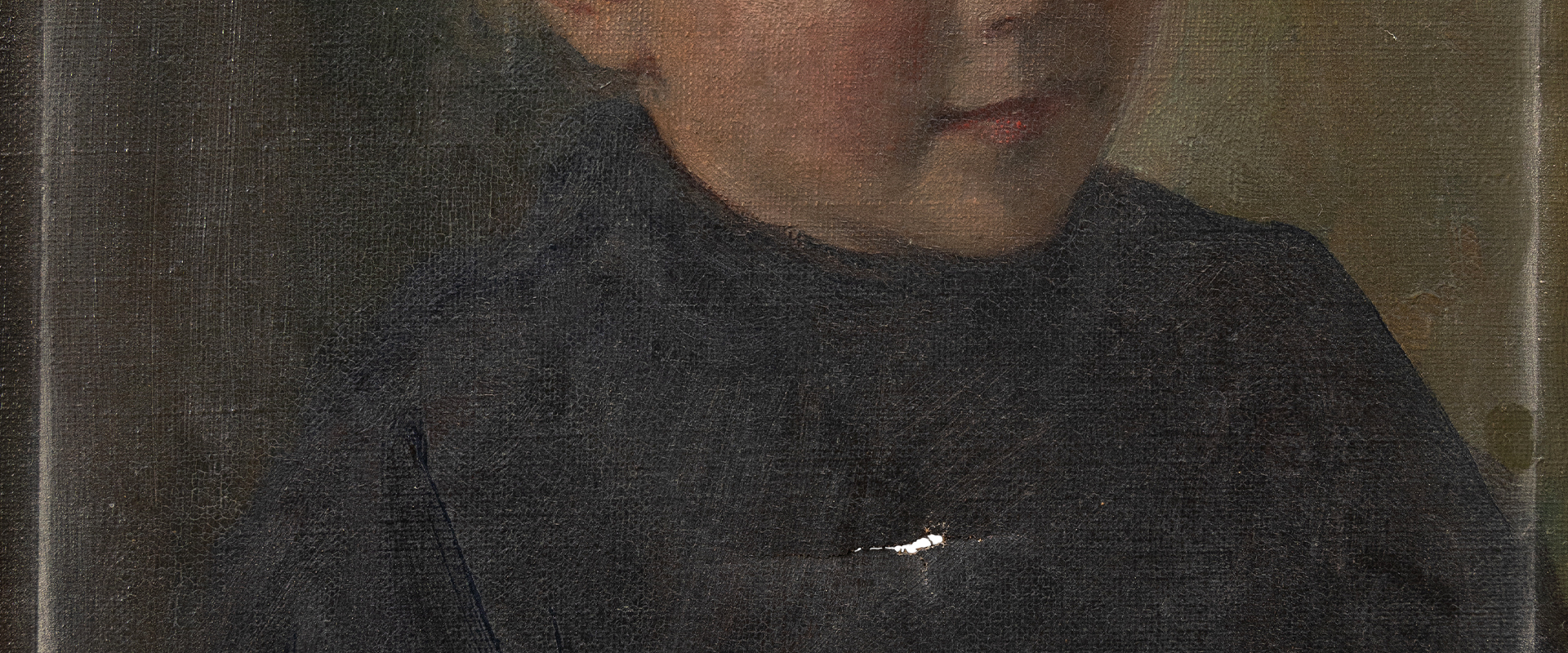 Above: a close up of the painting, showing the tear caused by an arrow
For decades, the family debated whether to repair the canvas tear at all or leave the damage in place as part of the painting’s story. Eventually, however, conservation became important not simply for its appearance, but to prevent the damage from worsening and the paint surrounding the tear from becoming unstable and falling away.
The decision was made to preserve the portrait – and with it, a remarkable piece of family history connecting three generations of the Sloane family.
If you have a family painting with a tear, puncture or other historic damage, our paintings conservators can assess its condition and advise on the options available to stabilise and restore it. Contact our team for specialist advice.
Assessing the Painting’s Condition
Although the arrow damage was the most memorable part of the painting’s history, examination by our paintings conservators revealed that it was not the only area requiring attention.
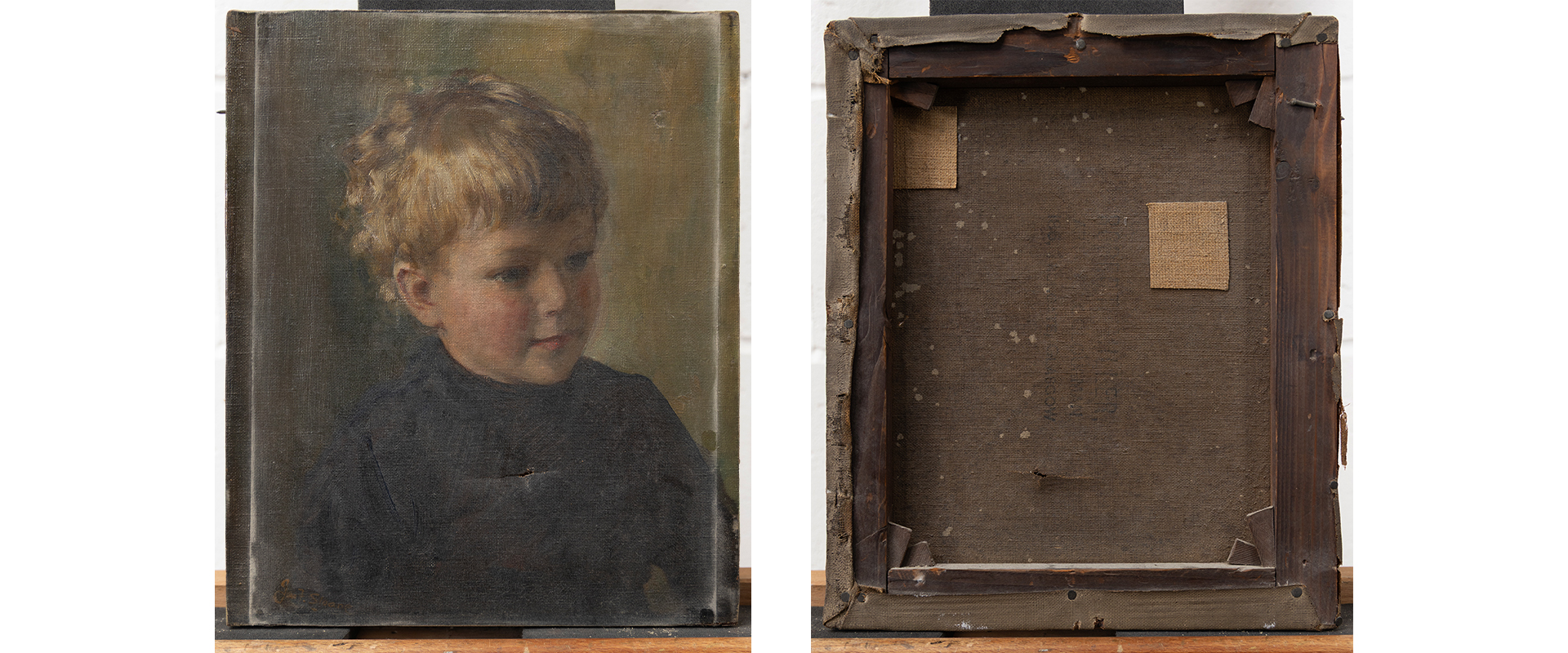
The canvas showed evidence of previous restoration, including two patches applied to the reverse. These corresponded with a crescent-shaped scratch and associated paint loss, as well as a linear abrasion through the sitter’s hair. There were also areas of deformation to the canvas, alongside further wear and deterioration around the lower corners.
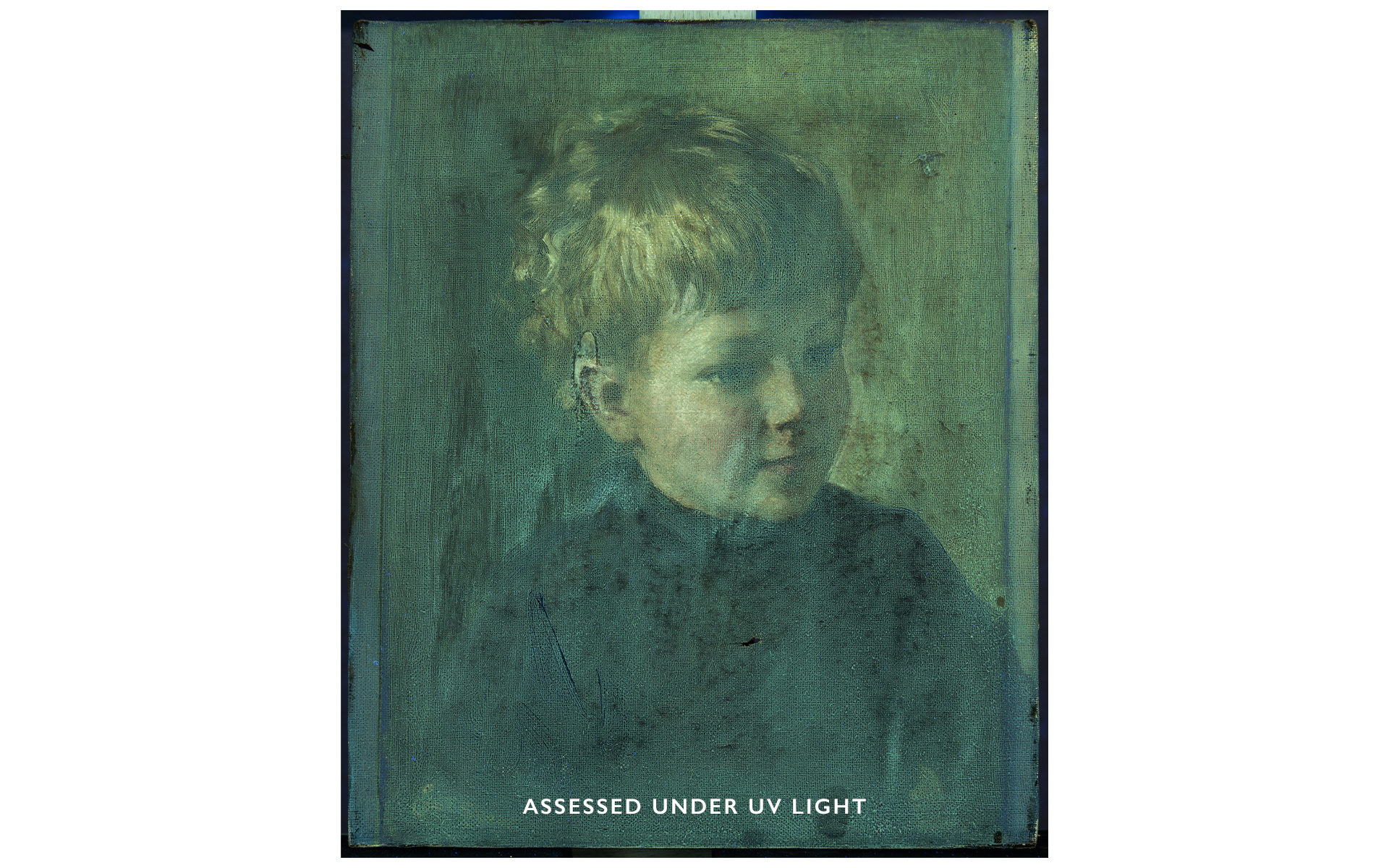
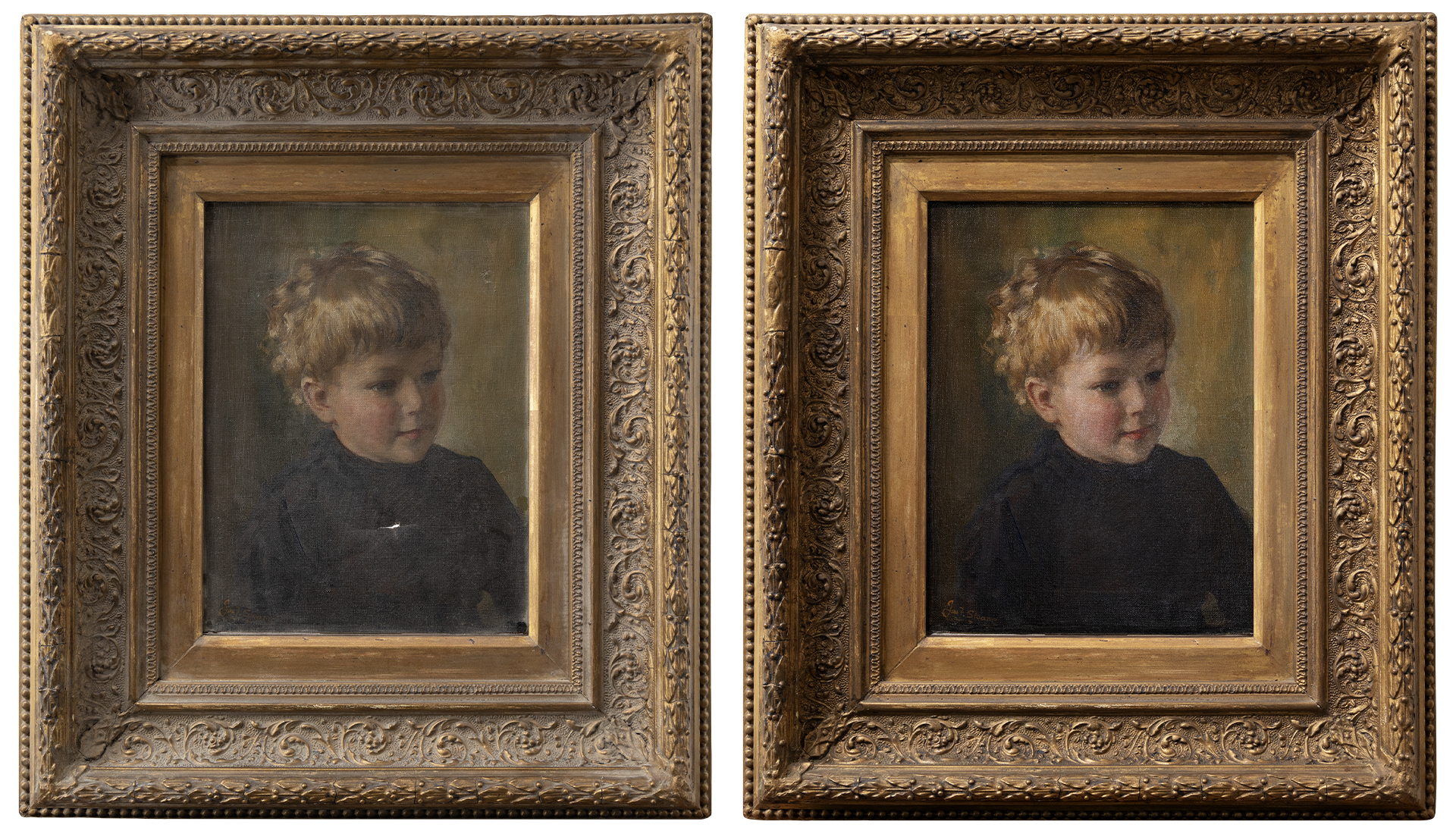
A substantial layer of dust had accumulated across the painting and the varnish had become discoloured. Testing established that the varnish could be safely removed, allowing the ageing coating to be replaced with a new protective varnish.
The family was presented with different treatment options, ranging from essential structural conservation to a more comprehensive programme. They chose the latter, allowing our conservators to address the tears and deformations, previous repairs, surface dirt and ageing varnish as part of one complete treatment.
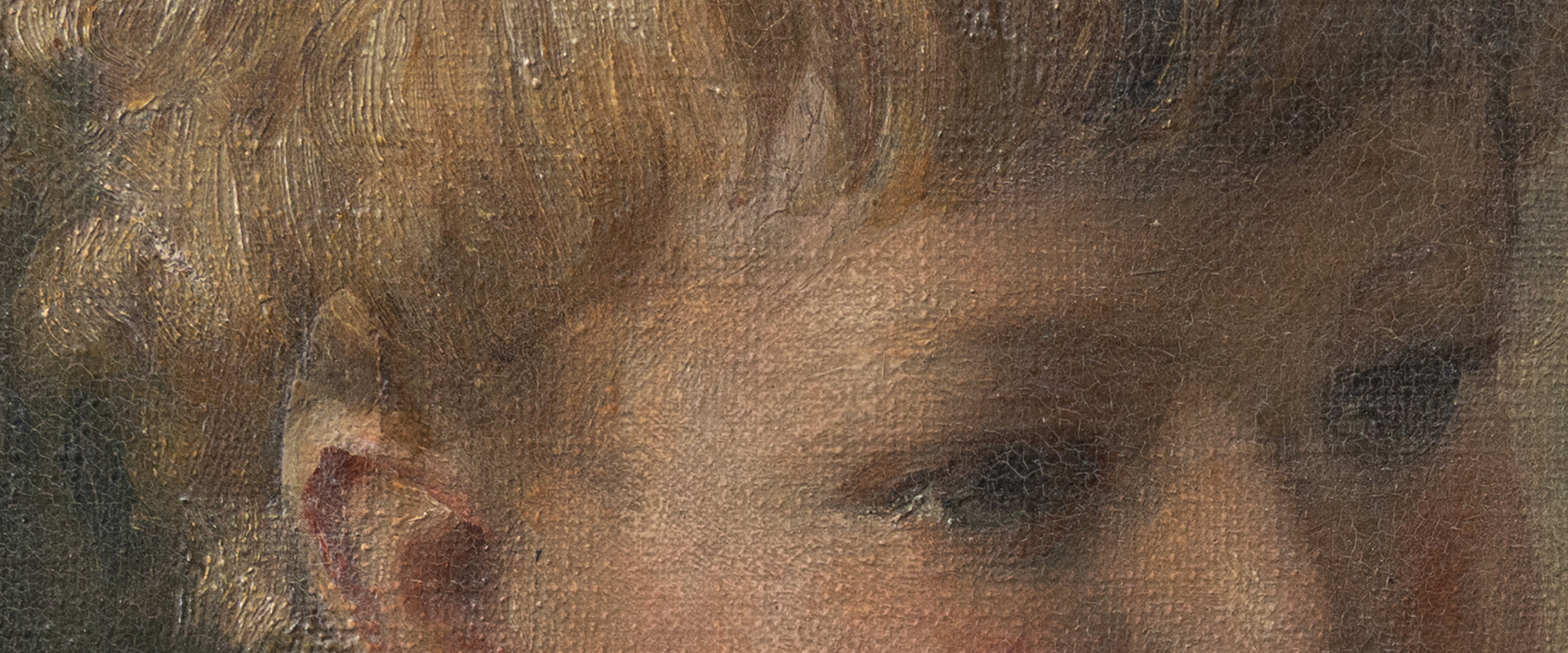 Above: detail of the darkened surface before conservation treatment
A Thread by Thread Repair
Following sensitive cleaning treatments, one of the most important stages of treatment was repairing the torn canvas while ensuring minimal interruption to the original artwork.
The previous patches on the reverse were carefully removed before the deformations in the canvas were treated. This allowed the conservator to work directly with the damaged areas and carefully realign the original canvas.
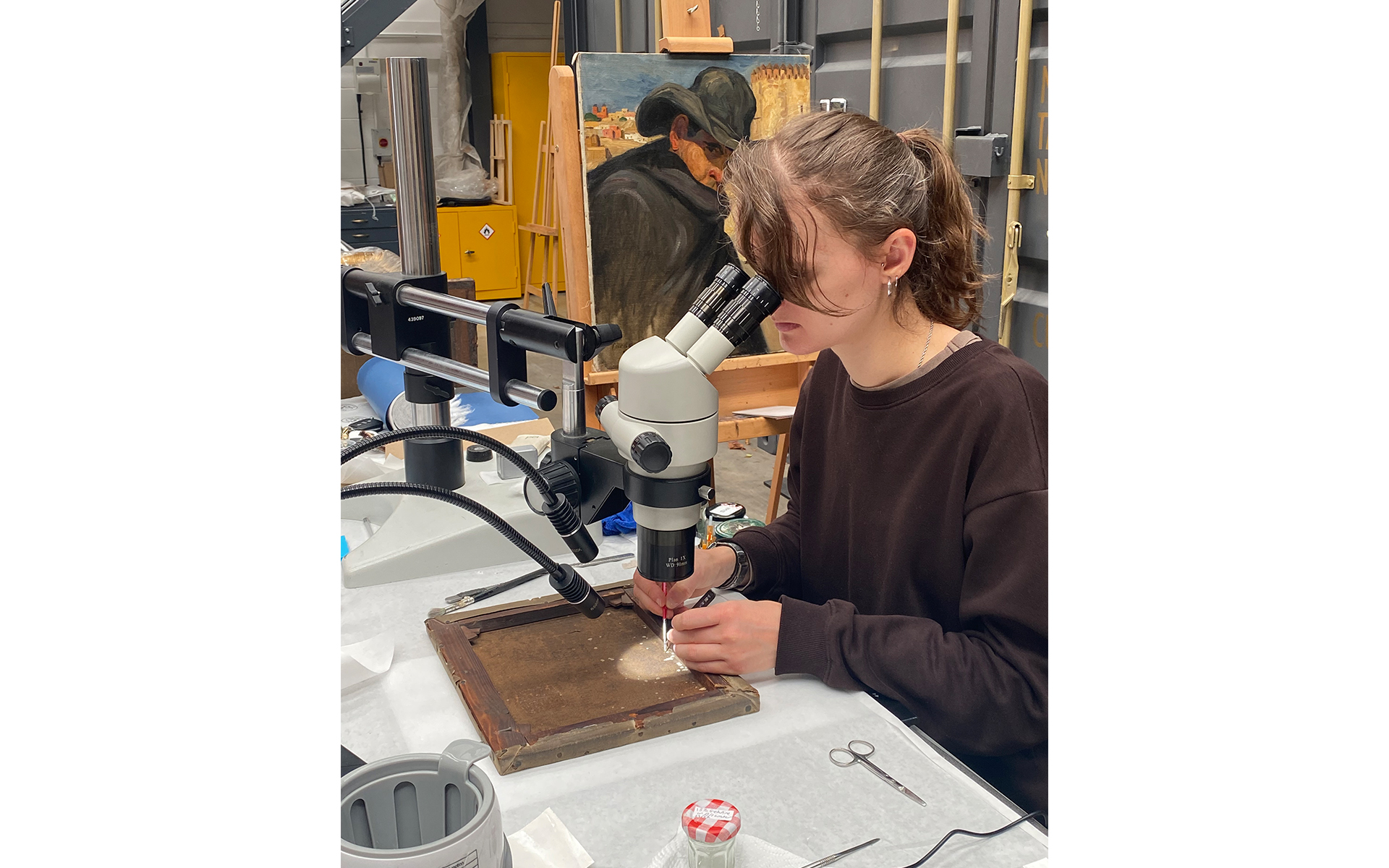
The tear was then repaired using thread-to-thread reweaving under a microscope. Rather than applying another patch across the reverse, this meticulous technique works directly with the individual threads of the canvas, carefully bringing the torn edges back together and restoring structural stability.
This is extremely precise and painstaking work. Importantly, it allows the tear to be stabilised while keeping the intervention localised, avoiding the need to cover a larger area of the original canvas than necessary.
 Above: a close up of the thread by thread tear repair treatment
Making the Damage Disappear Without Over-Restoring
With the canvas stable and the surface cleaned, areas of paint loss, scratches and scuffs could be carefully reintegrated.
Retouching in conservation is not about repainting an old picture or making it look newly created. Instead, new colour is confined to areas where original paint has been lost, reducing the visual interruption caused by damage while preserving as much of the artist’s surviving material as possible.
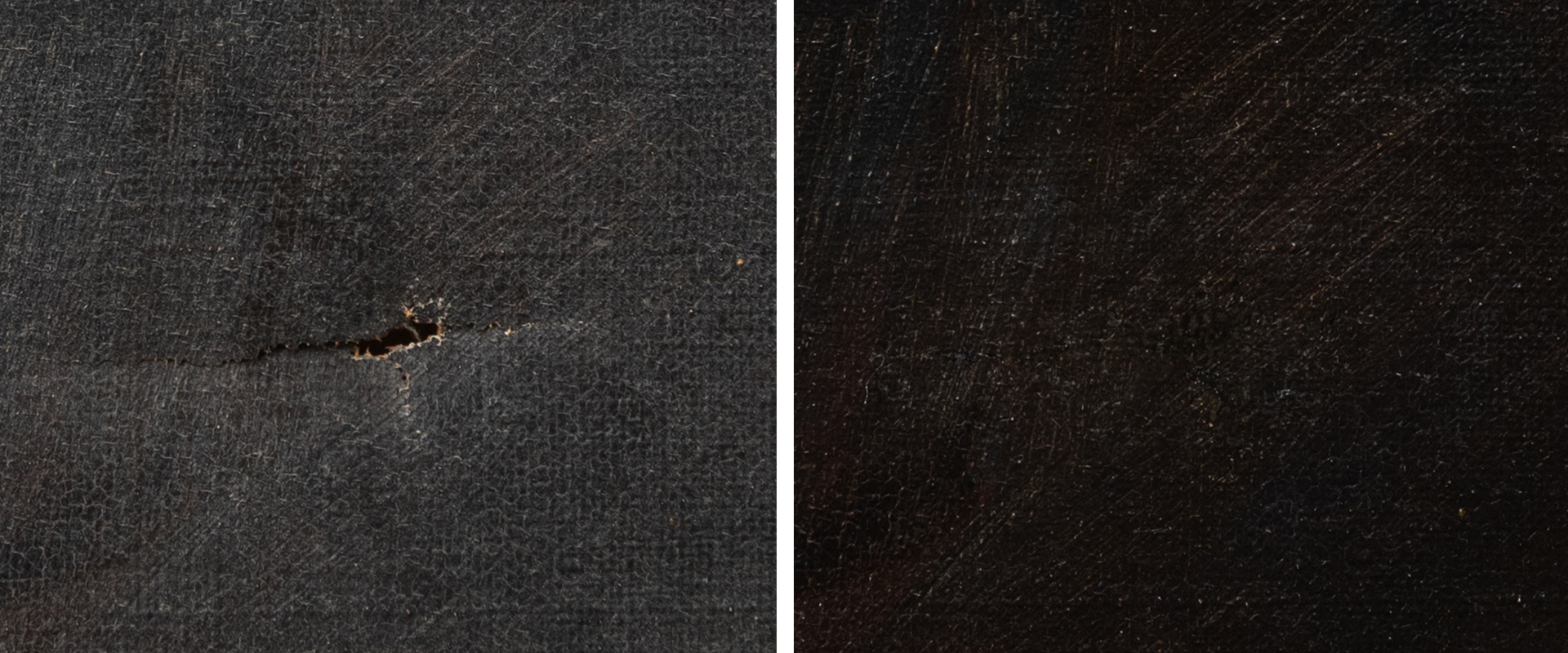
This was particularly important for a portrait with such strong family significance. The aim was not to erase its age, but to prevent decades of damage from distracting from the sitter and the original painting.
Following retouching, a final protective varnish completed the treatment.
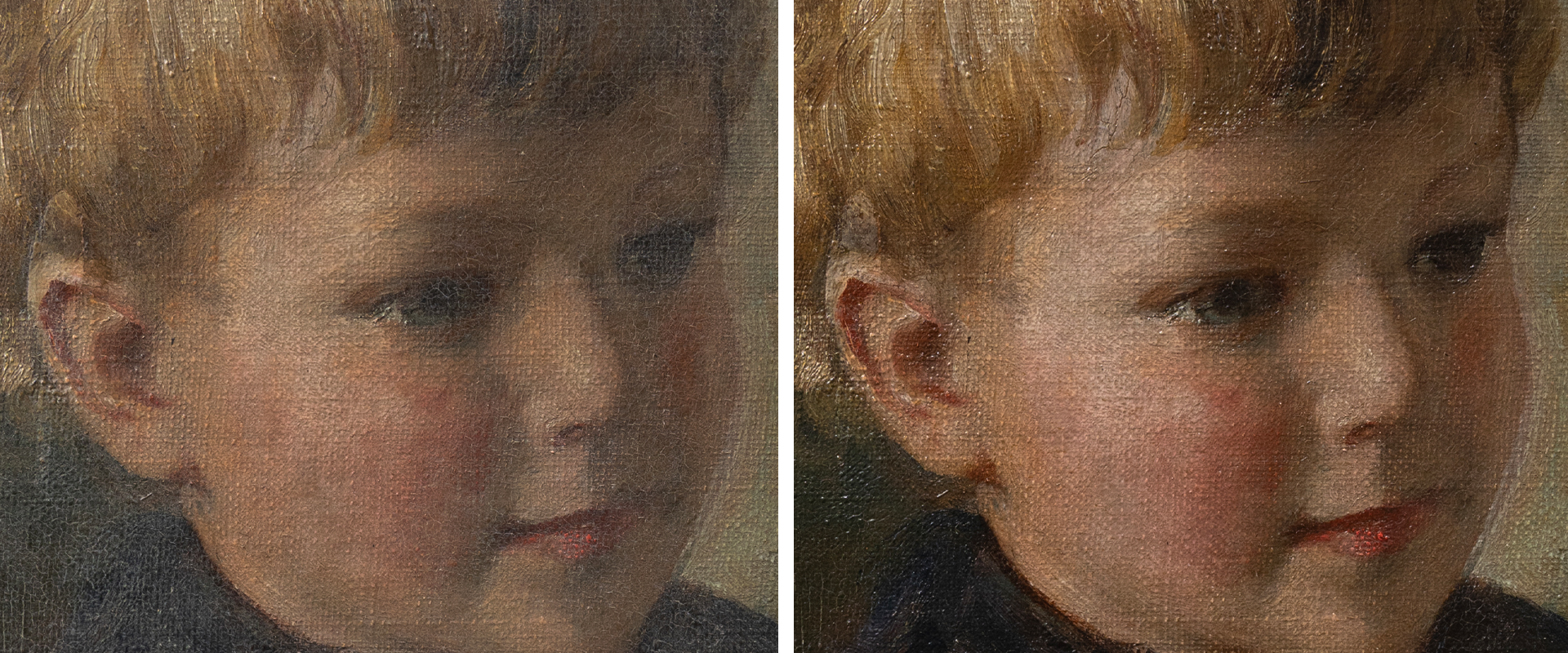
A Family Portrait Reunited
For more than 60 years, the arrow damage had been part of the family’s experience of the portrait. Iain even joked during treatment that he was looking forward to seeing the painting finally “sans trou” – without the hole.
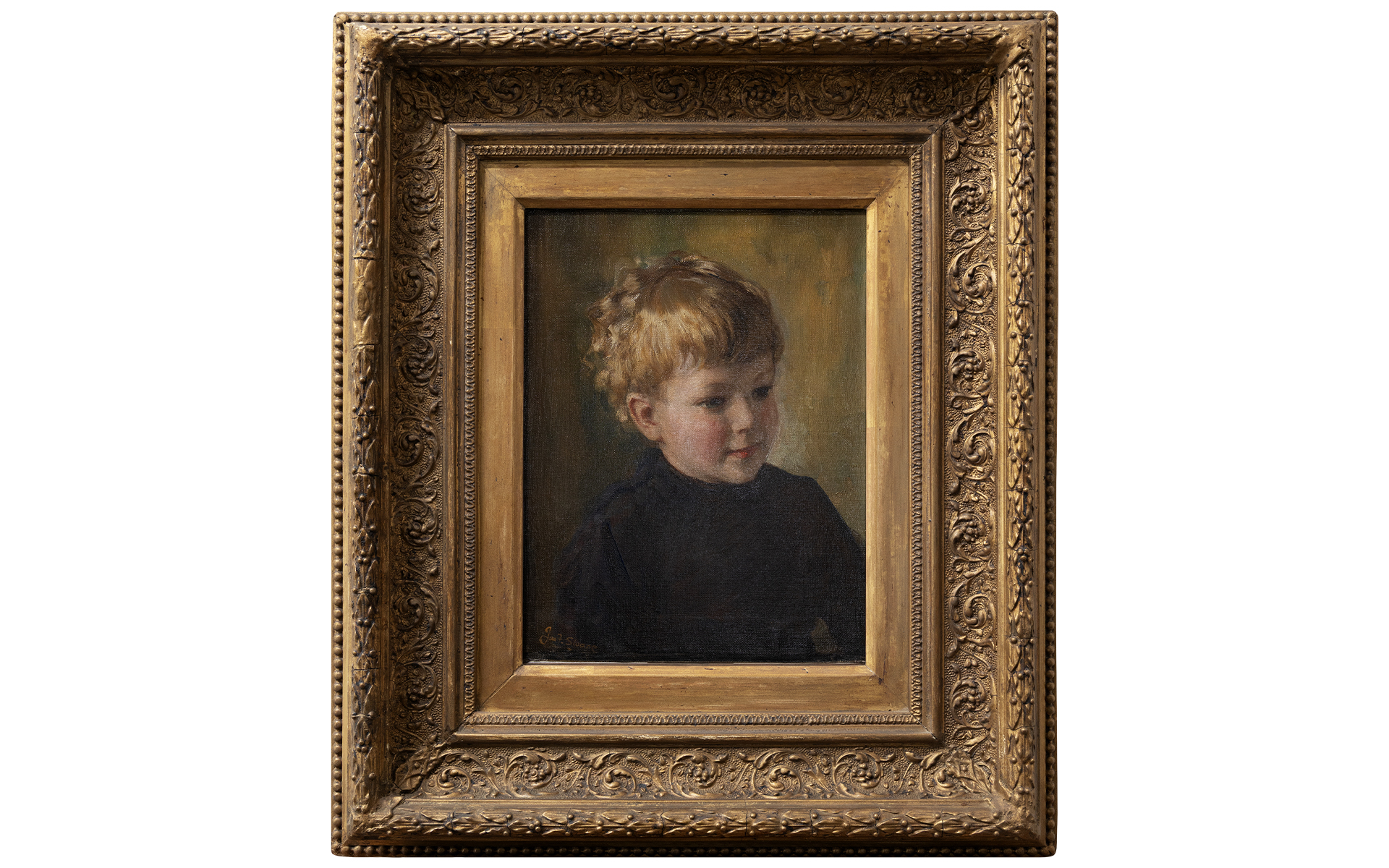
When he collected the completed portrait, the results exceeded his expectations:
“I just wanted to thank you for a wonderful repair and restoration. The picture came out far better than I could ever have hoped; unless you knew about the work you undertook, no one would ever spot all the previous damage. It is as good as new – and the colours just that little bit brighter – without having that ‘over-restored’ look.
That weaving under the microscope must take so much patience! I am very grateful (and in awe of your skills).”
The arrow may have become part of the family story, but the hole it left behind did not have to remain. After more than six decades, the portrait could be enjoyed again, with the peace of mind that the canvas and paint layers were stable and the damage no longer at risk of worsening.
Do You Have a Damaged Painting?
Accidental damage does not necessarily mean that a painting has been permanently lost. Tears, punctures, scratches, distorted canvas, historic repairs, discoloured varnish and areas of paint loss can often be treated using specialist conservation techniques.
At Fine Art Restoration Company, our paintings conservators work with artworks ranging from historically important and high-value paintings to family portraits and heirlooms whose greatest value is entirely personal.
If a painting in your home has been damaged, whether recently or several generations ago, contact our team for a conservation assessment and restoration recommendations.