 WhatsApp us
Modern portraits can carry more than a likeness. Their surface and distinctive handling of colour capture the character of their era, making their preservation particularly important when accidental damage occurs.
This was the case for Jacques Falcou’s 1961 portrait of Ruth Montagu, Mme Paumier. Dark, sophisticated and distinctly mid-century, the painting suffered a small puncture to the canvas, requiring our conservators to repair the damage without losing the qualities that give the portrait its striking presence.
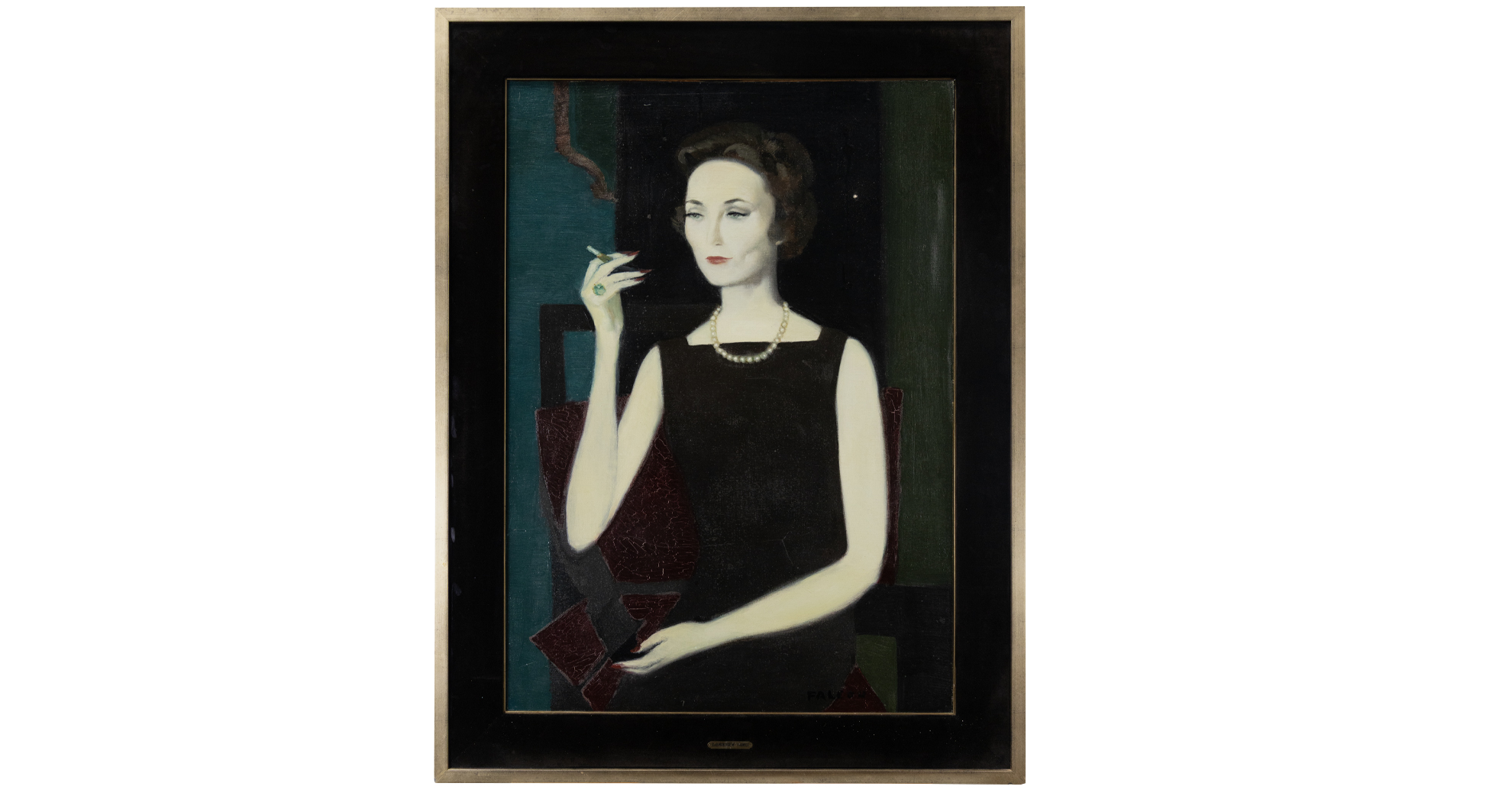
Falcou (1912–1975) was an established French artist who had exhibited at the Salon des Artistes Français. His career bridged the traditions of Salon painting and the increasingly modern visual world of post-war France.
Paintings from this period can require a particularly considered approach to conservation. By the 1960s, artistic practices were changing, with artists embracing new materials, techniques and approaches to the painted surface. Today, treatment for modern paintings must be carefully tailored and can, in some cases, prove more complex than the conservation of a centuries-old artwork.
Our specialist easel painting conservators restore mid-century artworks affected by tears, punctures, unstable paint, discoloured varnish and other forms of deterioration. If a portrait in your collection has been damaged or is beginning to show signs of age, contact our team at the end of this page to discover how we may be able to help.
The Women of Jacques Falcou
Women appear as a compelling subject within Falcou’s portraiture, with an emphasis not only on likeness, but on style, presentation and individuality. His female sitters also feel particularly evocative of post-war France, a period in which ideas surrounding femininity, fashion and how a modern woman chose to present herself were visibly evolving.
Madame Paumier belongs firmly within this world of mid-century glamour. Emerging from a predominantly dark composition, she has a quiet confidence. Falcou moves away from the grand interiors traditionally used to communicate a portrait sitter’s status. Instead, Ruth herself commands the composition. Her elegant dress, poised cigarette and assured expression create a sense of sophistication that feels unmistakably of its era.
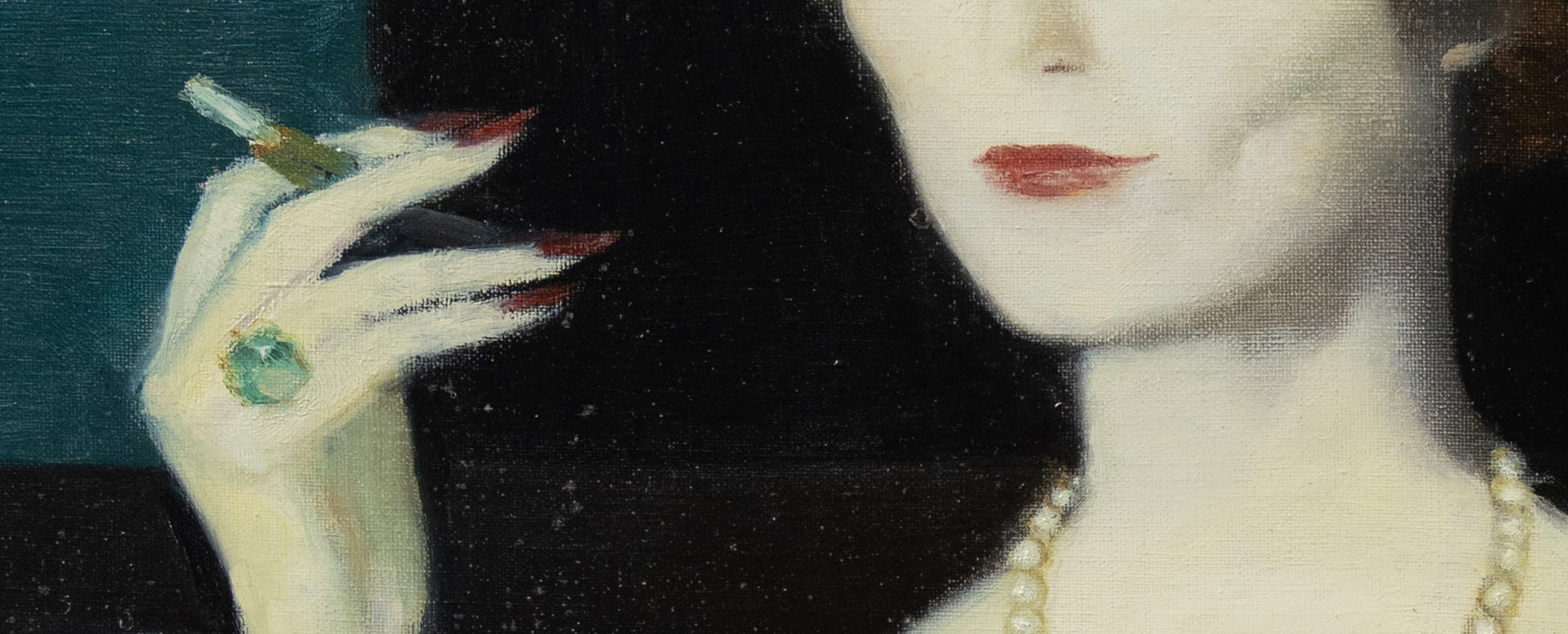
More than sixty years later, it was precisely this character that appealed to the painting’s new owner. Recently acquired, the portrait was described as both “gorgeous” and “striking” – a testament to the enduring presence Falcou captured in his sitter.
An Accidental Puncture
For a canvas that had survived over 60 years, the damage happened remarkably easily. While adjusting its hanging arrangement, the owner accidentally pushed a pair of pincers through the reverse.
The puncture itself measured only around 3 mm, but the impact had forced the canvas forwards. Stretched and frayed fibres erupted through the painted surface, creating a pale disruption within an otherwise dark passage of Falcou’s composition.

It was a tiny area of physical damage with a disproportionately large visual effect. On a portrait whose success depends upon atmosphere and restraint, even a small interruption could pull attention away from Ruth.
How Much Should We Restore?
The owner’s response to the proposed treatment raised an important conservation question: how much should be changed when the character of the existing surface is part of what makes a painting so appealing?
Although our initial recommendations included cleaning alongside structural repair, she was concerned that too much intervention might diminish the patina and distinctive appearance of this modern painting. Her initial request was therefore simple: could we repair the tiny hole invisibly without restoring everything else?

Rather than imposing a predetermined treatment, we invited the painting into the studio for a detailed conservation assessment. This allowed the decision to be made in front of the artwork itself. Above, you can see the difference before and after the removal of the old varnish viewed under UV light.
A Closer Look at the Painting’s Surface
The assessment revealed concerns beyond the puncture itself. The varnish had become uneven, with visible streaking across the surface that disrupted the bold, dark areas of the composition.
Two levels of treatment were considered, with the more extensive option chosen so these issues could be addressed alongside the structural repair.

The aim was not to make a painting from 1961 look newly painted, but to reduce the distracting effects of age and deterioration. This meant carefully considering which variations belonged to the artist’s technique and which had developed later.
This is particularly important with modern paintings, where changes in gloss, areas of darkness, visible brushwork and variations in texture may be entirely intentional. By assessing and testing the surface before treatment, our conservators could improve its visual clarity without removing the qualities that made Falcou’s portrait distinctive.

Repairing the Canvas
Dust and dirt were removed from the reverse of the canvas and from behind the stretcher bars, while vulnerable areas of paint were consolidated to protect against future lifting and flaking.
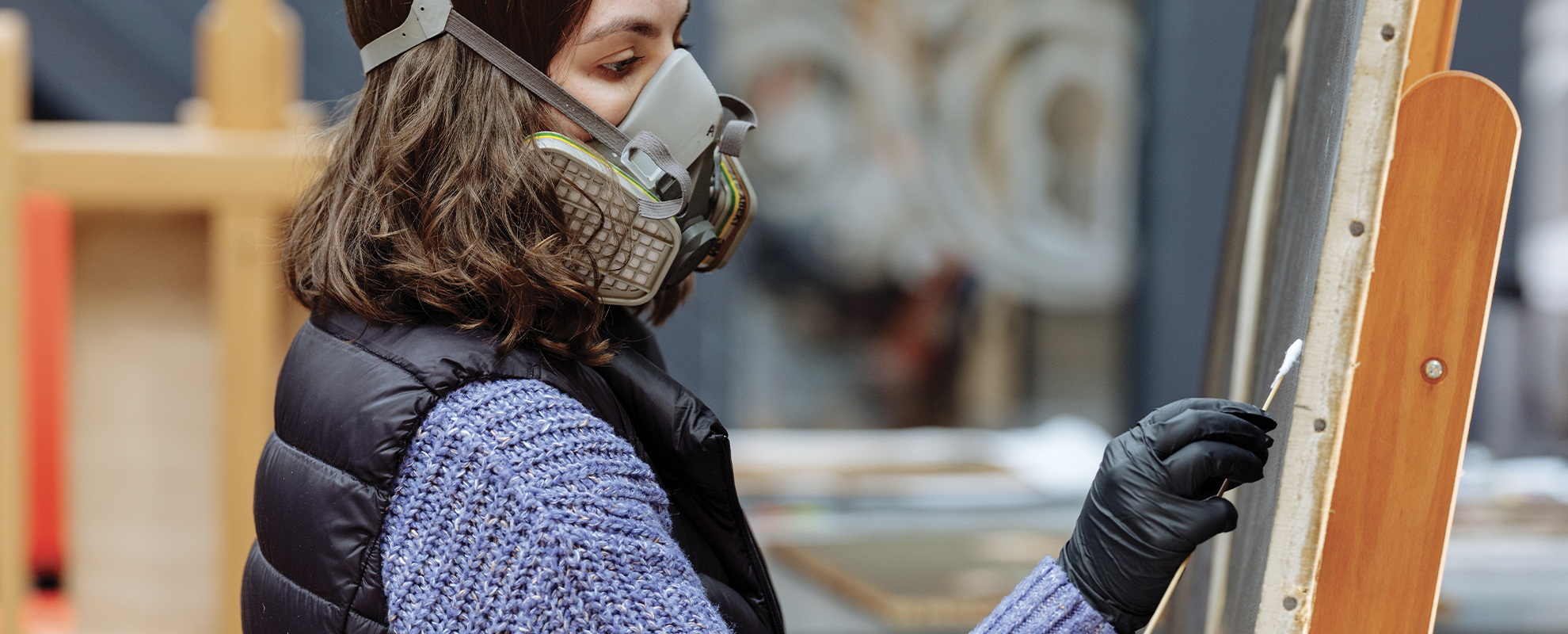
The distorted fibres surrounding the puncture could then be carefully brought back into plane. A precise thread-to-thread repair under magnification allowed the damaged fibres to be realigned and reconnected from the reverse. This highly localised approach avoided introducing an unnecessarily large repair to a canvas.

Once structurally stable, disrupted and missing paint could be sympathetically retouched with conservation pigments and resins, returning visual continuity to the dark areas of the composition.
The intention was ultimately that the accident should disappear from the experience of looking at the portrait and the eye should return directly towards Ruth.
Preventing Future Damage
The accident also highlighted just how vulnerable an exposed canvas can be. At the owner’s request, a protective backboard was fitted to the reverse, creating a barrier between Falcou’s original canvas and everyday hazards such as picture hooks, wall fittings and accidental contact. The existing nylon hanging string was also replaced with wire to provide a more secure hanging arrangement.
These are relatively simple preventive measures, but they can significantly reduce the risk and severity of accidental damage. Conservation is not only about repairing what has already happened, but helping an artwork remain protected for the future.

The Restoration of Modern Oil Paintings
Modern paintings present their own conservation challenges. Unusual surfaces, impasto, mixed media and deliberate irregularities can make it particularly important to understand an artist’s technique before treatment begins.
Our easel painting conservators assess each artwork individually, from localised tear and puncture repairs to cleaning, stabilisation and more extensive conservation.
If a modern or 20th century painting in your collection has been damaged, contact our team to arrange a specialist conservation assessment.

Contact Our Team
Speak to our team today to discuss your restoration project and discover how we can help with an assessment and estimate.
We also offer nationwide collection and delivery, as well as guidance on worldwide shipping to our studio.
